-
E-mail
hbzqhy2006@126.com
-
Phone
13932890473
-
Address
Zaoqiang County Industrial Park, Hebei Province
Hebei Weiheng Fiberglass Co., Ltd
Application of fiberglass desulfurization tower
Date: 2021-09-16Read: 19
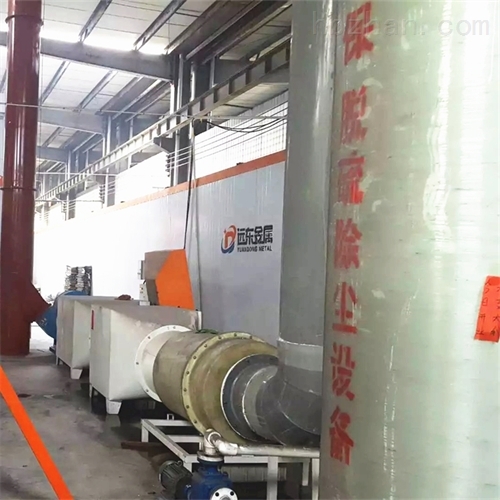
The technology of fiberglass desulfurization tower equipment can be applied to the purification treatment of acidic and alkaline waste gases emitted in industries such as chemical, electronic, metallurgical, electroplating, textile (chemical fiber), food, and machinery manufacturing processes. Exhaust gas desulfurization is divided into direct desulfurization and indirect desulfurization. Direct desulfurization refers to the direct separation of hydrogen sulfide in gas, while indirect desulfurization refers to the use of specific methods to reduce and suppress the production of hydrogen sulfide gas in gas. The principle of direct gas desulfurization method can be divided into two categories: wet method and dry method. Wet method mainly includes water washing method and alkaline salt solution method. Hebei Weiheng Fiberglass Co., Ltd. produces fiberglass desulfurization absorption towers, spray desulfurization towers, water film desulfurization and dust collectors, desulfurization and dust removal alkali washing towers, cyclone plate desulfurization and dust collectors, alkali washing desulfurization towers, and boiler dust collectors The product is made of high-quality fiberglass resin, which is corrosion-resistant, wear-resistant, long-lasting, multifunctional, occupies a small area, is easy to install, does not increase any power, has low resistance, and consumes less water.The fiberglass desulfurization tower uses sodium hydroxide solution as the absorption and neutralization solution to purify acid mist exhaust gas. The gas is pressurized or sucked into the inlet section by a centrifugal fan, and then flows upward to the filter layer, where it comes into contact with the neutralizing liquid sprayed from the nozzle. The absorbed exhaust gas continues to flow upward to the filter layer, where it comes into contact with the neutralizing liquid sprayed from the nozzle, undergoes neutralization, and is then discharged through the cyclone plate, hood, exhaust pipe or fan.