-
E-mail
249516825@qq.com
-
Phone
15666886209
-
Address
Room 207, Building 1, Weifang High tech Zone Optoelectronic Industry Accelerator (Phase I), No. 155 Optical Circuit, Weifang High tech Zone, Shandong Province
Jingdao Optoelectronics
How to determine the quality of African swine fever testing equipment?
Date: 2025-12-31Read: 1
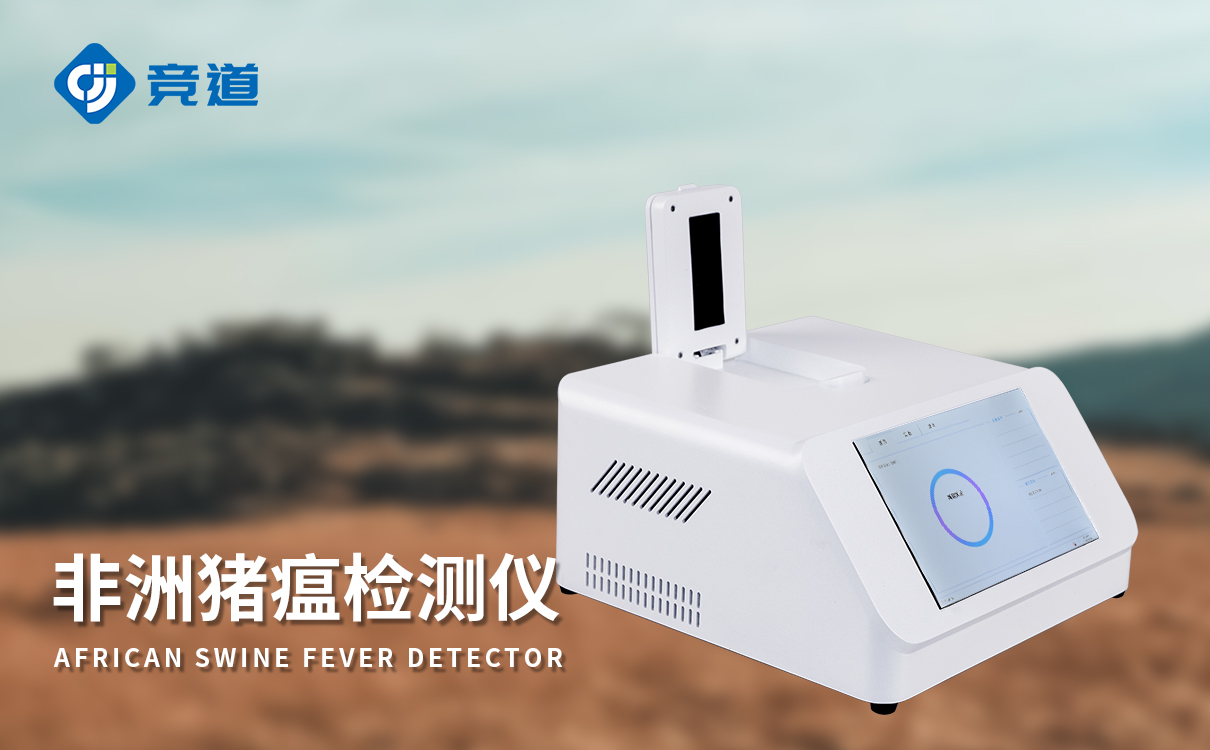
[JD-CW32H] [African swine fever detection equipment selected by Competitive Technology, intelligent operation, complete configuration, manufacturer direct delivery for better cost-effectiveness! 】.
How to determine the quality of African swine fever testing equipment?
The quality of African swine fever testing equipment directly determines the reliability of test results. Poor quality equipment may lead to missed detections and misjudgments, causing the spread of the epidemic or economic losses. But the device models on the market are complex and the parameter labeling is chaotic, making it difficult for practitioners to distinguish between good and bad. In fact, judging the quality of equipment can follow the four principles of "compliance as the basis, performance as the core, durability as the priority, and adaptation as the best", which can be accurately identified through clear verification standards and practical methods. The following is a specific analysis.
1、 First check compliance qualifications: Certification is the bottom line guarantee of quality
Compliance is the primary prerequisite for judging equipment quality. Even if the parameters of uncertified products are impressive, there are significant risks involved. The core requires verification of two qualifications:
Product approval number and comparison report: According to regulations, starting from 2021, equipment with approved numbers must be used for testing, and the authenticity of the numbers can be queried on the "Veterinary Drug Basic Database" of the China Veterinary Drug Information Network; At the same time, it is necessary to confirm that the equipment has passed the comparative test conducted by the China Animal Disease Prevention and Control Center, such as the Luoyang Putai cPCR amplification instrument and the Qingdao Lijian diagnostic kit, both of which are on the list of qualified comparisons. Equipment without these two certificates cannot be used as quarantine basis for testing results and must not be selected.
Compliance of supporting reagents: The performance of the equipment depends on the matching degree of the reagents. It is necessary to check whether the supporting reagents are labeled with the approval number, production batch number, and expiration date, and whether the storage conditions meet the standards (such as fluorescent PCR kits that need to be stored below -20 ℃ and have an expiration date of 12 months). Avoid mixing and matching different batches of reagents, or using unqualified "three no" reagents, as these reagents can directly lead to distorted test results.
2、 Upon closer examination of core performance: Sensitivity and specificity determine detection accuracy
Performance indicators are the core of equipment quality, and two key parameters, sensitivity and specificity, need to be focused on. They can be verified through standards and measured data:
Sensitivity verification: High quality equipment should be able to detect extremely low concentrations of viruses. The detection limit of fluorescent PCR equipment should be ≤ 100 copies/mL. For example, the Tianwei TW-P800 detector can detect single copy virus genes; The consistency rate between colloidal gold test strips and laboratory PCR should exceed 95%. When making a judgment, the manufacturer can be requested to provide a third-party testing report to confirm that stable detection can still be achieved when the virus concentration is close to the detection level, in order to avoid the risk of missed detection.
Specificity verification: It is necessary to be able to accurately distinguish African swine fever virus from similar viruses such as porcine blue ear disease and pseudorabies, without cross reactivity. Compliance equipment will clearly label specific data in the instruction manual, such as a certain brand of equipment testing negative for 12 common pig disease viruses, with a specificity of 100%. It can be verified through comparative experiments: detecting with other virus samples that are known to be negative, if false positives occur, it indicates insufficient specificity.
3、 Verify hardware configuration: durability and stability affect long-term use
The hardware quality determines the service life and adaptability to complex environments of the device, which needs to be judged from three aspects: material, core components, and protective design:
Core components and materials: The temperature control system should use high-precision components, such as equipment using Marlow Peltier refrigeration chips, with a heating rate of ≥ 5 ℃/s and a temperature error of ≤± 0.3 ℃; The preferred light source is LED lights, with a service life of over 10 years to avoid frequent replacement and maintenance. The shell should be made of corrosion-resistant ABS material, suitable for the humid environment of the pigsty.
Protection and stability design: Portable devices need to have shock and drop resistance, and can still work normally after passing a 1.5-meter drop test; At the same time, it should have an IP65 dustproof and waterproof design to cope with complex on-site environments. The built-in closed reaction system (such as specially designed cPCR tubes) can avoid contamination and is an important sign of mature hardware design.
4、 Adapt to practical needs: Humanized design reduces the probability of errors
High quality equipment should balance performance and practicality, especially suitable for non professionals to operate, which can be observed from three aspects:
Convenience of operation: The interface should be designed with graphical touch control and equipped with a screen of 7 inches or more. Common items such as "African swine fever detection" should have pre-set programs and do not require manual parameter settings. Fully automated equipment needs to achieve a closed-loop system of "sample in result out" to avoid the tedious process of manually transferring samples and the risk of contamination.
Intelligent assistance function: It should have fault self checking and operation prompts, such as text and voice warnings popping up when the sample amount is insufficient or the reagent expires; The result should directly display "negative/positive/suspected" without calculating Ct values or analyzing curves. The IoT function of some models can automatically record data for easy traceability and analysis, which is a value-added advantage.
After sales and training: Manufacturers need to provide on-site training services, covering core operations such as sample collection and equipment calibration; At the same time, we promise to respond to faults within 48 hours and provide long-term supply of compliant reagents to avoid equipment being idle due to after-sales shortages.
In summary, to determine the quality of African swine fever testing equipment, it is necessary to first verify compliance qualifications to establish a bottom line, then verify core performance through sensitivity and specificity, then pay attention to hardware configuration to ensure durability, and finally conduct a comprehensive evaluation based on practical applicability. Only equipment that meets these four standards can provide reliable support for epidemic prevention and control, avoiding loopholes in prevention and control caused by quality issues.