-
E-mail
249516825@qq.com
-
Phone
15666886209
-
Address
Room 207, Building 1, Weifang High tech Zone Optoelectronic Industry Accelerator (Phase I), No. 155 Optical Circuit, Weifang High tech Zone, Shandong Province
Jingdao Optoelectronics
Is the African swine fever PCR detection instrument suitable for small-scale farmers
Date: 2025-12-30Read: 1
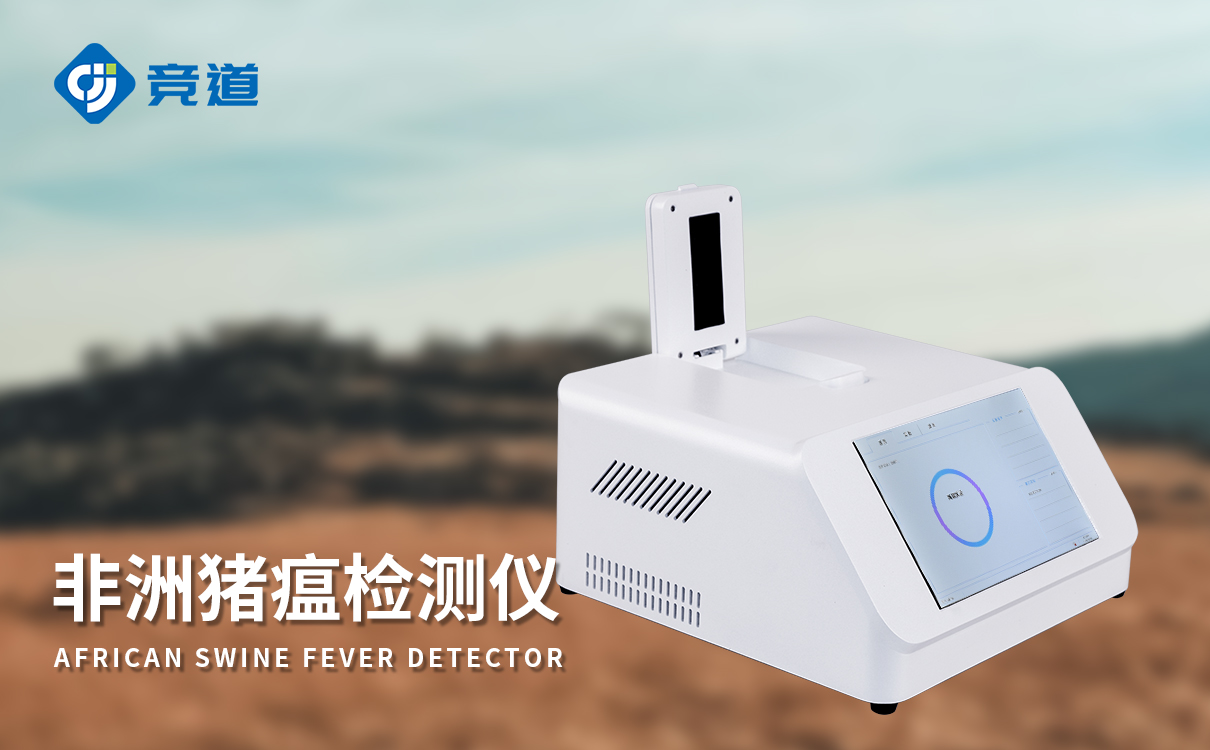
[JD-CW32H] [African Swine Fever Detection Equipment Selection Competition Technology, with complete supporting equipment, ready to use upon receipt! Teach and organize, help prevent and control swine fever! 】.
Is the African swine fever PCR detection instrument suitable for small-scale farmers
Is it necessary for us free range farmers to buy PCR machines that have high accuracy but are expensive? ”Will buying and not using it actually waste money? "This is a common dilemma faced by small-scale farmers (usually with less than 500 heads in stock) when faced with PCR detection instruments. With the development of portable and intelligent technology, PCR machines are no longer the "exclusive tools" of large enterprises. However, whether they can be adapted to small farmers depends on the "matching of needs" and "cost-effectiveness". Based on the characteristics of the equipment and frontline cases, we will break down the adaptation logic one by one.
1、 First, settle two accounts: Is the core concern of small-scale farmers valid?
Small scale farmers' concerns about PCR machines are focused on "high cost" and "difficult operation", but the actual situation has changed with technological upgrades:
1. Cost account: entry-level equipment has entered the "10000 yuan level" range
The unit price of traditional laboratory PCR machines often exceeds 100000 yuan, but the price of portable devices suitable for small households has significantly decreased. The portable cPCR amplifier from Luoyang Putai has a unit price of only 30000 to 50000 yuan and does not require a specialized laboratory. It can be operated in a corner of a regular pigsty. Based on a pig farm with 200 pigs in stock, if 20 imported samples and 10 emergency samples are tested annually, the cost of self testing consumables is about 1500 yuan (50 yuan per reagent), which saves 900 yuan per year compared to outsourcing third-party testing (80 yuan per reagent). The equipment cost can be recovered in 3-5 years.
More noteworthy is the policy support: it explicitly encourages farmers to conduct testing on their own, and some regions provide subsidies of 30% -50% to small households who purchase testing equipment, further reducing the investment threshold.
2. Operation account: Intelligent design allows beginners to get started in one day
The old belief that 'professional veterinarians are needed to operate' is outdated. Mainstream portable PCR machines, such as the TH-P800 model, are equipped with a dedicated detection program for African swine fever. They use a touch screen interface and only need to complete the "sample selection program startup" three steps. The device will automatically analyze and display "positive/negative" results. The experience of Mr. Li, a free range farmer in Hebei, is very typical: "The manufacturer provided on-site training for one day, and I practiced with negative standard samples three times. On the second day, I dared to test the actual samples, and the results were consistent with those of the township veterinary station
The equipment also avoids operational risks through a closed system design: the specially designed cPCR tube is sealed throughout the entire process from sample addition to interpretation, which can effectively avoid the nucleic acid contamination problem that beginners are most concerned about. Testing at a certain epidemic control center showed that the contamination rate of novice operation of this type of equipment is only 0.3%.
2、 Adaptation scenario: These three types of small-scale farmers require PCR machines more
PCR machines are not necessary for all small households, and their value is much higher than fast detection equipment such as colloidal gold in the following scenarios:
1. Farmers with a habit of introducing new species: precise control of entry risks
Introduction is one of the main ways for small-scale households to contract non plague infections. The missed detection rate of colloidal gold equipment for early infections (≤ 100 copies/μ L) can reach 15%, while the sensitivity of PCR instrument is as low as 10 copies/μ L, which can detect latent infections in pigs. Zhang Jianjun, a free range farmer in Jiangxi Province, once missed 2 early infected pigs due to the use of colloidal gold equipment to detect introduced pigs, resulting in the illness of 40 pigs in the entire population and a loss of over 80000 yuan. Later, he purchased a portable PCR instrument and tested it on the spot during the introduction, and there was no outbreak for two consecutive years.
2. Farmers with outbreaks in the surrounding areas: achieving "early detection and early disposal"
When there is an outbreak within a 3-kilometer radius, it is necessary to strengthen daily monitoring. The efficiency of the PCR instrument in producing results within 1.5-2 hours can save 4-6 hours compared to sending third-party testing, which is crucial for isolating sick pigs and disinfecting the environment. A pig farm with 300 pigs in stock in Henan province used PCR machines to screen 10 samples per week after the outbreak of the epidemic in the surrounding area. One pig was successfully diagnosed in the early stage of the disease, with only 2 pigs lost. The neighboring farm without PCR machines eventually wiped out the entire population.
3. Farmers engaged in self slaughter and self sale: Ensuring product safety
Some small households need to slaughter and sell the products themselves, and the PCR test results can serve as a "proof" of product safety. As required, approved PCR test results have traceability effectiveness and can enhance consumer trust. A farmer in Shandong province used a PCR machine to test their slaughtered pigs and posted a sign of "every batch must be tested" in the local market. The selling price of pork increased by 1 yuan per kilogram, and the annual income increased by more than 20000 yuan.
3、 Unsuitable scenarios: These small households can prioritize alternative solutions
For small households in the following situations, PCR machines are not an optimal solution, and it is more cost-effective to choose colloidal gold equipment or entrust testing:
Pure free range households with less than or equal to 50 heads: There is very little demand for testing (≤ 5 times per year), and entrusting township veterinary stations for testing (with a single cost of 50 yuan) is more cost-effective. The annual cost is only 250 yuan, far lower than the equipment investment.
Closed farming households without introduction or export: only require emergency screening, and the advantage of colloidal gold equipment producing results within 15 minutes is more prominent, with a unit price of only 800-2000 yuan, which can meet the demand.
Farmers who are within 1 hour's drive from third-party testing institutions can send samples for testing in emergency situations, balancing accuracy and cost, without the need to purchase equipment themselves.
4、 Selection and usage suggestions: "Avoiding pitfalls guide" for small households
If it is determined that a PCR instrument needs to be purchased, three things need to be done:
Choose the right model: Prioritize portable devices (weight ≤ 5 kg), single/8-channel, and devices with built-in dedicated programs, such as the Luoyang Putai cPCR amplifier, to avoid waste caused by selecting large devices with 96 channels.
Control consumables costs: Select approved economical test kits (such as products produced by Harbin Veterinary Research Institute), and the cost of a single test can be controlled within 50 yuan.
Binding after-sales support: When purchasing, the manufacturer is required to provide free training and 1-year on-site calibration service. If there are operational problems, technical personnel can be contacted in real time to reduce usage risks.
In summary, the African swine fever PCR detection instrument is suitable for small-scale farmers who have introduced, have outbreaks in the surrounding areas, or engage in sales, and is a "weapon" to reduce the risk of epidemic prevention; For pure free range households with minimal testing needs, they can prioritize more economical alternative solutions. The key is not whether one can afford it, but whether one really needs it, in order to make the device realize its maximum value through on-demand selection.