-
E-mail
1769283299@qq.com
-
Phone
15666889252
-
Address
Room 207, Building 1, Weifang High tech Zone Optoelectronic Industry Accelerator (Phase I), No. 155 Optical Circuit, Weifang High tech Zone, Shandong Province
Shandong Jingdao Optoelectronics Technology Co., Ltd
Can African swine fever detection instruments really produce results quickly? The actual test data has arrived
Date: 2025-12-30Read: 1
[JD-CW32H] [African Swine Fever Detection Equipment Selection Competition Technology, with complete supporting equipment, ready to use upon receipt! Teach and organize, help prevent and control swine fever! 】.
Can African swine fever detection instruments really produce results quickly? The actual test data has arrived
The testing results have to wait for 3 days, and half of the pigs have died. The slow introduction testing delays the entry time, which has been a dilemma faced by many farmers. Nowadays, there are numerous instruments claiming to be "rapid detection" in the market, but can their speed really meet the needs of prevention and control? We combine the measured data of three mainstream devices with farm cases to uncover the truth.
Colloidal gold: results within 10 minutes, emergency screening for "fast shooters"
Colloidal gold detection card (instrument) is a "regular" tool for grassroots farmers, and actual tests have shown that its speed advantage is extremely prominent. Taking a certain brand's testing card as an example, after collecting pig ear tip blood samples, adding buffer solution and letting it stand for 5 minutes can observe the results. The entire process from sampling to interpretation can be completed in just 10 minutes.
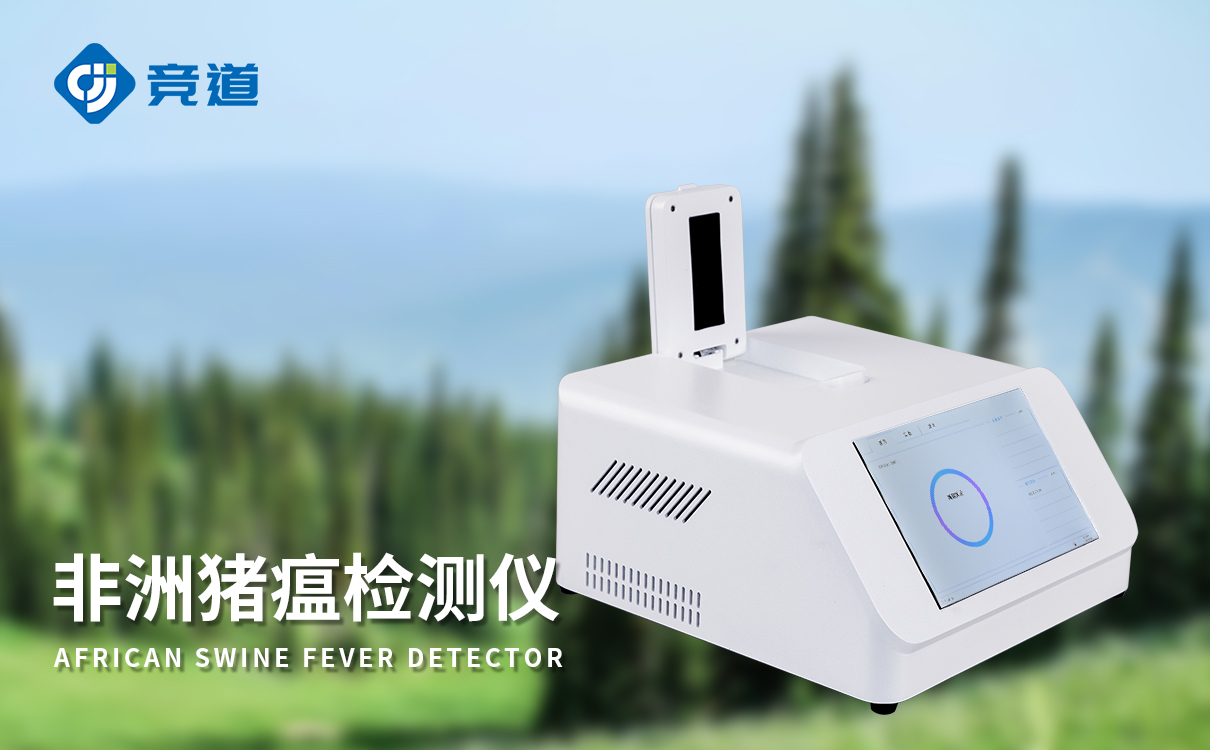
The actual measurement of a free range farmer is more convincing: after discovering that two pigs were mentally lethargic, they were tested on site using a colloidal gold detector, which confirmed positive within 12 minutes. On the same day, the entire population was screened and sick pigs were isolated, resulting in the loss of only three pigs, saving 72 hours compared to traditional testing. However, it should be noted that although these devices are fast, their sensitivity is about 91.3%, making them more suitable for preliminary screening rather than diagnosis.
PCR type: 1.5-2 hours for precise fruit production, balancing efficiency and accuracy
The real-time fluorescence quantitative PCR instrument, as a diagnostic level device, has achieved a significant breakthrough in speed. The Tianwei TW-P800 PCR instrument was tested and found to extract nucleic acid from blood samples and output Ct values in just 1.5 hours, which is nearly 4 hours shorter than traditional laboratory testing. The core secret lies in the heating rate of 7 ℃/s and the eight hole parallel detection design, which can process 8 samples at a time and meet the detection requirements of 20 samples per day for small and medium-sized pig farms.
A comparative experiment on a medium-sized pig farm showed that for the same batch of 16 samples, the traditional method takes 6 hours, while the 16 channel PCR instrument only takes 2 hours to complete the detection, and the detection limit is as low as 10 copies/μ L, which can capture low concentrations of early infected viruses. For scenarios that require precise results, this "fast and accurate" performance is particularly crucial.
Batch detection system: 96 hole synchronous operation, "efficiency king" in large-scale scenarios
The demand for batch testing in large pig farms and slaughterhouses has given rise to more efficient screening systems. The WX-PCR08 rapid screening system was tested and found to require only 2 hours for its 96 well whole plate detection. It can process more than 2000 samples in a single day, equivalent to completing the detection of 100 samples per hour.
The application data of a certain integrated breeding and slaughtering enterprise is more intuitive: after deploying the system, the entry quarantine of live pigs has changed from the traditional "next day result" to "2-hour release", and the economic losses reduced by testing delays throughout the year exceeded 3 million yuan. More noteworthy is that its intelligent software can automatically analyze data and issue warnings, further reducing decision-making time.
The key behind speed: choosing the right equipment is' really fast '
Actual test data has proven that mainstream detection instruments can achieve rapid results within "10 minutes to 2 hours", but matching scenarios are required: emergency screening using colloidal gold equipment, precise diagnosis using PCR machines, and batch testing relying on multi-channel systems. The experience of a provincial epidemic prevention station shows that after selecting the right equipment, the response time for the epidemic is shortened from 7 days to 2 days, and the spread of the virus is reduced by 60%.
For farmers, instead of worrying about whether it is fast enough, it is better to focus on whether the equipment is suitable and can quickly provide reliable results at key nodes, which is the true "accelerator" for epidemic prevention.