-
E-mail
13951277205@139.com
-
Phone
13951277205
-
Address
Changwang Town, Yangzhong City
Yangzhong Minghong Instrument Parts Factory
The structure of socket welding joints is relatively simple and easy to manufacture
Date: 2025-10-15Read: 50
Socket welding joint is a commonly used welding form for connecting small diameter pipelines. It involves inserting the end of the pipeline into the socket of a pipe fitting (such as a flange, elbow, tee, etc.) and then performing circumferential welding to achieve the connection between the pipeline and the pipe fitting. The insertion part of the joint generally has a certain depth to ensure the firmness of the welding. After welding is completed, the socket part will be sealed, and the weld seam will form a smooth transition with the pipeline.
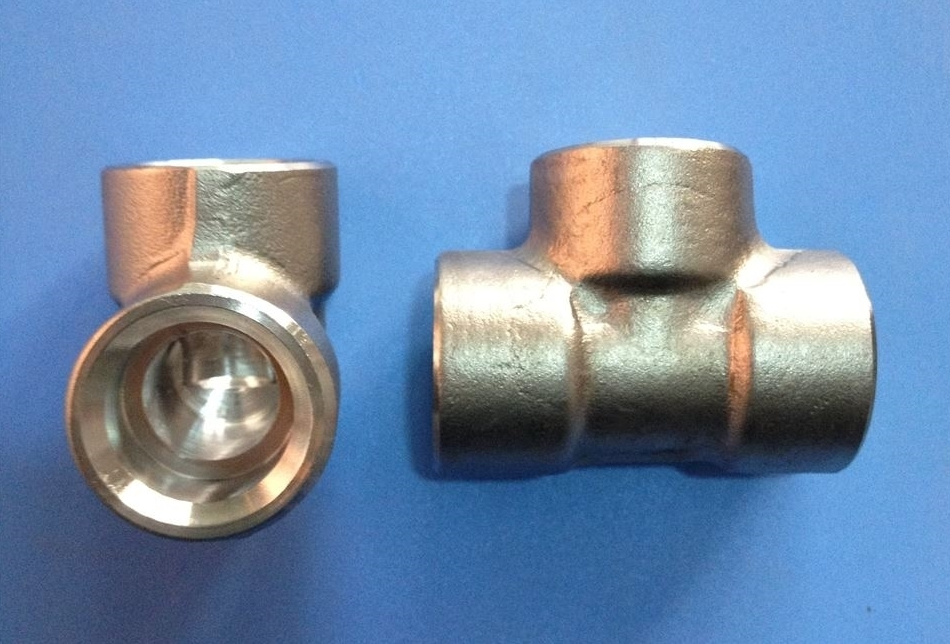
Socket welding jointDesign requirements:
1. Design of the socket: The depth, inner diameter, and outer diameter of the socket should be reasonably designed based on parameters such as the diameter and wall thickness of the pipeline. The depth of the socket is usually between 1.5 and 2 times the thickness of the pipe wall.
2. Selection of welding position: The welding position is usually at the circular joint around the socket, and the welding process requires that the weld seam be uniform, without defects such as cracks or pores.
3. Determination of welding dimensions: The welding dimensions are determined based on factors such as the wall thickness and material strength of the pipeline, usually referring to relevant standards such as the "Pressure Pipeline Welding Specification".
4. Load bearing capacity requirements: The load bearing capacity should be sufficient to withstand various pressure and temperature changes during the operation of the pipeline, ensuring the safety of the welded joint in long-term use.
Welding process:
1. Preparation work: Before performing socket welding, it is necessary to clean the end faces of the pipes and fittings, remove oil stains, rust and other impurities, and ensure the cleanliness of the welding area.
2. Docking: Insert the pipeline into the socket of the fitting, ensuring that the insertion depth is appropriate. In order to improve welding quality, fixtures can be used to fix the joints to ensure that there is no deviation during welding.
3. Welding: Use appropriate welding methods such as manual arc welding, TIG welding, etc. to perform circumferential welding. When welding, it is necessary to ensure that the welding metal is uniform and that the shape of the weld seam meets the requirements.
4. Inspection and Cleaning: After welding is completed, the weld seam needs to be inspected to ensure that the welding quality meets the requirements. Common inspection methods include visual inspection, ultrasonic testing, etc. After passing the inspection, perform surface cleaning to remove welding slag, oxides, etc.
Advantages of socket welding joints:
1. Suitable for small diameter pipelines: Suitable for pipelines with smaller diameters, especially when the pipeline requires high pressure or leakage prevention.
2. Simple structure: The structure is relatively simple, easy to manufacture, and the installation speed is fast, reducing construction time.
3. Stable welding quality: The welding process is relatively simple, the welding quality is relatively stable, and it is not easy to have obvious welding defects.
4. Good sealing: As the weld seam is formed around the annular joint, it can effectively prevent leakage at the pipeline joint.