-
E-mail
xue@hkmedqc.com
-
Phone
18148595778
-
Address
111 Shaping North Road, Nanwan Street, Longgang District, Shenzhen
Product Categories
Shenzhen Zhongyukang Technology Co., Ltd
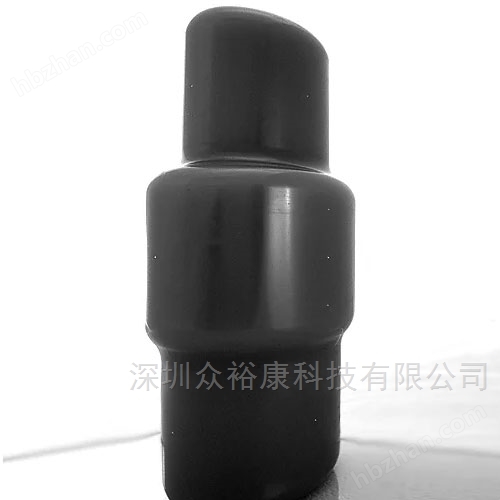

ATCM performance module
NegotiableUpdate on 02/06
- Model
- Nature of the Manufacturer
- Producers
- Product Category
- Place of Origin
Overview
CCT228 ATCM phantom, CCT228 ATCM performance phantom is made of sturdy Catthan #174; Made of uniform materials, it allows measurement of signal noise in three elliptical sections of different sizes to demonstrate the compensation effect of ATCM on trunk size changes and anatomical transitions. This model also helps evaluate the impact of patient alignment changes.
Product Details
Automatic tube current modulation (ATCM) is used in conjunction with modern CT scanners to optimize patient dosage while maintaining acceptable image quality. The effectiveness of ATCM varies depending on different imaging schemes and manufacturers.
The CCT228 ATCM Phantom was developed in collaboration with researchers from Karolinska Institute to assist CT operators in characterizing ATCM performance.
CCT228 ATCM phantom, CCT228ATCM performance moduleMade of sturdy Catphan ® Made of uniform materials, it allows measurement of signal noise in three elliptical sections of different sizes to demonstrate the compensation effect of ATCM on trunk size changes and anatomical transitions. This model also helps evaluate the impact of patient alignment changes.
The 65 centimeter long phantom consists of three elliptical parts. Each ellipsoid is 15 centimeters long, with a ratio of 3:2; 25:16.7 cm, 30:20 cm, and 35:23.3 cm sizes. Provide smooth transitions between each section, with rounded corners at both ends. The sides and top of the model are marked with polytetrafluoroethylene with a diameter of 1.6 millimeters to help align the model.
The CCT228 ATCM phantom, CCT228 ATCM performance phantom, and CCT228 ATCM model are designed to use the ATCM algorithm to estimate patient attenuation through projection X-ray (SPR) scanning. Various scanning parameters or models can be applied to reposition and evaluate the impact of parameter changes or patient positioning errors. The generated CT image set can be evaluated based on reference scans to calculate the normalized root mean square error (NRMSE) of the tube current curve and provide a visual assessment of the tube current fluctuation curve and image noise.
In order to better understand the overall effects of different imaging parameters, Catphan ® The model can be used for comprehensive image performance evaluation.

This phantom is made of durable Catphan ® Uniformity material is cast in one piece. By using three elliptical regions of different sizes on the phantom, both image noise and applied tube current can be evaluated, demonstrating how ATCM compensates for the effects of changes in torso size. In addition, this phantom can also be used to evaluate the impact of patient positioning deviation.
This phantom is 65 centimeters long and consists of three elliptical regions. Each ellipsoidal region is 15 centimeters long, with an aspect ratio of 3:2, and sizes of 25:16.7 centimeters, 30:20 centimeters, and 35:23.3 centimeters, respectively. It is suitable for modern CT scanners with spiral collimation widths up to 80 millimeters and using both longitudinal and angular ATCM technology. The transition between each area is smooth, with circular designs at both ends.
The side and top of the phantom are marked with polytetrafluoroethylene (Teflon) markers with a diameter of 1.6 millimeters, which can assist in aligning the phantom with the positioning laser of a CT scanner.
The phantom is designed to first scan through projected radiographic imaging (SPR), and the ATCM algorithm will use this image to estimate the degree of attenuation of the patient. The impact on ATCM can be studied by applying different scanning parameters or repositioning the phantom. The obtained CT image set is used to evaluate the tube current applied along different slice positions of the phantom and the resulting image noise. This method can be used both to provide a basis for optimization work and in conjunction with quality control (QC) to test the stability of scanner ATCM.
To gain a more comprehensive understanding of the overall impact of different imaging parameters, Catphan can be used ® Conduct a comprehensive image performance evaluation of the phantom.
(Note: Teflon is the trade name for polytetrafluoroethylene, commonly used in scenarios that require high temperature resistance and corrosion resistance.); SPR stands for Scan Projection Radiograph, which is a projection image obtained before CT scanning and can be used for localization and pre evaluation; QC stands for Quality Control, which refers to the quality control process of medical equipment. )


