-
E-mail
hongruideep@126.com
-
Phone
13675325138
-
Address
No. 29, the Nanling Mountain 3rd Road, Licang District, Qingdao, Shandong
Product Categories
Qingdao Hongruide Environmental Protection Technology Co., Ltd

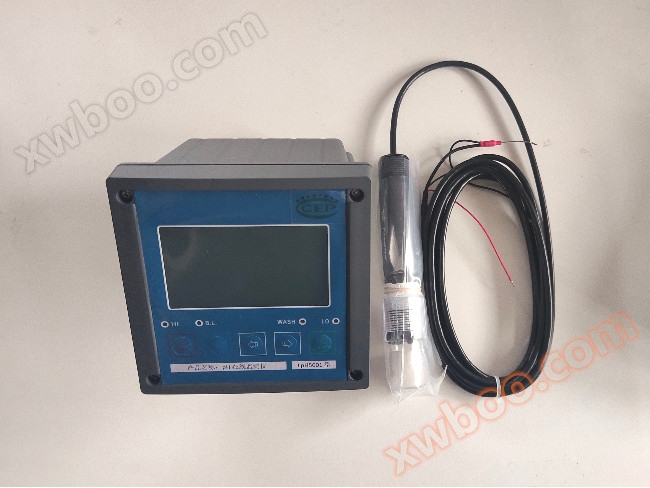
CEMS particulate matter monitor
NegotiableUpdate on 02/21
- Model
- Nature of the Manufacturer
- Producers
- Product Category
- Place of Origin
Overview
This manual describes the installation, operation, inspection, and maintenance of the HRD-SK-3001 particulate matter monitoring device. HRD-SK-3001 is based on the principle of backscattering of smoke particles and is used for online continuous measurement of particulate pollutants from fixed pollution sources. Note that HRD-SK-3001 uses a 10mW, 650nm semiconductor laser, and direct injection of the laser beam and reflected light into the eyes can cause serious damage. Do not directly look at the laser beam and its reflected light, and do not perform operations beyond the scope of this manual without appropriate training.
Product Details

This manual describes the installation, operation, inspection, and maintenance of the HRD-SK-3001 particulate matter monitoring device. HRD-SK-3001 is based on the principle of backscattering of smoke particles and is used for online continuous measurement of particulate pollutants from fixed pollution sources.
Attention
HRD-SK-3001 uses a 10mW, 650nm semiconductor laser, and direct injection of the laser beam and reflected light into the eyes can cause serious damage. Do not directly look at the laser beam and its reflected light, and do not perform operations beyond the scope of this manual without appropriate training.
Scope of Application / apply
HRD-SK-3001 can be used for real-time continuous measurement of particulate pollutant concentration from various pollution emission sources. It can be paired with a smoke monitoring system and can be connected to a smoke monitoring network with one or several units, sharing a front desk. The instrument can be used for monitoring smoke and dust in power plants, steel mills, cement plants, etc. It can also be used for process control of dust removal equipment and other powder engineering.
Technical Features / Technical characteristics
The laser hydrogen chloride/fluoride online monitoring system has the following main features, including:
01. Adopting the principle of laser backscattering. Not afraid of mechanical vibration of the flue and beam oscillation caused by uneven refractive index due to uneven flue gas temperature;
02. Single end installation, no need for optical alignment. The instrument design process greatly reduces the complexity of on-site installation. The installation of instruments and rainproof systems only requires a screwdriver for electrical connections, which can be completed within 20 minutes. Installation and maintenance are extremely simple, minimizing many problems caused by on-site installation and debugging;
03. Adopting standard (4-20) mA industrial standard current output, easy to connect;
04. The overall power consumption of the instrument is very low, about 5W;
05. Place the calibrator on site to avoid confusion and loss;
06. High resolution, suitable for monitoring low concentration emissions as well as high concentration emissions;
07. Non point measurement, with a large sampling area, can be used for chimneys of various diameters.
Technical Specifications / parameter
| measurement range | MIN 0-200mg/m3 | Environmental Requirements | Temperature: -40 ℃~65 ℃ |
| MAX 0-10g/m3 | 相对湿度: (0-100)% R H | ||
| measurement error | ±2%F.S./ 周 | Size | 160×160×250mm/ 4kg |
| zero drift | ±2%F.S./ 周 | Medium conditions | Up to 300 ℃ (customized for high temperatures) |
| Span Drift | ±2%F.S./ 周 | signal output | (4~20)mA |
| linear error | ±2%F.S./ 周 | Maximum output load | 500Ω |
| resolution | 1mg/m3 | power consumption | MAX 5 W |
| Applicable flue diameter | 1~5m | power supply | DC24V |
System principle and composition / System principle
3. Schematic diagram of host structure
●The host includes a laser light source and power control unit, a photoelectric sensing and small signal preprocessing unit, a scattered light receiving unit, a display and input unit, an output driving unit, and a main control unit. The 650nm beam emitted by the laser enters the emission source at a small angle, and the laser beam interacts with smoke particles to produce scattered light. The backscattered light enters the sensor through the receiving system and is converted into an electrical signal for processing The circuit part realizes the functions of photoelectric conversion, modulation of laser beam, signal amplification, demodulation, power control of light source, and V/I conversion.

System Schematic Diagram
2. Selection of parameters
●The measurement range and measurement area of the HRD-SK-3001 particulate matter monitor are adjustable under on-site conditions, but the adjustment process is relatively complex. It is recommended that users select accurate parameters for the manufacturer to adjust when ordering to simplify the installation process. Generally, when the user does not specify the parameters, the measurement range of the manufacturer's factory is adjusted to (0-200) mg/m3, and the DGT parameter of the measurement area is adjusted to 2000mm. The better working state of general measuring instruments is around 2/3 of their full range, but it is not the same for smoke detectors, whose working point is at 1/3 or even lower of their full range. This is because the on-site smoke and dust emissions have a large dynamic range even when the dust removal equipment is working normally. The electrostatic precipitator with three electric fields often operates in the state of three electric fields, two electric fields, or even a single electric field. The bag filter also often operates in situations where one or several bags have slight leaks. Therefore, the smoke detector needs to balance the accuracy of measurement and a large dynamic range.
●The measurement area of HRD-SK-3001 particulate matter monitor refers to the length of the area in front of the smoke and dust monitor where the backscattered light generated by the interaction between the laser beam of the smoke and dust monitor and the particulate matter can be perceived by the receiving system if there is particulate matter. For the HRD-SK-3001 particulate matter monitor, the backscattered light generated by the interaction between particles and laser beams within a distance of 2500mm in front of the smoke and dust monitor can be perceived by the receiving system, while particles beyond 2500mm cannot be received by the receiving system even if they have scattered light. The measurement area of the smoke and dust monitor is marked on the instrument nameplate. There are two key points for its use: one is that the parameter must be greater than or equal to the distance from the flange end face of the smoke and dust monitor to the opposite chimney or flue wall, ensuring that the reflected light from the flue wall does not mix with the scattered light of the smoke and dust monitor; In addition, this parameter must be greater than the thickness of the flue wall plus a distance of about 300-500mm to ensure that the measurement area is inside the flue.
3. Installation

The situation where the pressure at the measuring point is negative pressure

The situation where the pressure at the measuring point is positive pressure
3. High concentration issue
Both the optical method and the scattering method have nonlinear problems at higher concentrations, which means that there is no proportional relationship between concentration and instrument output. Both the scintillation method and the electrostatic induction method have similar situations. Fortunately, within the concentration range required for general emission monitoring, the deviation caused by this non-linearity can be ignored. Generally speaking, without precise calculation and on-site experience estimation, optical and electrostatic induction methods do not need to consider the deviation caused by non-linear factors when the smoke concentration is below 500mg/m3 (here, non-linear only refers to non-linear factors caused by light or charge changes due to interference between particles). Of course, for the penetration method and scintillation method, the size of the optical path should also be considered, and for the scattering method, the size and position of the sampling measurement area should be taken into account. In some cases, it is necessary to measure high concentrations of smoke and dust emissions. For example, at some measuring points before desulfurization and dust removal, the smoke and dust concentration may exceed 1000mg/m3, while at some measuring points, the smoke and dust concentration can reach 20g/m3. In this case, nonlinear factors must be considered. In fact, if each set of instruments is installed on site for environmental monitoring, a reference is required to accurately quantify the relationship between instrument output and smoke concentration. Broadly speaking, the correlation and linear relationship between two sets of data are two different concepts. The correlation coefficient between two sets of data is 1 (or completely correlated), but the relationship between them may not be linear. Therefore, there is still an issue of matching patterns between the two sets of data. The relationship matching pattern between the two sets of data (reference data and instrument recorded data) in the reference experiment is generally achieved through multiple regression. Generally, quadratic regression can be used to meet the environmental emission standards. So for measurements at high concentrations, a regression matching pattern with at least two iterations is required. For data regression, first make the regression data into two rows and then follow the following steps to directly perform it using Excel:
1Click on the Chart Wizard
2Select the scatter plot and click 'Next'
3Select the two rows of data to be regressed and click 'Next'
4Click 'Finish'
5Move the cursor to the data point in the figure, click to select the data series, and then right-click
6Select 'Add Trend Line' from the menu discussed
7Select 'Polynomial Regression', choose order 2
8Click on the 'Options' page to check' Display Formula 'and' Display Correlation Coefficient '‘
9Confirm completion
The 4-20mA output of a typical smoke detector has been converted through data acquisition or software. The current becomes voltage V, and the voltage is converted into concentration value through C=KV. If the coefficient K is set to 1, the value recorded by the software is the original signal voltage. By regressing the results of voltage and isokinetic sampling, the response coefficients can be obtained. The quadratic regression result is generally C=K0+KV-K1 * V * V. After such regression, there may be very small constant terms that can generally be ignored. Figure 10 shows the correlation between the same set of data using linear regression and quadratic regression.

| System displays concentration | 50.75 | 415.45 | 619.5 | 700 | 500.5 | 924 | 798 | 1172.5 | 647.588 |
| voltage | 0.3625 | 2.9675 | 4.425 | 5 | 3.575 | 6.6 | 5.7 | 8.375 | 4.62563 |
| The results of isokinetic sampling | 67.2 | 548 | 636 | 824 | 528 | 928 | 755.6 | 992 | 659.85 |
Data processing for reference experiments
Interference of moisture in flue gas
In addition to examining various parameter indicators in detail when selecting instruments, most users always ask a question: whether the moisture content of flue gas will interfere with the measurement results of the instrument. In fact, the moisture content in the flue gas does not necessarily affect the measurement results, it depends on the accumulation state of water. In other words, for gaseous water, the interference on the measurement of particulate matter can be ignored. However, water in the form of droplets poses a great challenge to the measurement of particulate matter. The instrument cannot remove the scattering and extinction caused by small water droplets, so it cannot accurately eliminate the interference of water mist. The following scenarios are often encountered on site: 1) When the flue gas temperature is above 100 ℃, the moisture in the flue gas exists in gaseous form and will not interfere with the measurement results. Here, 100 ℃ or above refers to the temperature at the sampling point or measurement area. Although sometimes, especially in winter in the north, white smoke is emitted from the chimney outlet (meaning that the ambient temperature is below the dew point of the flue gas, and the water in the flue gas forms small water droplets), as long as the temperature of the flue gas in the measurement area is above the dew point (generally above 100 ℃), the exhaust temperature of most power plants is between 100 ℃ and 200 ℃, so the exhaust situation of most power plants is like this; 2) When the flue gas temperature is below 100 ℃, the flue gas temperature in the measurement area is generally lower than the dew point, and the moisture in the flue gas exists in the form of droplets. In the petrochemical industry, this situation can be encountered, and most of the flue gas using water curtain dust removal is also in this situation. In this case, if the moisture content of the flue gas does not change significantly and good insulation measures are taken in the flue gas, the moisture in the form of droplets in the flue gas does not change significantly, and the interference of water droplets in the flue gas can be eliminated through reference tests. If the moisture content of the flue gas changes significantly and the water mist droplets in the flue gas change significantly, the measurement results will be greatly disturbed, and whether they can be used depends on the correlation of the reference test.