-
E-mail
815510555@qq.com
- Phone
-
Address
No. 3566 Jiasong Middle Road, Qingpu District, Shanghai
Product Categories
Shanghai Jiaquan Pump Industry Co., Ltd
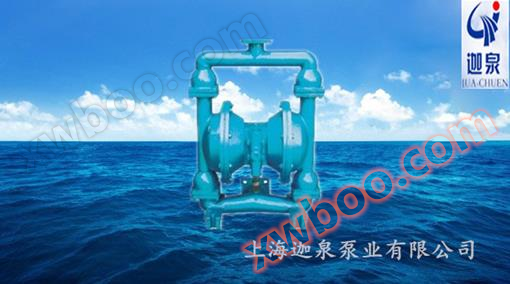
Cast iron pneumatic diaphragm pump
NegotiableUpdate on 03/13
- Model
- Nature of the Manufacturer
- Producers
- Product Category
- Place of Origin
Overview
Brief description: QBY cast iron pneumatic diaphragm pump - using compressed air as the power source, it can pump and absorb various corrosive liquids, granular liquids, high viscosity, volatile, flammable, and highly toxic liquids.
Product Details
QBY cast iron pneumatic diaphragm pump-Introduction
QBY Pneumatic Diaphragm PumpIt is a new type of conveying machinery and currently a type of pump in China. Using compressed air as the power source, it can extract and absorb various corrosive liquids, particulate liquids, high viscosity, volatile, flammable, and highly toxic liquids. Its performance parameters are similar to WLLDENPVMPS from the Federal Republic of Germany and MARIOWPUMPS from the United States Our factory has currently formed a series of production, with a total of eight specifications of diameters: ¢ 10mm (3/8 "), ¢ 15mm (1/2"), ¢ 25mm (1 "), ¢ 40mm (11/2"), ¢ 50mm (2 "), ¢ 65mm (21/2"), ¢ 80mm (3 "), ¢ 100mm (4"). There are four materials: aluminum alloy, cast iron, engineering plastics, and stainless steel. According to different liquid media, nitrile rubber, chloroprene rubber, fluororubber, and polytetrafluoroethylene are used respectively. To meet the needs of different users. Since its production in 1986, it has been adopted by more than a thousand domestic units in the petroleum, chemical, electronics, and ceramic textile systems. It is installed in various special occasions to pump media that cannot be pumped by conventional pumps, and has achieved satisfactory results.
QBY cast iron pneumatic diaphragm pump-Main features
1. No need for irrigation and water diversion, with a suction height of up to 7m, a lift of 50m, and an outlet pressure of ≥ 6kgf/cm2;
2. Spacious flow, good passing performance, allowing for particle diameters up to 10mm. When pumping mud and impurities, there is minimal wear on the pump;
3. The head and flow rate can be infinitely adjusted through the opening of the air valve (the air pressure can be adjusted between 1-7kgf/cm2);
4. The pump has no rotating parts and no shaft seal. The diaphragm completely separates the pumped medium from the moving parts and working medium of the pump, and the conveyed medium will not leak outward. So when pumping toxic, easily reactive or corrosive media, it will not cause environmental pollution and endanger personal safety;
5. No need for electricity, safe and reliable to use in flammable and explosive places;
6. Can work submerged in a medium;
7. Easy to use, reliable in operation, with simple opening and closing of the gas valve for on-off operation. Even if the pump runs without medium for a long time or suddenly stops due to unexpected situations, it will not be damaged. Once overloaded, the pump will automatically stop, with self-protection performance. When the load returns to normal, it will automatically start and operate again;
8. The pump has a simple structure and few vulnerable parts. It is easy to install and maintain, and the medium transported by the pump does not come into contact with moving parts such as the valve and connecting rod. Unlike other types of pumps, the performance gradually decreases due to wear and tear of components such as rotors, pistons, gears, and blades;
9. Can transport viscous liquids (viscosity below 10000 centipoise);
10. No need for oil lubrication, even when idling, it has no impact on the pump, which is a major feature of this pump.
QBY cast iron pneumatic diaphragm pump-Main purpose
1. Pump peanut butter, kimchi, mashed potatoes, red sausage, jam apple puree, chocolate, etc.
2. Pump paint, gum, and pigment.
3. Adhesive and glue, all types can be pumped up.
4. Various types of tiles, porcelain, bricks, and ceramic glazes.
5. After drilling the oil well, use a pump to suck up sediment and grout.
6. Pump various emulsions and fillers.
7. Pump various types of sewage.
8. Use a pump as an oil tanker and a barge to clear and extract sewage from the warehouse.
9. Hops and fermented powder slurry, syrup, sugar dense.
10. Pump water from mines, tunnels, ore dressing, and slag. Pump cement grout and mortar.
11. Various rubber pastes.
12. Various abrasives, corrosives, petroleum and mud, cleaning oil stains, and general containers.
13. Various highly toxic, flammable, and volatile liquids.
14. Various strong acids, strong alkalis, and highly corrosive liquids.
15. Various high-temperature liquids can withstand up to 150 ℃.
16. As a front-end pressure feeding device for various solid-liquid separation equipment.
QBY cast iron pneumatic diaphragm pump-STRUCTURE DIAGRAM

QBY Pneumatic Diaphragm Pump-Performance parameter table
|
model
Model 1 |
internet traffic
Dischage (m3/h) |
lift
Head (m) |
KPa
Exit Pressure (kgf/cm2) |
Suction distance
Sucked lift (m) |
Allow particles to be straight particles
Max grain D |
air supply pressure
Max Pressure (kgf/cm2) |
air
consumption Max air consumption (m3/min) |
Materials
|
|||
|
aluminium
104 |
stainless steel
1Cr18Ni9Ti |
cast iron
HT200 |
enhance
polypropylene Enhanced Polypropy lene |
||||||||
|
QBY-10
|
0~0.8
|
0~50
|
6
|
5
|
1
|
7
|
0.6
|
★
|
★
|
★
|
★
|
|
QBY-15
|
0~1
|
0~50
|
6
|
5
|
1
|
7
|
0.3
|
★
|
★
|
★
|
★
|
|
QBY-25
|
0~2.4
|
0~50
|
6
|
7
|
2.5
|
7
|
0.6
|
★
|
★
|
★
|
★
|
|
QBY-40
|
0~8
|
0~50
|
6
|
7
|
4.5
|
7
|
0.6
|
★
|
★
|
★
|
★
|
|
QBY-50
|
0~12
|
0~50
|
6
|
7
|
8
|
7
|
0.9
|
★
|
★
|
★
|
/
|
|
QBY-65
|
0~16
|
0~50
|
6
|
7
|
8
|
7
|
0.9
|
★
|
★
|
★
|
/
|
|
QBY-80
|
0~24
|
0~50
|
6
|
7
|
10
|
7
|
1.5
|
★
|
★
|
★
|
/
|
|
QBY-100
|
0~30
|
0~50
|
6
|
7
|
10
|
7
|
1.5
|
★
|
★
|
★
|
/
|
Note: ★ - Yes/- No without
Working principle
In each of the two symmetrical working chambers of the pump, there is an elastic diaphragm 6 installed. The connecting rod integrates the two diaphragms into one. Compressed air enters the distribution valve 3 from the inlet joint 1 of the pump, pushing the diaphragms in the two working chambers and driving the two diaphragms connected by the connecting rod to move synchronously. At the same time, the gas in the other working chamber is discharged out of the pump from behind the diaphragm. Once reaching the end of the journey. The valve mechanism automatically introduces compressed air into another working chamber, pushing the diaphragm in the opposite direction, thus forming synchronous reciprocating motion of the two diaphragms. Each working chamber is equipped with two one-way ball valves 4. The reciprocating motion of the diaphragm causes a change in the volume of the working chamber, forcing the two one-way ball valves to alternately open and close, thereby continuously sucking and discharging liquid.
Similar Product Recommend


