-
E-mail
1743251064@qq.com
-
Phone
13403270026
-
Address
Botou Development Zone, Hebei Province
Product Categories
- Pulse dust collector
- Star shaped unloader
- Dust bag
- Spiral conveyor
- Cyclone dust collector
- Dust humidifier
- Dust removal framework
- Low temperature plasma exhaust gas treatment equipment
- precipitator
- Dust removal accessories
- Single dust collector
- Boiler dust collector
- bag-type dust collector
- Plasma oxygen integrated machine
- Catalytic combustion equipment
- Industry dust collector
- Welding smoke purification equipment
- other
- UV photo oxygen exhaust gas treatment equipment
Botou Longnuo Environmental Protection Equipment Co., Ltd

DMC series pulse single machine dust collector
NegotiableUpdate on 08/20
- Model
- Nature of the Manufacturer
- Producers
- Product Category
- Place of Origin
Overview
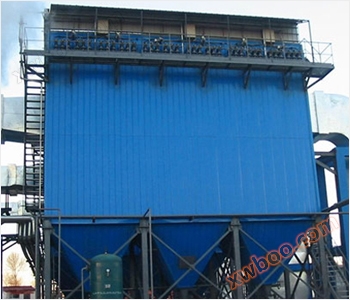
Introduction to DMC series pulse single machine dust collector: DMC series pulse single machine dust collector is widely used in steel mills, smelters, cement plants, carbon black plants, power plants and other enterprises for purifying and recovering smoke and dust generated by smelting, crushing, screening and combustion
Product Details

The DMC series pulse single machine dust collector is widely used in enterprises such as steel mills, smelters, cement plants, carbon black plants, and power plants for purifying and recovering smoke and dust generated from smelting, crushing, screening, and combustion. The DDF large bag back blowing dust collector was evaluated by the Ministry of Metallurgical Industry and the Ministry of Machinery Industry in June 1986, and was rated as the technical level of similar products in the late 1980s internationally, and was awarded the title of * product.
Attention when choosing DMC series pulse single machine dust collector:
1. The amount of gas processed is the decisive factor determining the size and type of dust collector. For large gas volumes, it is necessary to choose a dust collector that can handle large gas volumes. If multiple dust collectors that can handle small gas volumes are used in parallel, it is often uneconomical; Which type of dust collector should be used for smaller air volumes? It is economical and easy to meet the environmental requirements of dust source control and dust emissions.
2. The higher the dust concentration at the inlet, the higher the dust removal efficiency, but this will also increase the dust concentration at the outlet. Therefore, it cannot be generally assumed that the dust treatment effect is good based solely on the high dust removal efficiency. For wet dust collectors such as Venturi tube scrubbers and jet scrubbers, the initial dust concentration should be below 10g/m; For bag filters, the lower the dust concentration, the better the removal performance, especially at higher initial concentrations. Continuous ash cleaning can also meet environmental requirements in terms of pressure loss and emission concentration.
3. Dry dust removal equipment must be operated at a temperature above the dew point of the dusty gas in principle. In wet dust collectors, treatment should be carried out at low temperatures as much as possible due to factors such as water evaporation and condensation after discharge into the atmosphere. In the filter cartridge dust collector, the temperature of the dust containing gas treated directly or indirectly should be reduced to below the heat-resistant temperature of the filter cloth.
4. When choosing a bag filter, the first thing is to accurately grasp the dispersion of dust, such as choosing a cyclone filter when the particle size is mostly above 10 μ m. If the particle size is mostly below a few microns, electrostatic precipitators and bag filters should be selected. The specific selection can be based on dispersion and other requirements, and refer to the commonly used dust collector types and performance table for preliminary selection; Then determine based on other conditions and the introduced types and performance of dust collectors. The dust density also has a significant impact on the dust removal performance of the dust collector. The obvious manifestation of this influence is gravity.
5. In a cyclone dust collector, dust adheres to the wall due to centrifugal force, posing a risk of blockage; The dust adhered to the bag filter is prone to clogging the pores of the filter bag, while the electrostatic precipitator is prone to dust accumulation in the discharge and collection electrodes.
6. Inertial force and centrifugal force dust collector. A common feature of all dust collectors is that the lower the packing density, the more difficult it is to separate and capture dust particles, and the more severe the secondary flying of dust. Therefore, special measures should be taken in operation and equipment structure.