-
E-mail
1685972137@qq.com
-
Phone
18127993046
-
Address
No. 368 Xingke Road, Tianhe District
Product Categories
Zhongke Testing Technology Services (Guangzhou) Co., Ltd


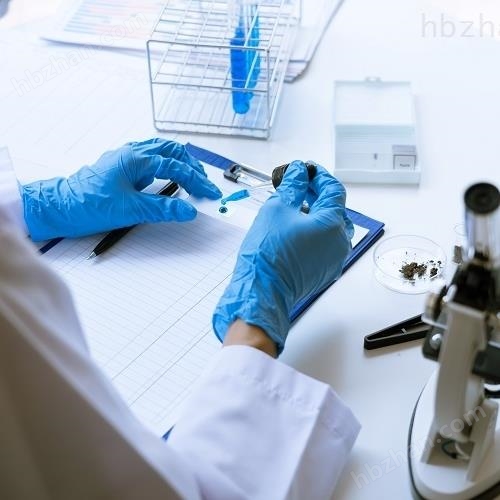

Detection of bacterial biofilm removal effect of cleaning agents
NegotiableUpdate on 04/24
- Model
- Nature of the Manufacturer
- Producers
- Product Category
- Place of Origin
Overview
The bacterial biofilm on the surface of medical equipment has become a hidden killer of hospital infections. Research has shown that the biofilm formed in endoscopic lumens can increase bacterial resistance by 1000 times, leading to an 8-fold increase in the risk of sterilization failure. According to monitoring data from the National Health Commission in 2023, 23% of medical device related infections are directly related to biofilm residues, with a biofilm detection rate of up to 67% for orthopedic implant infections. Therefore, the detection of the bacterial biofilm removal effect of medical cleaning agents has become a key link in ensuring medical safety.
Product Details
Detection of bacterial biofilm removal effect of medical cleaning agent
The bacterial biofilm on the surface of medical equipment has become a hidden killer of hospital infections. Research has shown that the biofilm formed in endoscopic lumens can increase bacterial resistance by 1000 times, leading to an 8-fold increase in the risk of sterilization failure. According to monitoring data from the National Health Commission in 2023, 23% of medical device related infections are directly related to biofilm residues, with a biofilm detection rate of up to 67% for orthopedic implant infections. Therefore, Doctor YongDetection of bacterial biofilm removal effect of cleaning agentsBecoming a key link in ensuring medical safety.
At present, the internationally recognized standard system includes ISO 15883-5:2024 "Cleaning and Disinfection Equipment - Part 5: Testing of Biofilm Removal Effect" and GB/T 33422-2023 "Detection Method for Biofilm Contamination of Medical Devices" in China. ISO standards stipulate that the biofilm clearance rate of surgical instruments must reach 99.9%, while luminal instruments require a log value reduction of ≥ 5; The GB/T standard further refines the preparation method of simulated pollution carriers, requiring the use of 316L stainless steel material with a surface roughness Ra value controlled between 0.8-1.6 μ m. The YY/T 0734.3-2025 "Medical Cleaning Agents Part 3: Biofilm Removal Determination" implemented in 2025 innovatively introduces the "two-step verification method", which first uses ATP detection for rapid screening, and then confirms the live bacterial count of positive samples, significantly improving detection efficiency.
The verification of biofilm removal effect requires the use of a "qualitative quantitative morphological" three in one detection system.
The ATP bioluminescence assay, as the first screening method, utilizes the ATP produced by live bacteria in the biofilm to react with luciferase, emitting fluorescence at a wavelength of 560nm. The intensity is linearly related to the number of live bacteria (R ² ≥ 0.99). The detection limit of this method can reach 1 × 10 ³ CFU/cm ², and the entire process only takes 15 minutes, making it suitable for rapid clinical validation. When performing specific operations, a dedicated sampling rod (such as Hygiena SystemSURE Plus) should be used to wipe back and forth in a 10cm ² area on the surface of the instrument. After sampling, it should be immediately inserted into the detector, and the results should be expressed in relative light units (RLU). A threshold set to ≤ 250 RLU is considered qualified.
As an arbitration method, the plate counting method requires the contaminated carrier to be eluted with ultrasound (power 300W, frequency 40kHz, time 20 minutes), and then subjected to pouring culture (TSA medium, cultured at 37 ℃ for 48 hours). The result calculation requires the introduction of elution efficiency correction (requirement ≥ 90%), and the formula is: biofilm clearance rate (%)=(1- number of eluted viable bacteria/initial viable bacteria) × 100%. In 2024, a study in the Chinese Journal of Hospital Infection pointed out that the recovery rate of mature biofilms using this method is 2-3 orders of magnitude lower than that of planktonic bacteria, and the elution effect needs to be improved by adding 0.1% Tween-80.
Laser scanning confocal microscopy (LSCM) is the gold standard for morphological verification.
The processed carrier was double stained with SYTO 9/PI (green labeled live bacteria, red labeled dead bacteria) and observed under a 63 × oil microscope. The biofilm thickness (normal ≤ 5 μ m) and the proportion of live bacteria (required ≥ 95%) were calculated using ImageJ software. The typical biofilm structure presents "mushroom shaped" microcolonies, and residual extracellular polysaccharide matrix (EPS) networks can be seen when the bottom is not cleared.
The biofilm detection laboratory needs to establish a three-level instrument system. The core equipment includes: Olympus FV3000 laser confocal microscope (equipped with 488nm/561nm dual laser channels, Z-axis step accuracy of 0.1 μ m), 3M Clean Trace ATP detector (detection range 0-9999 RLU, accuracy ± 5%), and Thermo Fisher Varioskan LUX multifunctional enzyme-linked immunosorbent assay (used for XTT reduction method to measure metabolic activity). Auxiliary equipment includes: Branson CPX3800 ultrasonic cleaner (temperature control ± 1 ℃), ESCO Class II biosafety cabinet, Mettler SevenCompact pH meter.
The control of key operational parameters directly affects the reliability of the results.
When observing LSCM, it is necessary to set a scanning step size of 1 μ m, overlay layers ≥ 20, and use Airyscan ultra-high resolution mode; Before ATP testing, it is necessary to ensure that the sampling rod is refrigerated at 4 ℃ and used within 30 minutes after opening; The elution solution for plate counting needs to be filtered through a 0.8 μ m filter membrane to avoid interfering with colony counting. The comparative study of "Laboratory Medicine" in 2025 shows that the deviation of results from different brands of ATP detectors can reach 32%. It is recommended to use positive controls (1 × 10 ⁵ CFU/cm ² standard biofilm) for each batch of experiments.
The validation of biofilm removal requires simultaneous evaluation of four dimensional indicators. The core indicators include: biofilm clearance rate (surgical equipment ≥ 99.9%, endoscopy ≥ 99.99%), log reduction of viable cell count (orthopedic implants require ≥ 6 log), residual EPS (polysaccharide content determined by high-performance liquid chromatography ≤ 5 μ g/cm ²), and reformation ability (no new biofilm formation after 72 hours of cultivation). The calculation of the log reduction value needs to satisfy the formula: log reduction=log ₁₀ (N ₀/N ₁), where N ₀ is the initial bacterial count (1 × 10 ⁷ CFU/tablet) and N ₁ is the residual amount after cleaning.
The methodological validation parameters strictly require precision (RSD ≤ 10%), recovery rate (80% -120%), and detection limit (10 CFU/cm ²). The 2024 capability verification results of the China National Institute for Food and Drug Control showed that only 6 out of 18 laboratories passed both ATP and live bacterial count verification, with the main source of error being inconsistent degrees of biofilm aging. It is recommended to use a standardized biofilm model (such as Pseudomonas aeruginosa PAO1 strain, cultured for 72 hours), with an initial bacterial count controlled at 5-7 log CFU/cm ².
The result judgment adopts the "one vote veto system": if any indicator fails to meet the standard, the cleaning agent will be judged as unqualified.
Typical non compliant cases include: a certain brand of multi enzyme cleaning agent has a removal rate of 99.8% for Escherichia coli biofilm, but only 89.3% for Staphylococcus aureus (due to differences in polysaccharide matrix); A certain endoscopic cleaning agent passed the ATP test, but LSCM observation found 5 μ m biofilm fragments remaining in the dead corner of the lumen. In actual testing, it is necessary to dynamically adjust the standards based on the material of the instrument (titanium alloy is more prone to residue than stainless steel) and the usage scenario (the requirements for closed mirrors are higher than those for abdominal mirrors).
Biofilm detection faces three major technological bottlenecks. The preparation of simulated contaminated carriers requires addressing reproducibility issues. Microfluidic chips (such as Ibidi μ - Slide) can be used to construct fluid biofilms that are closer to the in vivo environment, and their removal difficulty is 2-3 times higher than static cultivation. In 2025, a study in the Journal of Medical Devices showed that adding 10% human serum protein can increase biofilm resistance by 40%. It is recommended to prepare the contaminated solution formula in a ratio of "80% bacterial suspension+20% simulated body fluid".
Similar Product Recommend