-
E-mail
vip@zcjxps.com
-
Phone
18738194110
-
Address
Zhengshang Road Middle Section, Zhengzhou City, Henan Province
Product Categories
Zhengzhou Zhongcheng Environmental Protection Equipment Co., Ltd

Disc-shaped screening machine
NegotiableUpdate on 02/16
- Model
- Nature of the Manufacturer
- Producers
- Product Category
- Place of Origin
Overview
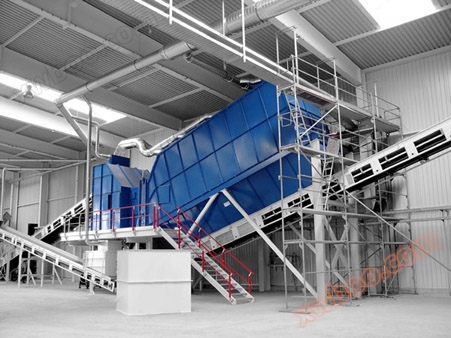
Disc screen, disc screening garbage equipment, disc screen Zhengzhou Zhongcheng Environmental Protection Equipment Co., Ltd. disc screen is used for sorting inert garbage and small volume garbage. The disc-shaped screen of the disc sorting machine will rotate, driving the vibration of the garbage on the screen. There is a spacing between the disc-shaped screens to achieve sorting based on the size and weight of the garbage ..
Product Details
Zhengzhou Zhongcheng Environmental Protection Equipment Co., Ltd. disc screen is used for sorting inert waste and small volume waste. The disc-shaped screen of the disc sorting machine will rotate, driving the vibration of the garbage on the screen. There is a spacing between the disc-shaped screens to achieve sorting based on the size and weight of the garbage. As for the treatment of solid waste, sorting is an essential step, and the control of feed size often determines the overall sorting effect. Disc shaped screens are used for sorting inert waste and small volume waste.

The characteristics of the disc screen are: simple process, easy installation and maintenance, and easy operation; Small space occupation and reduced investment costs; Smooth and reliable operation; Low power, low energy consumption, equipped with a cleaning device inside the sieve body, the sieve holes are not easily blocked. In terms of screening household waste, disc screens have greatly surpassed traditional drum screens, bar screens, and vibrating screens in terms of production capacity and sorting efficiency. The sieve material sorted out by the disc-shaped sieve mainly includes combustible materials such as waste paper, plastic, and rags, as well as non combustible materials such as organic matter, small-sized combustible materials, sand, stone, and glass.

Zhengzhou Zhongcheng Machinery's disc-shaped screening technology is particularly suitable for sorting: crushed household waste, industrial waste, and bulk waste derived fuels; It is also commonly used in the production process of sorting and reusing recycled resources such as rubber waste, paper waste, plastic waste, RDF preparation, etc.Using a disc structure to set the sieve size for screening garbage materials smaller than the set sieve size. The processing capacity of this disc screen is three times that of a traditional drum screen of the same volume, and the screening efficiency is 1.5 times that of a drum screen. The disc-shaped screen of the disc sorting machine will rotate, driving the vibration of the garbage on the screen. There is a spacing between the disc-shaped screens to achieve sorting based on the size and weight of the garbage. According to different widths, 15 to 20 sieve plates can be installed on one bearing. Install different numbers of bearings according to the required screening processing capacity. The motor drives the bearings to rotate synchronously. Screening equipment with other shapes of sieve plates is prone to clogging the sieve holes with wet garbage, while disc-shaped sieve plates, due to their continuous rotation, will not experience clogging of the sieve holes.

Characteristics of disc screening machine:
1、 The sieve size is set using a disc structure, and the sieve size of 25-120mm can be selected and customized for design and production;
2、 It can perfectly replace the drum screen, with a processing capacity 4 times that of traditional drum screens of the same volume, and a screening efficiency 1.5 times that of drum screens;
3、 Adopting variable frequency drive control method, low energy consumption, high safety, and adjustable processing capacity;
4、 Specially designed wear-resistant chain wheel, chain linkage, and unique tensioning chain design, with extremely high operational stability;
5、 Modular design allows for the selection of appropriate module quantities based on customer requirements, facilitating maintenance and structural adjustments;
6、 The production capacity and sorting efficiency have greatly surpassed traditional screening equipment such as drum screens, bar screens, and vibrating screens;
7、 Suitable for various types of solid waste, such as household waste, construction and decoration waste, stale waste, kitchen waste, etc.