-
E-mail
710013548@qq.com
-
Phone
15190009117
- Address
Product Categories
Shanghai Lanti Energy saving and Environmental Protection Technology Co., Ltd


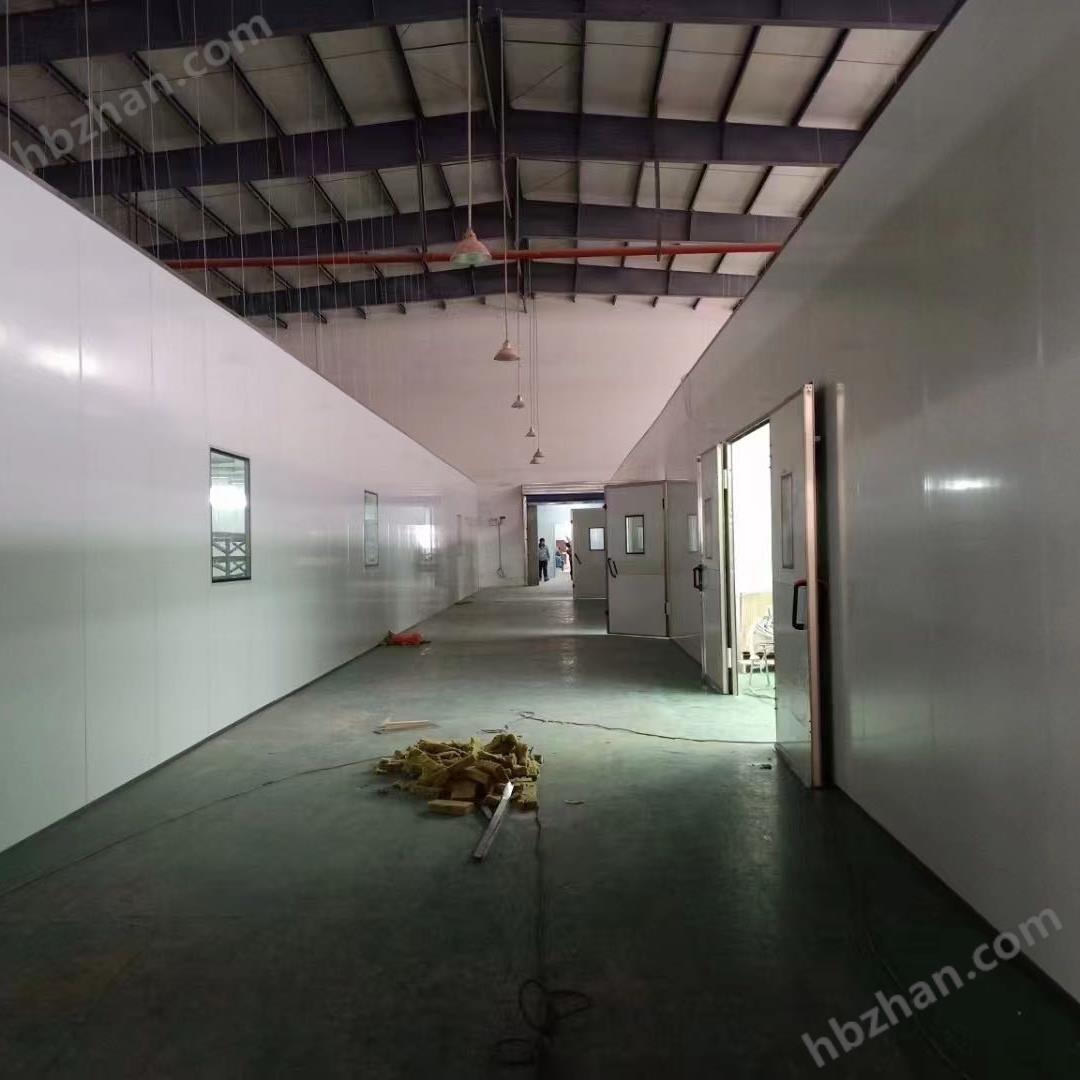

Factory building purification workshop
NegotiableUpdate on 01/08
- Model
- Nature of the Manufacturer
- Producers
- Product Category
- Place of Origin
Overview
The factory purification workshop is a closed space constructed through special design and technical means in industrial production, aimed at controlling pollutants such as particles, harmful gases, and bacteria in the air at extremely low levels, while accurately adjusting indoor environmental parameters such as temperature, humidity, pressure, and airflow distribution.
Product Details
The factory purification workshop is a closed space constructed through special design and technical means in industrial production, aimed at controlling pollutants such as particles, harmful gases, and bacteria in the air at extremely low levels, while accurately adjusting indoor environmental parameters such as temperature, humidity, pressure, and airflow distribution.
Its main structure includes an efficient filtration system, a sealed enclosure structure, an airflow organization device, and an environmental monitoring system. Through multi-stage purification and intelligent regulation, it provides a stable and clean environment for high-precision manufacturing, special processes, or sterile production.
Working principle of factory purification workshop
Purification achieved through "filtration airflow control environmental regulation":
Air purification: The airflow passes through primary, medium, and high-efficiency filters in sequence to intercept pollutants of different particle sizes.
Airflow organization: Laminar flow design enables unidirectional airflow, while turbulent flow design disperses airflow to avoid dead corners.
Positive pressure maintenance: The indoor air pressure is higher than the external pressure to prevent unpurified air from entering through gaps.
Environmental regulation: The air conditioning system dynamically adjusts parameters such as temperature, humidity, and pressure based on sensor feedback.
Application advantages
Efficient and energy-saving: Multi stage filtration and heat recovery technology reduce energy consumption and lower operating costs.
Flexible adaptation: The cleanliness level and environmental parameters can be adjusted according to process requirements to meet diversified production needs.
Safe and reliable: The enclosed structure and intelligent monitoring reduce human errors and lower the risk of accidents.
Long term benefits: Stable product quality reduces after-sales problems, improves customer satisfaction and repurchase rate.
Sustainability: In line with the trend of green manufacturing, it helps companies achieve their environmental and social responsibility goals.
Application field
Electronic manufacturing: Production of semiconductor chips, LCD panels, and precision circuit boards to avoid short circuits or performance degradation caused by dust particles.
Life sciences: genetic engineering, cell culture, laboratory research, providing a high cleanliness experimental environment.
Precision industry: optical instruments, aerospace components, precision machinery manufacturing, ensuring product accuracy and reliability.
Precautions
Personnel control: Entry requires changing clothes and exposure to air, jewelry and makeup are prohibited to reduce human pollution;
Material purification: All materials are disinfected through transfer windows or airlocks before entering to avoid the introduction of dust particles or microorganisms;
Pressure difference control: Maintain a positive pressure (usually ≥ 10 Pa) between the clean area and the non clean area to prevent external air from flowing back;
Temperature and humidity management: generally control the temperature to 22-26 ℃ and humidity to 45% -65% to meet the requirements of process and personnel comfort;
● Regular cleaning and disinfection: floors, walls, and equipment surfaces are cleaned daily and disinfected regularly with sporicidal agents;
Efficient filter maintenance: Regularly check the integrity of HEPA/ULPA filters (such as DOP leak detection) and replace them in a timely manner;
Equipment selection: Equipment in the workshop should have low dust emissions, be easy to clean, and avoid dead corners;
Environmental monitoring: Real time monitoring of suspended particles, settling bacteria, planktonic bacteria and other indicators to ensure compliance with ISO 14644 or GMP standards.
Similar Product Recommend