-
E-mail
16632260664@163.com
-
Phone
16632260664
-
Address
Floor commercial 036, Huafanmingju Phase II, Nancheng District, Dingzhou City
Product Categories
Hebei Qizhou Environmental Protection Equipment Co., Ltd
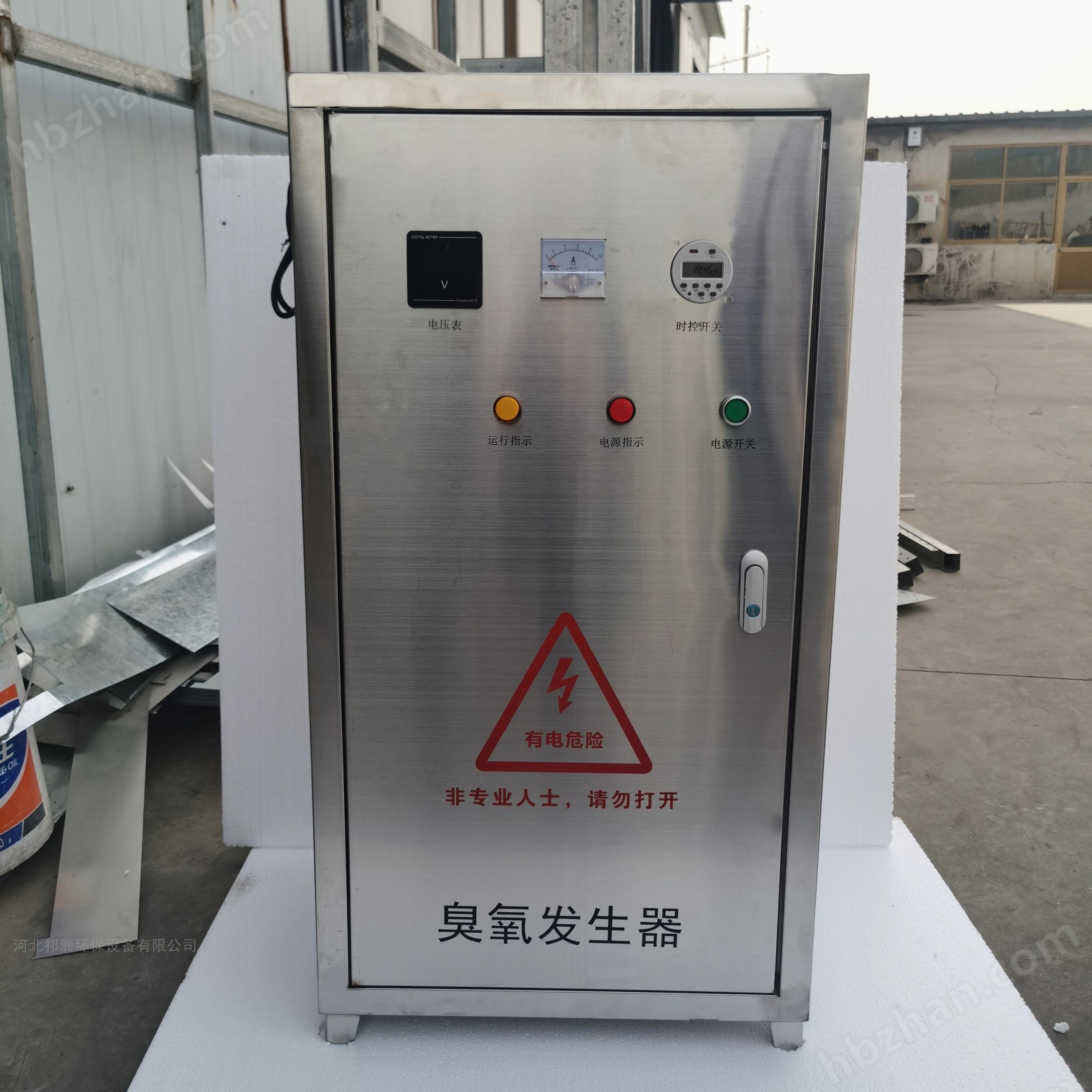


High concentration ozone generator
NegotiableUpdate on 02/10
- Model
- Nature of the Manufacturer
- Producers
- Product Category
- Place of Origin
Overview
A high concentration ozone generator is a device used to produce ozone gas (O3). Ozone is easily decomposed and cannot be stored, so it needs to be produced and used on-site (in special cases, short-term storage can be carried out). Therefore, ozone generators are required in any place where ozone can be used. Large scale ozone generators are widely used in fields such as drinking water, wastewater, industrial oxidation, food processing and preservation, pharmaceutical synthesis, and space sterilization. The ozone gas generated by the ozone generator can be directly utilized or mixed with liquid through a mixing device to participate in the reaction.
Product Details
High concentration ozone generatorIt is a device used for producing ozone gas (O3). Ozone is easily decomposed and cannot be stored, so it needs to be produced and used on-site (in special cases, short-term storage can be carried out). Therefore, ozone generators are required in any place where ozone can be used. Large industrial ozone generators are widely used in fields such as drinking water, wastewater, industrial oxidation, food processing and preservation, pharmaceutical synthesis, and space sterilization.
The ozone gas generated by the ozone generator can be directly utilized or mixed with liquid through a mixing device to participate in the reaction.
Volatile organic compounds (VOCs) and nitrogen oxides (NOx) can generate ozone (O3) through a series of photochemical reactions in the atmosphere, which is a secondary pollutant that has a significant impact on human health and the ecological environment. The Environmental Air Quality Standards (GB 3095-2012) include the 8-hour concentration of ozone as a monitoring indicator for air quality assessment.
[3] Monitoring data shows that in recent years, particulate matter pollution in key cities in China has slowed down, but the problem of ozone pollution has become increasingly severe, especially in the Beijing Tianjin Hebei region. O3 concentration has not decreased but instead increased, and it is an important pollutant affecting air quality along with PM2.5. High quality ozone monitoring data plays a fundamental role in winning China's battle against air pollution prevention and control.
High concentration ozone generatorThe circuit consists of transistors VT1 and VT2, inductor coils L1-13, pulse transformer T, current limiting resistor R1, charging capacitor C3, bidirectional trigger diode 5, etc., forming a push-pull oscillation circuit; The filtering inductor L0, rectifier diode VD1, and filtering capacitors C1 and C2 form a half wave rectification filtering circuit.
Connect the power supply, AC 220V voltage is filtered by LO, rectified by VD1, and a voltage of about+280V is generated at both ends of C1 to supply the push-pull oscillation circuit.
At the moment of startup, VT1 conducts. Due to the charging effect of C3, the bidirectional trigger diode VD5 is turned off. When the charging voltage at both ends of C3 rises to 32V, VD5 is triggered to conduct, causing VT2 to conduct. During the conduction period of VT2, C3 gradually discharges, causing VT2 to turn off. After VTl is turned on, positive feedback voltage is generated on L1 and L2 under the action of pulse transformer T. This voltage is applied to the bases of VTl and VT2 respectively, causing VTl and VT2 to alternately turn on and off (i.e. when VTl is turned on, VT2 is turned off); When VT2 is turned on, VTl is turned off, and the push-pull oscillation circuit oscillates. After the push-pull oscillation circuit works, a pulse high voltage is generated on the secondary winding L6 of the pulse transformer T, causing the ozone generator VG to operate and produce ozone.
Similar Product Recommend