-
E-mail
kunyizhice@163.com
-
Phone
18253636694
-
Address
Room 201, Office Building No.1, North Road, 2 kilometers east of the intersection of Jiaowang Road and Weiri Expressway, Yingqiu Town, Changle County, Weifang City, Shandong Province
Product Categories
Shandong Kunyi Intelligent Testing Equipment Co., Ltd
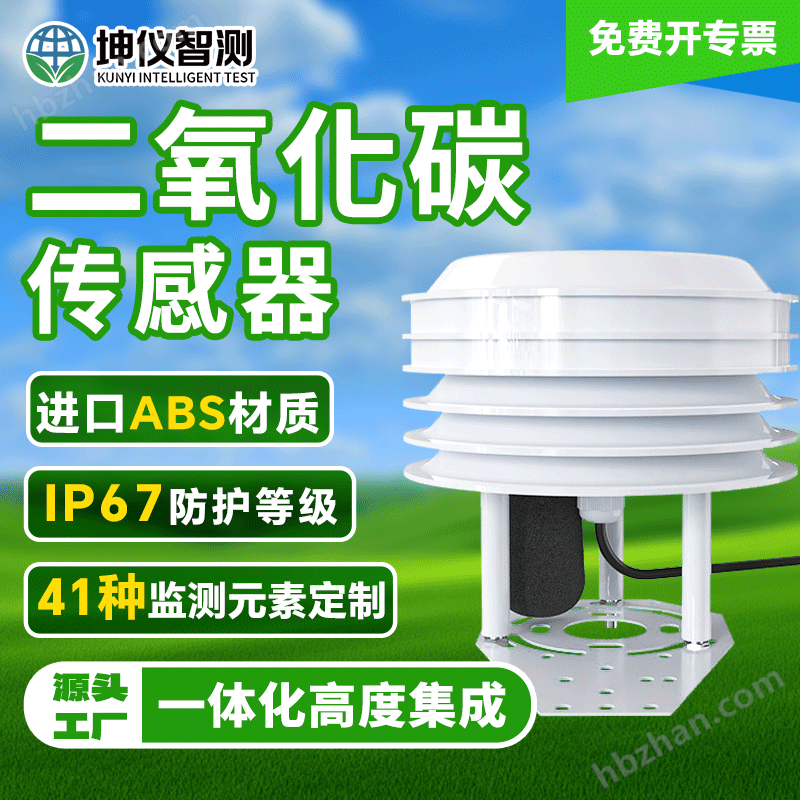



High precision carbon dioxide sensor
NegotiableUpdate on 01/08
- Model
- Nature of the Manufacturer
- Producers
- Product Category
- Place of Origin
Overview
High precision carbon dioxide sensor with built-in temperature compensation module, reducing the impact of environmental temperature fluctuations on measurement results; Some models adopt anti-interference design (such as sealed optical path, anti-corrosion shell) to extend their service life.
Product Details
High precision carbon dioxide sensorDiverse in form, including independent modules, embedded sensors or integrated monitoring terminals, supporting wall mounted, pipeline or portable installation, some models have waterproof, dustproof or explosion-proof designs, and can be adapted to scenarios such as fresh air systems, air purifiers, agricultural greenhouses, industrial monitoring stations, etc.
High precision carbon dioxide sensorApplication field
Indoor air quality monitoring: embedded with fresh air system, air conditioning or air quality monitoring device, real-time display of CO ₂ concentration, linked with ventilation equipment to regulate indoor environment.
Agricultural planting: Monitor the concentration of CO ₂ in greenhouses, assist in photosynthesis regulation, and improve crop yield and quality.
Animal husbandry: Monitor parameters such as CO ₂ and ammonia in enclosed places such as pig farms and chicken farms to prevent animal hypoxia or disease transmission.
Industrial safety: Monitor CO ₂ leakage in the production process of chemical, metallurgical and other industries to prevent explosion or poisoning risks.
Environmental monitoring: deployed at urban air quality monitoring stations or transportation hubs, long-term tracking of CO ₂ emission data to provide a basis for environmental policies.
working principle
Non dispersive infrared (NDIR) technology:
Sampling: The built-in fan draws in air to allow CO ₂ molecules to enter the detection chamber.
Light absorption: Infrared light sources emit light of a specific wavelength, and after CO ₂ molecules absorb it, the remaining light reaches the detector.
Signal conversion: The detector converts changes in light intensity into electrical signals and calculates the concentration of CO ₂ through algorithms.
Electrochemical principle:
CO ₂ molecules react with chemical substances in the electrolyte, producing a current or voltage signal proportional to the concentration, which is amplified and processed to output data.