-
E-mail
info@gw-laser.com
-
Phone
18062019334
-
Address
3rd Floor, Building B, Zhiyuan Building, Great Wall Creative Park, No. 8 Tangxun Hubei Road, Donghu High tech Zone, Wuhan City
Product Categories
Wuhan Ganwei Technology Co., Ltd
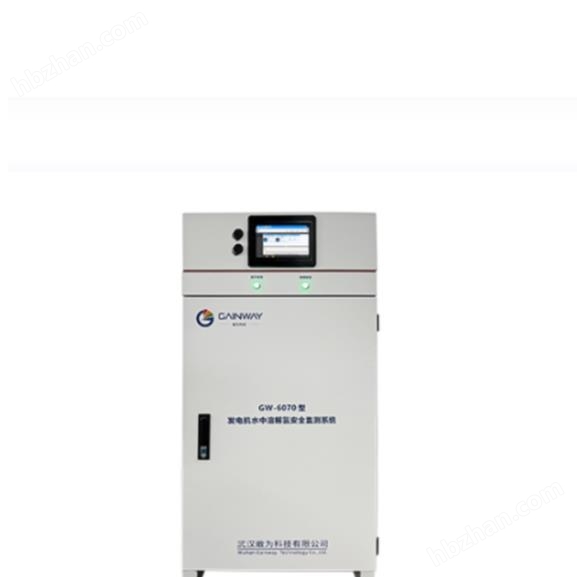
Hydrogen leakage monitoring device for hydrogen cooled generator
NegotiableUpdate on 02/15
- Model
- Nature of the Manufacturer
- Producers
- Product Category
- Place of Origin
Overview
Hydrogen leakage monitoring device for hydrogen cooled generators, application scenarios: This product can be widely used in power plants, hydrogen production stations and other places that require monitoring and alarm of hydrogen leakage content. For environments that require strict monitoring and alarm of hydrogen leakage content, it provides an intelligent and efficient solution. $r $n $r $n Measure gas H2 $r $n $r $n Measurement range 0-1000/2000 μ g/L Optional $r $n $r $n $r $n Technical principle Gas liquid separation technology and thermal conductivity detection technology (TCD) $r $n $r $n Application fields Power plant detection generator unit cooling water hydrogen leakage and other scenarios
Product Details
Hydrogen leakage monitoring device for hydrogen cooled generatorProduct Introduction
The GW-6070 safety monitoring system for dissolved hydrogen in generator water is an innovative technology product developed by our company to deeply integrate the development needs of the power industry. The system integrates AI algorithms and machine learning technology, and is designed in strict accordance with the International Electrotechnical Commission (IEC) standards and relevant standards of the Chinese power industry.
The 'Intelligent Perception, Accurate Monitoring' system adopts gas-liquid separation technology and thermal conductivity detection technology (TCD), combined with AI algorithm optimization, to achieve ultra trace accurate detection of dissolved hydrogen in water. Specially suitable for trace hydrogen monitoring in local areas of electric hydrogen cooled generators, it can promptly issue alarm signals in case of hydrogen leakage exceeding the standard.
Combining machine learning algorithms with 'Intelligent Diagnosis, Early Warning for the Future', the system is capable of self-learning and identifying the patterns of fault characteristic gases such as hydrogen gas. It can timely capture potential fault information of hydrogen cooled generators and quickly perform intelligent diagnosis, scientifically guide the operation and maintenance of generator equipment, effectively prevent accidents, reduce significant losses, and greatly improve the safety and reliability of equipment operation.
Intelligent calibration ensures accuracy. The device is equipped with an intelligent Faraday calibration device, which supports real-time on-site calibration and ensures the accuracy of long-term monitoring. With the assistance of AI algorithms, the calibration process is more efficient and accurate.
Hydrogen leakage monitoring device for hydrogen cooled generatorProduct Features:
Collaborate with multiple energy industry research institutes to lead the development of the "Technical Requirements for Hydrogen Content Detection Equipment in Generator Cooling Water" standard;
Using thermal conductivity method for detection, achieving an accuracy of 0.1 μ g/L for ultra-low concentration detection;
Efficient headspace degassing method, more thorough degassing, and more stable detection;
The detection module comes with a temperature control function, which ensures more stable detection data;
Detect and prevent the transfer of explosive and flammable hazardous gases to avoid creating new hazardous environments;
Integrated design of detection and sampling, high integration, easy installation, and small footprint;
Equipped with calibration device, maintenance free, long service life;
The system is designed with dual indicator lights for running and detecting different states, providing a more intuitive display;
The real-time variation of hydrogen leakage curve provides a basis for judging the safe operation of the generator set;
The comprehensive expert diagnostic system provides hourly/daily/monthly data reports and trend analysis reports to eliminate hydrogen leakage hazards.
Technical principle:
System Principles
The cooling water enters the generator from the excitation end, cools the wire rod, and returns to the cooling water tank from the steam end. It is transported by a water pump, cooled, and then enters from the excitation end. The steam end returns and circulates in sequence. If there is a leakage point on the outer wall or joint of the rotor, due to the hydrogen pressure being higher than the water pressure, hydrogen gas will leak into the cooling water and dissolve in the water. The dissolved hydrogen content in the cooling main pipe of the generator steam end will be higher than that in the excitation main pipe, and the difference between the two reflects both the size of the leakage point and the amount of hydrogen gas leaking into the cooling water. Based on the above principles, water samples are taken from the inlet main pipe at the excitation end and the outlet main pipe at the steam end of the generator, and the dissolved hydrogen content in the water is measured. The instrument measurement signal is sent to the data processor for processing and calculation, and the size and development trend of the leakage point are monitored online. The risk of hydrogen leakage in the generator's cooling water is predicted in advance to prevent accidents from occurring.
Detection Principle
Thermal conductivity detection (TCD) is a widely used detection method in gas analysis, which works based on the fact that different gases have different thermal conductivities. The detector is mainly composed of thermal sensitive elements, circuits, and pneumatic systems. Thermistors usually use hot wires and are insulated and installed in metal tubes. During operation, a constant DC current is used to heat the wire, keeping its temperature constant. When the tested gas passes through the hot wire, it will take away heat. Due to the different thermal conductivities of different gases, the flow of the tested gas through the hot wire will change the heat dissipation conditions, resulting in changes in the temperature and resistance value of the hot wire. This change is caused by the hot wire element connected to the Wheatstone bridge circuit, which changes the balance state of the bridge and outputs a voltage signal. This signal is directly proportional to the concentration of the gas being measured, which is the basis for online quantitative detection of dissolved hydrogen.
Similar Product Recommend