-
E-mail
2881068607@qq.com
-
Phone
18721098757
-
Address
No. 253 Yulu Road, Jiading District, Shanghai
Product Categories
Ankerui Electric Co., Ltd



Integrated solution for industrial source network load storage
NegotiableUpdate on 02/11
- Model
- Nature of the Manufacturer
- Producers
- Product Category
- Place of Origin
Overview
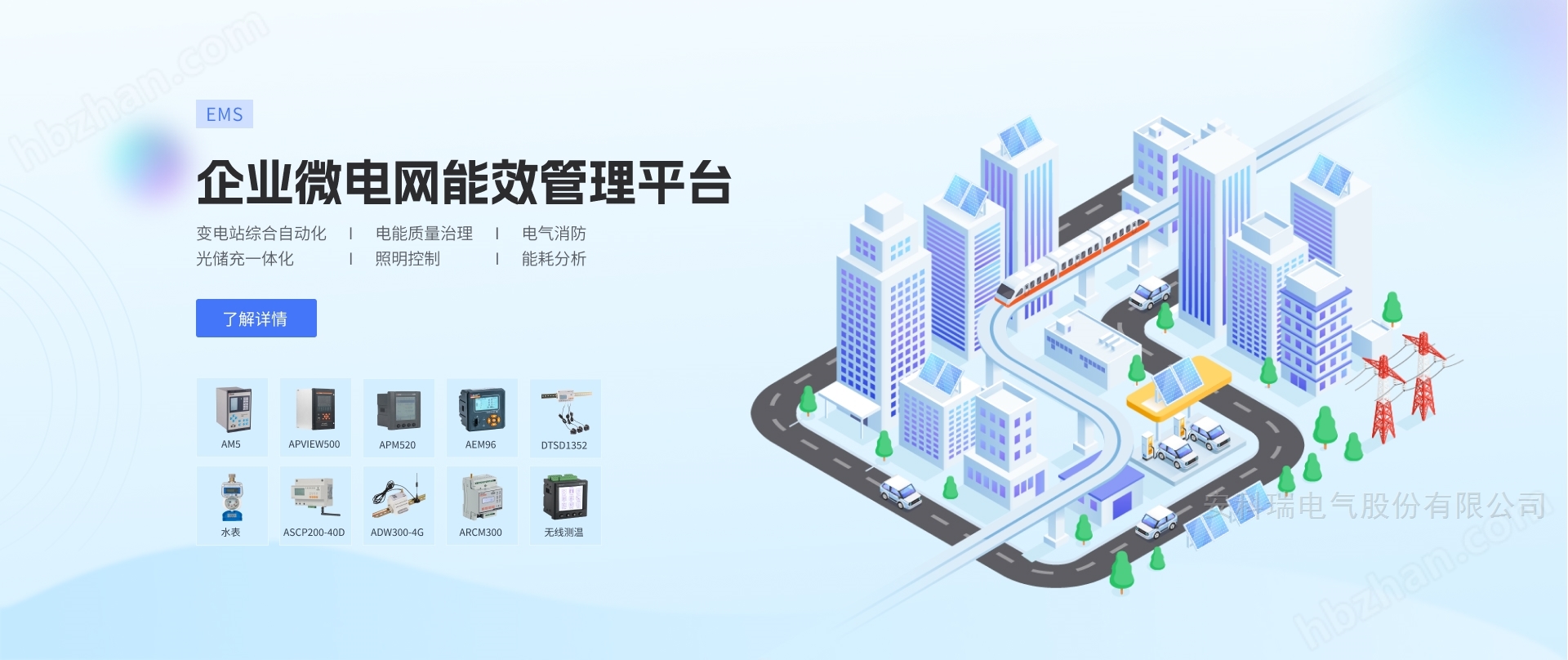
The core goal of the industrial source network load storage integration solution is to improve energy utilization efficiency. By cleverly integrating distributed power generation, energy storage systems, load management, and smart grid technology, enterprises can achieve regulation of energy production and consumption, effectively curb energy waste, significantly reduce costs, and thus occupy an advantageous position in fierce market competition
Product Details
1、 Overview-Integrated solution for industrial source network load storage
In the new situation of rapid industrial development, in order to achieve safe and reliable power supply and clean and low-carbon transformation, it is necessary to further upgrade the quality of the distribution network. First, the promotion of Chinese path to modernization requires a stronger and more reliable distribution network. It is necessary to continue to strengthen the construction of distribution network, improve the ability to resist and prevent disasters, and constantly enhance the reliability and sufficiency of power supply. The second is to achieve the goal of carbon peak and carbon neutrality, which requires the distribution network to have stronger carrying capacity. It must adapt to the needs of large-scale distributed new energy, electric vehicle charging facilities, new energy storage, virtual power plants and other new entities and formats, and increase the proportion of green electricity consumption. Thirdly, the construction of a new energy system and a new power system requires the distribution network to be more intelligent and flexible. In terms of form, it needs to transform from a traditional "passive" unidirectional radiation network to an "active" bidirectional interaction system. In terms of function, it needs to transform from a single power supply and distribution service subject to an efficient configuration platform for source network load storage resources. Integrated solution for production enterprise source network load storage
IIIntegrated solution for industrial source network load storageThe value of
Energy efficient utilization: The core goal of integrating enterprise source, network, load, and storage is to improve energy utilization efficiency. By cleverly integrating distributed power generation, energy storage systems, load management, and smart grid technology, enterprises can achieve regulation of energy production and consumption, effectively curb energy waste, significantly reduce costs, and thus occupy an advantageous position in fierce market competition;
Green and low-carbon development: The integration of enterprise source, network, load, and storage is an important engine for promoting green and low-carbon transformation. By actively introducing renewable energy sources such as solar and wind power, reducing excessive dependence on fossil fuels, companies can significantly reduce carbon emissions and lay a solid foundation for sustainable development. Meanwhile, with the help of intelligent management systems, enterprises can further optimize the utilization efficiency of renewable energy and significantly reduce the consumption of traditional energy;
Power system stability: The integration of enterprise source, grid, load, and storage plays a key role in improving the stability and reliability of the power system. The application of smart grid technology enables enterprises to monitor and control the operation status of the power system in real time, and timely detect and deal with potential safety hazards. In addition, the introduction of energy storage systems enables enterprises to release reserve electricity during peak demand periods, effectively smoothing out power fluctuations and ensuring smooth operation of the enterprise;
Economic and social benefits: The integration of enterprise source, network, load, and storage has brought significant economic and social benefits. By improving energy utilization efficiency, enterprises can significantly reduce costs and achieve the goals of energy conservation, cost reduction, and efficiency improvement. At the same time, promoting green and low-carbon development not only helps enterprises establish a good social image, enhance brand value and market competitiveness, but also promotes the prosperous development of local economy and drives the continuous growth of related industrial chains.

3、 Integrated project plan for source network load storage
3.1 Overview of Solutions
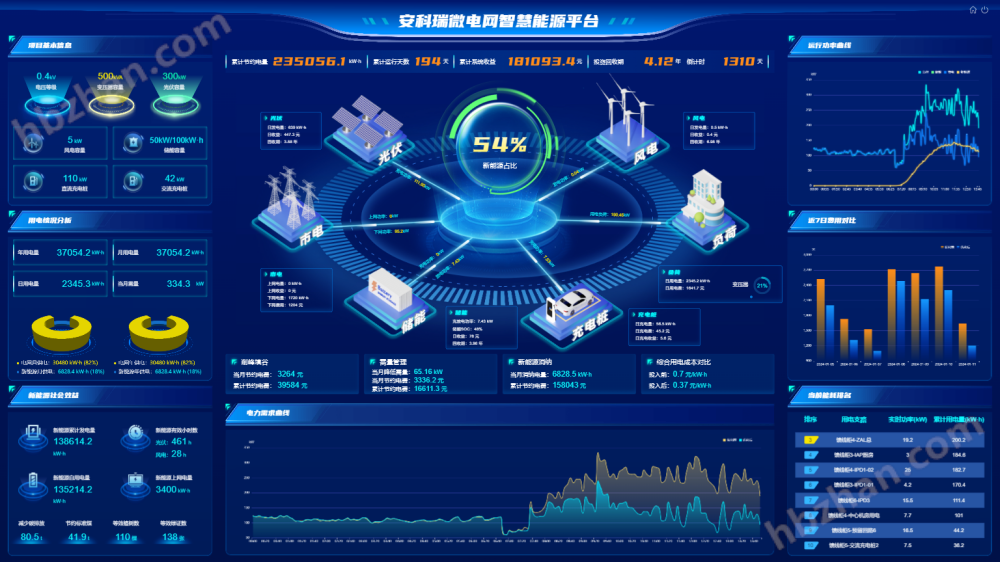
We have conducted multi-dimensional and multi angle real-time monitoring of distributed power sources, municipal power sources, energy storage devices, charging stations, and various loads in the enterprise microgrid. We have conducted energy data analysis, intelligent future forecasting, flexible resource scheduling, and strategic optimization and adjustment. Through the integrated real-time diagnosis and alarm system, we have facilitated coordinated interaction between dispatchable energy and load, and conducted in-depth energy situation analysis. This comprehensive plan closely meets the digital needs of enterprise microgrids in energy efficiency management, successfully achieving the intelligent transformation of safety assessment, dynamic adjustment of regulatory measures, and visual presentation of the overall situation. This solution can flexibly adapt to the interactive scenarios of various resources such as wind energy, solar energy, diesel power generation, energy storage, and charging facilities under multiple strategies, enabling the system to operate in an economically efficient state, thereby effectively reducing users' energy expenses and significantly improving the overall operational efficiency of enterprise microgrids.
3.2 Solution Networking Architecture
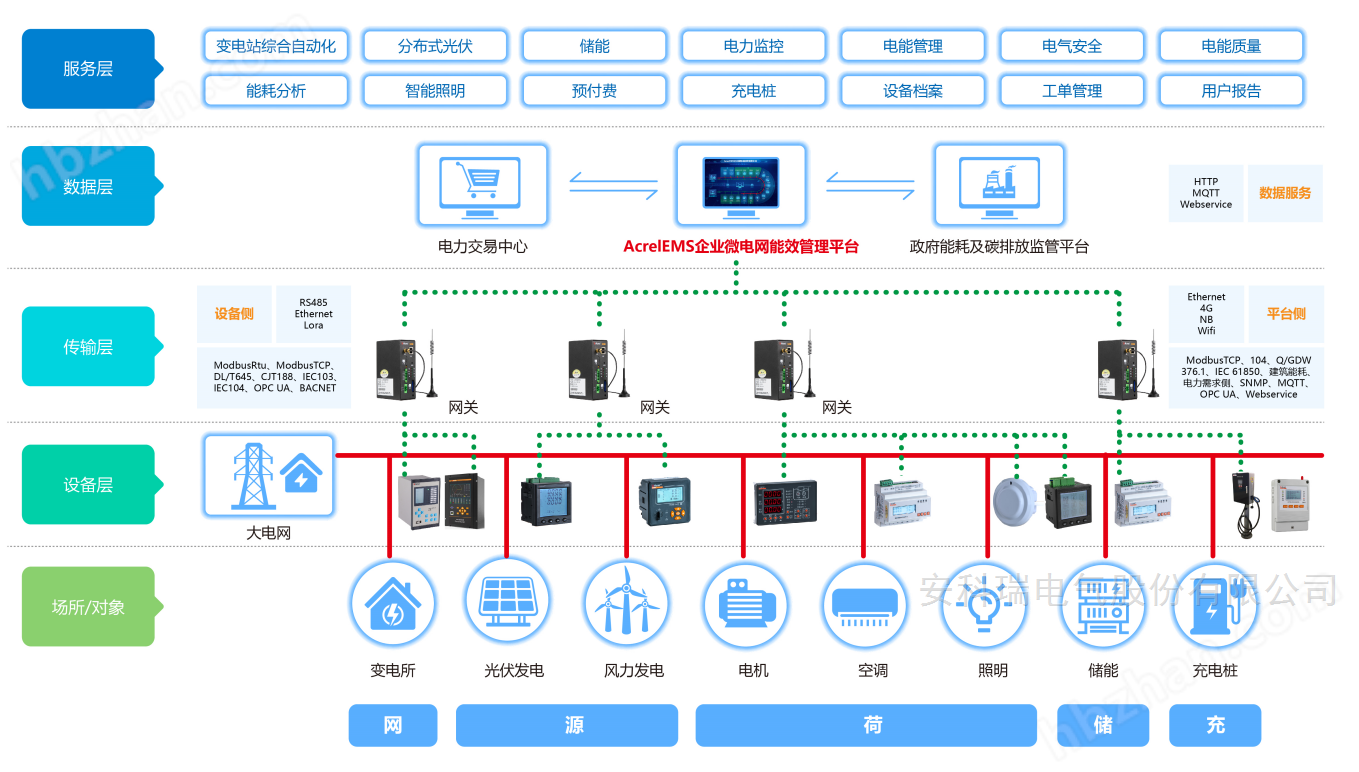
The system covers the "source grid load storage charging" link of enterprise microgrids, collecting data from measurement and control devices, new energy generation, mains power, energy storage, charging piles, and conventional loads through intelligent gateways. It optimizes control based on load changes and grid scheduling, promoting the consumption of new energy while reducing the demand for the grid, making its operation safer and more efficient.

3.3 Core Functions of the Plan
Flexible expansion: When the short-term power consumption exceeds the capacity of the transformer, the energy storage can be quickly discharged to meet the energy requirements of the load;
Backup power supply: emergency power supply to ensure power quality;
Anti backflow: prevent the system power from being sent back to the grid and avoid assessment;
Peak shaving and valley filling: in conjunction with energy storage equipment, optimizing energy consumption costs with low charging and high discharging;
Demand control: energy storage, charge and discharge power tracking to prevent an increase in basic electricity bills;
Ordered charging: Guided by transformer capacity and electricity prices, utilizing technology to coordinate charging power and reduce operating costs;
Power prediction: prediction of power generation and electricity load, optimization of scheduling, and improvement of on-site consumption of new energy.

4、 Software feature interface display
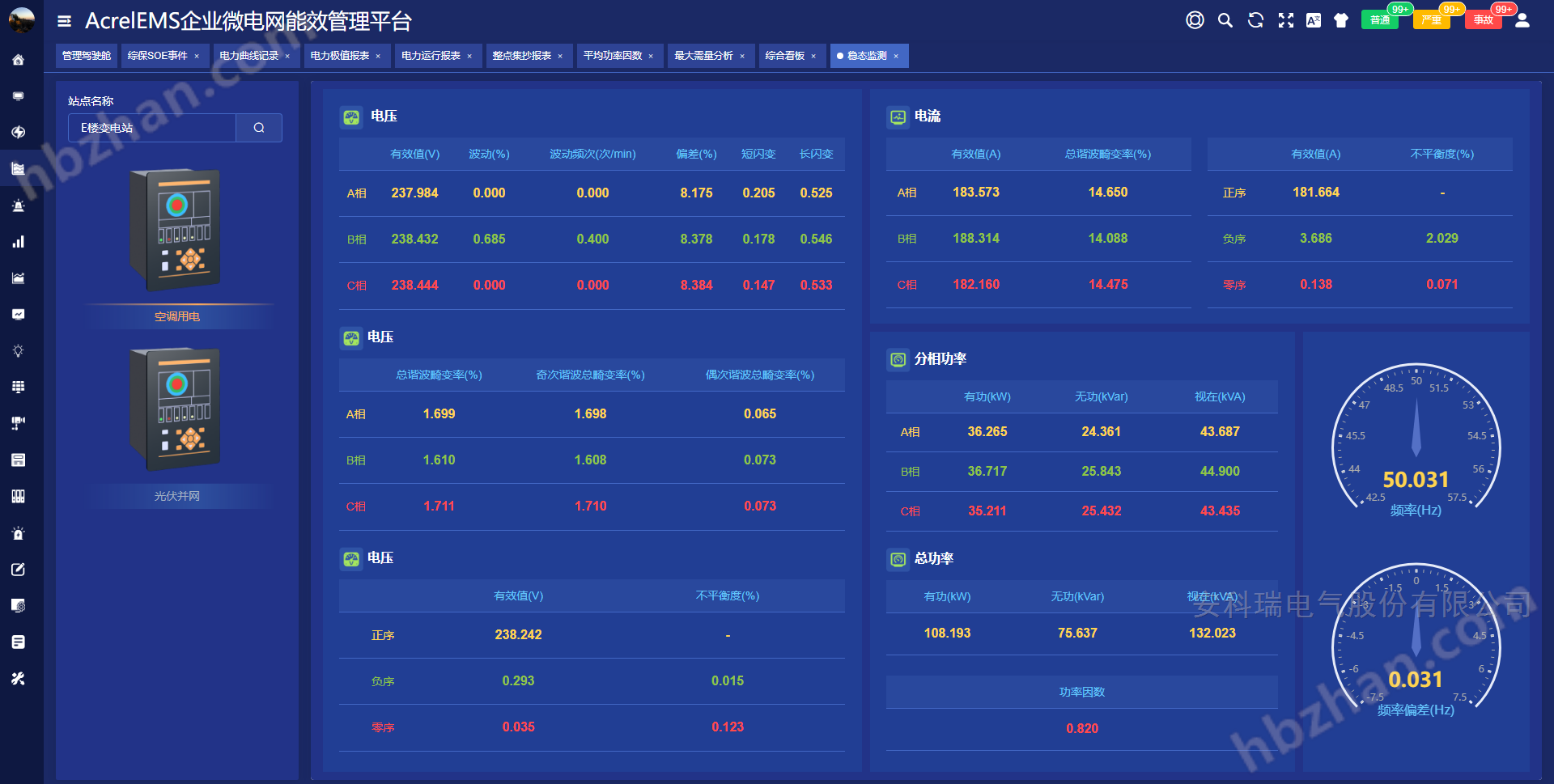
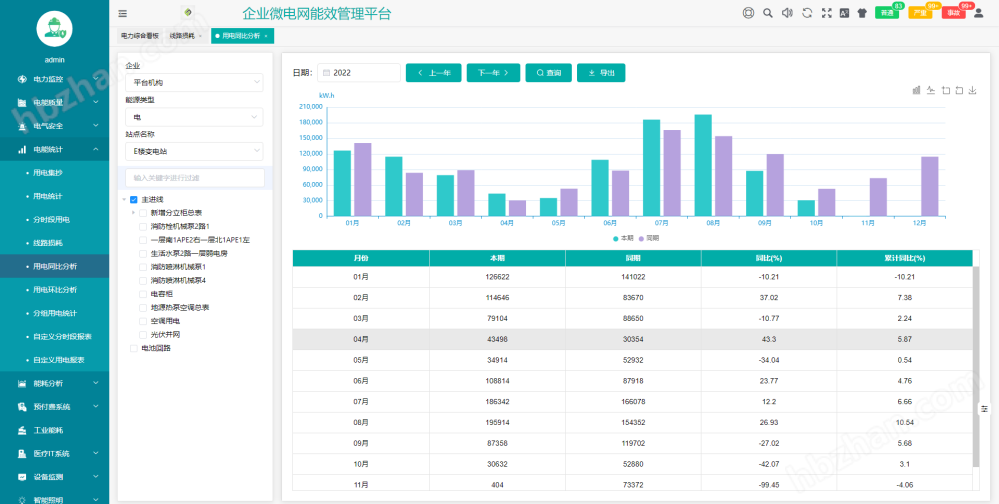
Electricity statistics: electricity consumption collection, electricity consumption statistics, time-based electricity consumption, line losses, year-on-year and month on month analysis of electricity consumption, grouped electricity consumption statistics, custom compound rates, time-based collection;
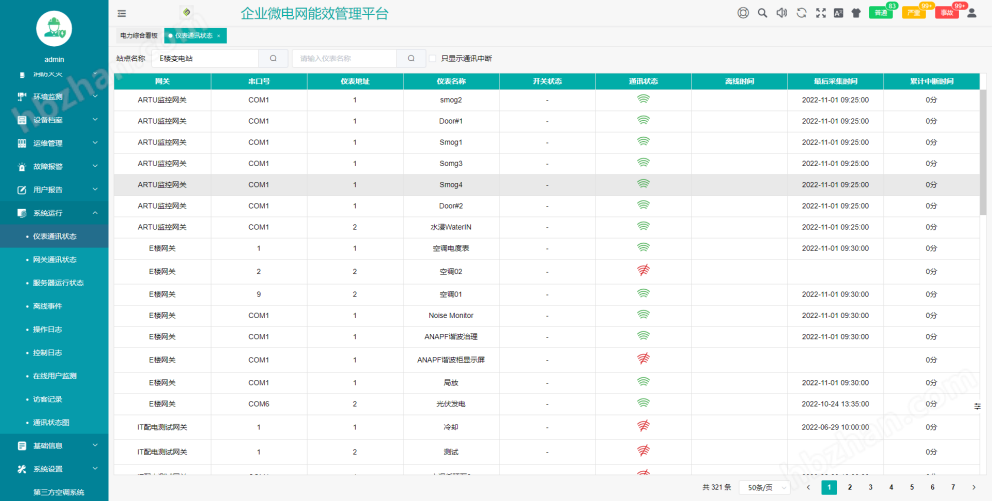
System operation: Instrument communication status, gateway communication status, server operation status, offline events, operation logs, control logs, online user monitoring, visitor records, communication status diagram;
Electrical safety: leakage and cable temperature measurement, electrical contact temperature measurement, contact temperature monitoring, contact temperature report, insulation monitoring, fiber optic equipment monitoring, fiber optic zone details, zone real-time data;

Power monitoring: power operation bulletin board, distribution room, DC screen monitoring, reactive power compensation cabinet, transformer monitoring, comprehensive protection S0E event, power curve recording, power report, power operation report, hourly collection report, hourly collection summary table, demand analysis, average power factor, harmonic analysis, harmonic spectrum, circuit monitoring, monthly power operation report, station load history rate, arc protection, partial discharge;

Distributed photovoltaics: comprehensive photovoltaic dashboard, power station operation monitoring, inverter operation monitoring, power station generation statistics, inverter generation statistics, photovoltaic power station distribution monitoring, inverter curve analysis, photovoltaic panels, multi device curve analysis, dispersion rate report, simulated power generation, inverter parameter alarm;

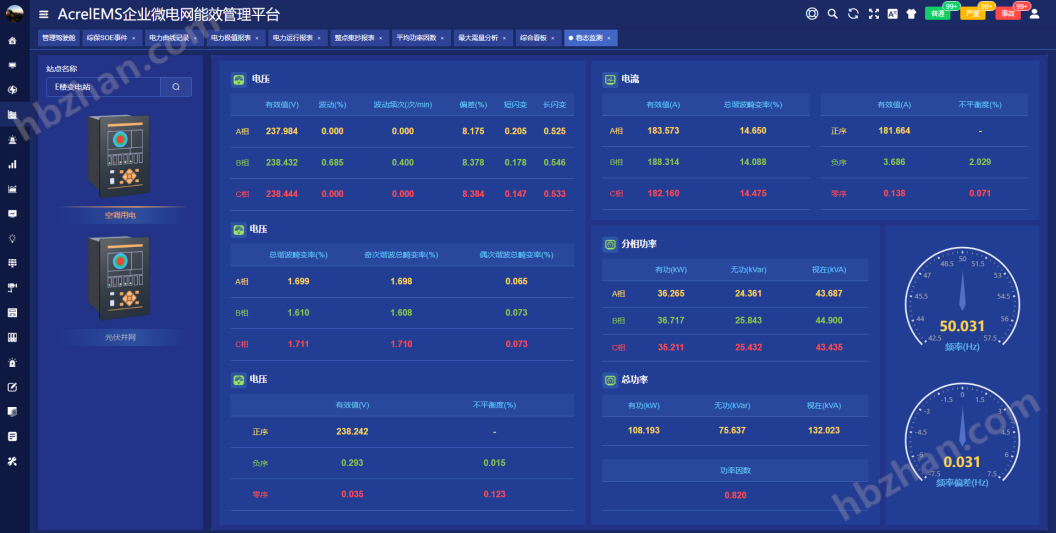
Power quality: comprehensive power quality dashboard, steady-state monitoring, harmonic spectrum, steady-state curve, harmonic curve, load curve, transient analysis, power quality SOE event and waveform analysis, power quality analysis, power quality governance, transient analysis report;
Intelligent lighting: intelligent lighting control, event control, lighting control, scene control, operation recording, scheduled tasks, lighting monitoring;

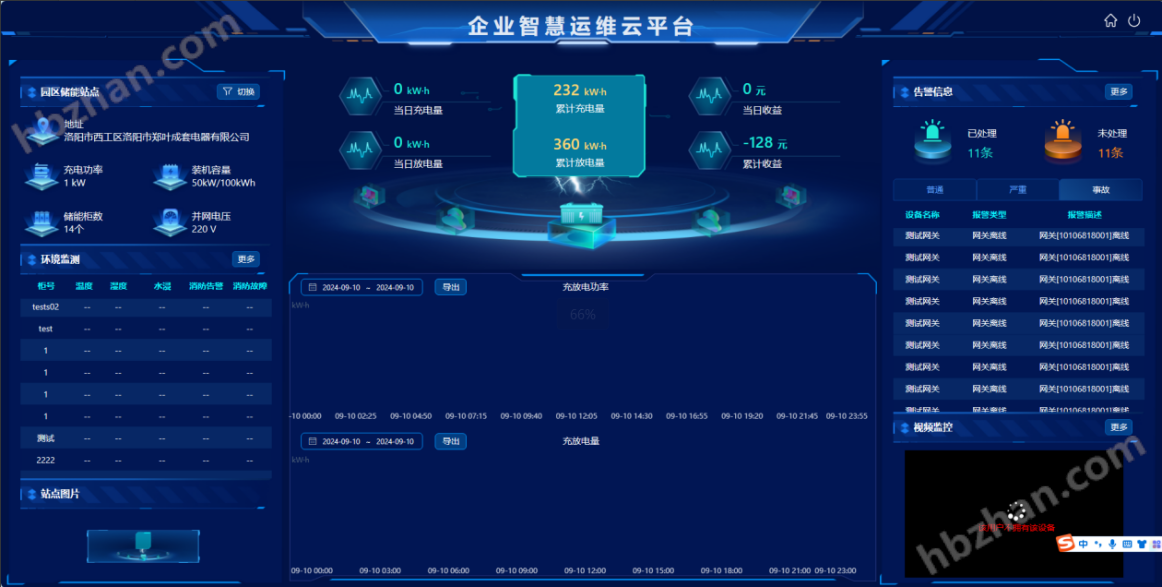
Energy storage module: energy storage operation and maintenance screen, energy storage dashboard, energy storage cabinet monitoring, equipment monitoring, statistical revenue report, time period revenue report, strategy issuance;
Industrial energy consumption: industrial energy consumption topology, production time setting, shift setting, trend analysis, carbon emission monitoring, electricity cost analysis, output input, output statistics, product input, unit consumption report, product unit consumption, unit consumption benchmarking analysis;

Carbon assets: emission reduction plan, carbon emission analysis, trading records, carbon trading records, carbon accounting list, quota accounting, carbon emission report, carbon flow chart, carbon emission assessment;

5、 Recommended hardware products
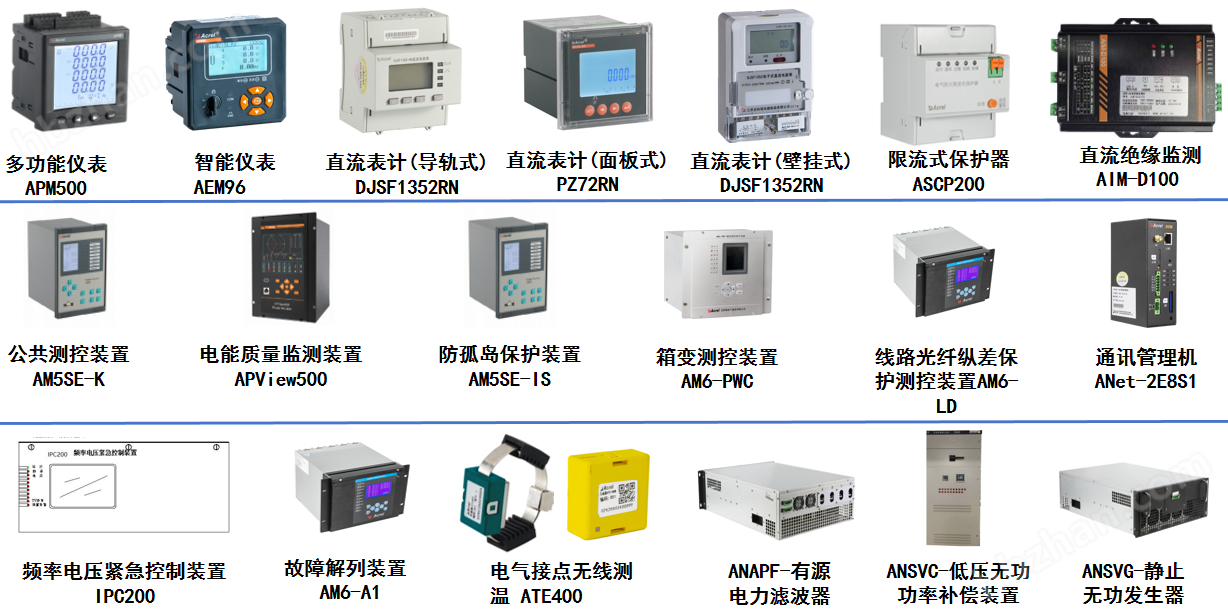
5.1 Monitoring, Protection, and Governance Products
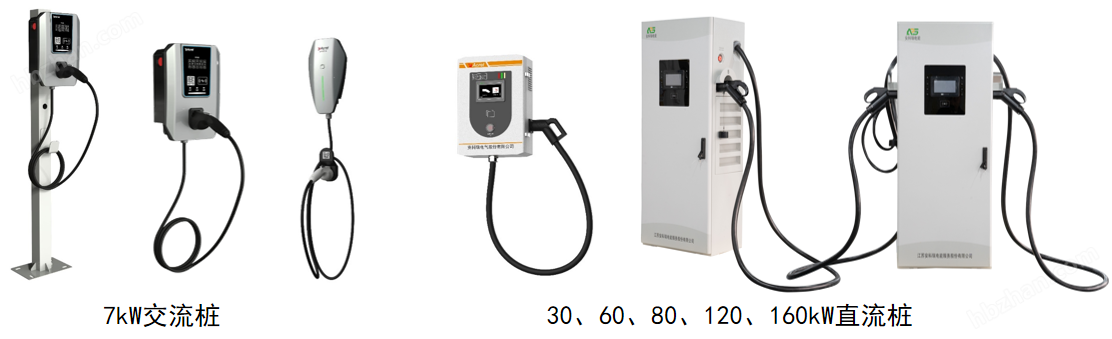
5.2 Charging pile products
Similar Product Recommend

