- Phone
-
Address
3-3, Enterprise Shushang District, No. 18 Jingxing Street, Changping District, Beijing
Product Categories
- stereoscopic monitoring
- Monitoring the hygroscopic growth characteristics of particulate matter
- Ozone/photochemical pollution monitoring
- Greenhouse gas monitoring
- Carbon aerosol monitoring
- Haze monitoring
- Monitoring of particulate matter source apportionment components
- AQI monitoring of ambient air quality
Beijing Saikema Environmental Protection Instrument Co., Ltd

IntelliSEM EPAS Intelligent Scanning Electron Microscope Environmental Particle Analysis System
NegotiableUpdate on 01/15
- Model
- Nature of the Manufacturer
- Producers
- Product Category
- Place of Origin
Overview
Automatic, fast, and powerful characterization and analysis of environmental particulate matter
Product Details
Automatic, fast, and powerful environmentCharacterization analysis of particulate matter
Introduction to RJ Lee Group:
RJ Lee Group serves as an industry leader in fields such as environmental science, material characterization, forensic engineering, and information management, providing innovative solutions that inspire research and solve complex problems with scientific expertise, instruments, technology, and a spirit of collaboration. In addition to laboratory and consulting services, RJ Lee Group has 40 years of continuous research and development experience in using scanning electron microscopy, forming an accurate, reliable, and intuitive IntelliSEM software system. Its breadth and depth of experience are unparalleled, and IntelliSEM embodies a wealth of professional knowledge and experience in computer-controlled scanning electron microscopy systems.
System Overview:
The IntelliSEM EPAS (Environmental Particle Analysis System) developed by RJLee Laboratory (RJLee Group) combines intelligent control technology and professional data analysis calculation methods with the Scanning Electron Microscope Energy Spectrometer (SEM-EDS) to automatically, accurately, and quickly characterize and analyze large quantities of single particles in environmental samples. It provides users with rich professional software tools and powerful functions for visual analysis, mining, and management of data.
The unique technical advantage of the IntelliSEM EPAS system lies in its combination of analysis breadth and depth, with fast analysis time efficiency of analyzing tens of thousands of single particles per hour. It can fully obtain and record the geometric shape, energy spectrum, and digital image information of each particle. Based on this, the overall characteristics of environmental samples can be obtained with high statistical confidence, and the detailed features of each single particle can be explored in depth.
System application:
* PM10、PM2.5、PM10-2.5、 Characterization study of ultrafine particles;
*Dust research;
*Identification of metals in environmental particulate matter;
*Identification of fly ash in environmental particulate matter;
*Research on the morphology of carbon particulate matter (coal smoke, biomass, coal);
*Research on long-distance transport of particulate matter;
*Assessment of bioavailability of metals in soil;
*Research on emission characteristics of point sources and unorganized non-point sources;
*Source apportionment of particulate matter (receptor model) research;
*Analysis of UNC passive sampler samples;
System features:
*Tailored software package for environmental particulate matter analysis;
*Extremely strong particle analysis function, quickly obtaining a large amount of characterization analysis data and statistical analysis results of single particles;
*Intelligent scanning electron microscopy energy spectrometer analysis operation:
>One click selection to set analysis parameters: brightness/contrast, focus, threshold, etc., without user intervention;
>Real time monitoring and calibration of instruments to achieve fully automated analysis and operation of scanning electron microscopes and energy spectrometers;
>Automatically store images, spectra, and measurement data for each particle;
>Automatic calibration and performance testing of X-ray detectors;
>Using image analysis technology for rapid detection and precise measurement of particulate matter;
>Using statistical algorithms for instantaneous element identification and quantification;
>Real time classification and sorting of particulate matter analysis data;
*Remote control and remote analysis operations;
*Seamless control and remote repositioning of specific particles for further detailed analysis;
*Summarize and visualize particle analysis data using the IntelliSEM workbench for post analysis;
>Conduct "offline" electron microscopy analysis;
>Perform statistical processing and display charts on stored particulate matter images/spectral data;
>Display all analysis data of particulate matter in an interactive manner on the sample overview image;
System composition:
Surveyor - Online data/image acquisition and analysis module. Its function is to achieve fully automatic control of scanning electron microscopy (SEM) and X-ray energy dispersive spectroscopy (EDS), using intelligent algorithms to quickly scan large areas of the sample area and finely determine the boundaries of each particle. On the basis of precise measurement of the geometric dimensions of particles, the "surveyor" collects and stores high magnification digital images of each particle, calculates the chemical element composition of individual particles based on energy spectrum analysis data, and stores the original energy spectrum data and processing results in a database. The intelligent algorithm of the "surveyor" can ensure the best data collection time and resolution to meet the requirements of precise measurement and rapid analysis. The "Surveyor" has two operating modes: "Expert Mode" and "One Click Mode". The former allows professional users to specify and fine tune various parameter options for data collection, while the latter provides users with a standard parameter setting scheme, simplifying user operations to the greatest extent possible.
Workbench - Data Summary Processing and Visualization "Post Analysis" Module. On the workbench, the raw data collected by the "surveyor" can be transformed into the analysis results that users need, and displayed through rich tables, graphics, and images to better explain and understand the data. The tools provided by the platform include: a tabular form that displays all information for each individual particle; Overview map - combines all images, geometric and spectral data into a single multi-layer montage overall sample view; Series graphical tools - generate various two-phase and three-phase diagrams and data tables; Query and classification - facilitates the classification of particulate matter for research and report production. The workbench can be installed on any computer that can access the database, and users can remotely access and process sample analysis data through the network. The power of the "workbench" is like installing a scanning electron microscope energy spectrometer system on a laptop.
Database/Image Storage - The brain that stores all data from the 'explorer'. By combining powerful relational databases with network storage, any computer with a "workbench" installed can access all data and images in the database while connected to the network. IntelliSEM's data storage method is flexible and powerful - supporting multiple databases, and this structure can accommodate almost unlimited amounts of data. This method also helps with efficient hierarchical backup of data.
The sample analysis process of IntelliSEM EPAS system:
*The grayscale images obtained by scanning electron microscopy are used to detect particulate matter;
*Generate single particle images for each particle;
*Perform 45 box measurements on each individual particle to obtain 90 diameter data;
*Perform energy dispersive spectroscopy (EDS) measurements to obtain the elemental composition of individual particles;
*After completing the analysis operation, parse and process the data on the "workbench";
Sample collection [UNC passive sampler]
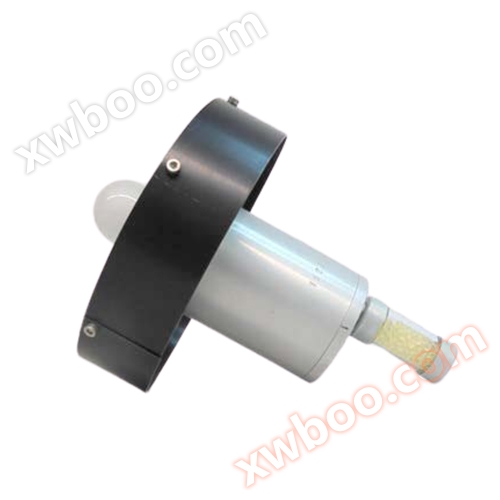
The sample collection of the IntelliSEM EPAS system is carried out using a UNC passive sampler, which adopts the technology of the University of North Carolina and mainly collects PM2.5, PM10, PM10-2.5 samples through passive sampling by gravity settling. Its unique design is very suitable for electron microscopy analysis.
*Patent technology
*Very good consistency with FRM sampler
*Widely used globally*
Service area:
*Environmental air quality;
*Environmental health and safety;
*Characterization of particulate matter;
*Optical microscope;
*Scanning Electron Microscopy (SEM);
*Transmission Electron Microscopy (TEM/STEM);
*Raman spectroscopy;
* FTIR;
*Metallurgical industry;
*Advanced materials science and nanotechnology;
*Building materials;
*Biotechnology/Medicine;
*Criminal investigation/forensic;
Laboratory strength:
*Transmission Electron Microscopy (TEM)/Scanning Electron Microscopy (SEM);
*Optical microscope;
*Fourier transform infrared spectrometer (FTIR);
*Raman spectrometer;
*Gas chromatography (GC)/gas chromatography-mass spectrometry (GCMS) combination;
*Atomic absorption spectroscopy;
*High performance liquid chromatography (HPLC);
*Inductively Coupled Plasma Mass Spectrometry (ICP-MS);
*Ion chromatography (IC);
*Thermogravimetric analysis (TGA);
*OC/EC analyzer;
*X-ray diffractometer (XRD);
*X-ray fluorescence spectrometer (XRF);