-
E-mail
202010444O@qq.com
-
Phone
13913786855
-
Address
Youchegang Town, Jiaxing City, Zhejiang Province
Product Categories
Zhejiang Saipu Separation Equipment Co., Ltd


Isotope complete equipment manufacturing, pressure vessel manufacturing
NegotiableUpdate on 02/23
- Model
- Nature of the Manufacturer
- Producers
- Product Category
- Place of Origin
Overview
The production of pressure vessels for isotope complete sets of equipment is mainly based on the difference in atomic mass of different isotopes to achieve separation. Common methods include gas diffusion, centrifugation, and laser methods. In the gas diffusion method, isotopic gas molecules undergo separation by varying diffusion rates due to their different masses when passing through a semi permeable membrane. The centrifugal method utilizes the centrifugal force field generated by high-speed rotation to move heavier isotope atoms outward and gather lighter isotope atoms inward. The laser principle is to selectively excite specific isotopic atoms and then separate them using chemical or physical methods.
Product Details
Isotope complete equipment manufacturing, pressure vessel manufacturingBoron-10 Isotope Device: Technical Principles and Applications
In many fields of modern science and technology, the boron-10 isotope device relies on itsgoodThe performance and wide range of uses have becomeKey equipment. This article will delve into the technical principles, core components, and applications of the boron-10 isotope device in different fields.

1、 Technical principle of boron-10 isotope device
(1) Low temperature distillation method
Low temperature distillation is an efficient technique for the separation of boron-10 isotopes. The core principle is to utilize boron-10 ([^ {10}B ]) and boron-11 ([^ {11}B ]The difference in volatility between these two isotopes at different temperatures. During the distillation process, the raw material containing boron isotopes is heated to a vaporized state. The vaporized gas enters the distillation tower, where the gas-liquid phase undergoes multiple contacts and separations to achieve effective isotope separation. Specifically, boron-10 has a higher volatility due to its lower relative molecular weight, making it easier to evaporate upwards in distillation columns; Boron-11, on the other hand, has a relatively high molecular weight and low volatility, and tends to accumulate in the lower part of the distillation tower. By precisely controlling the operating conditions of the distillation tower, such as temperature, pressure, and feed rate, efficient separation and enrichment of boron-10 can be achieved.
(2) Gas centrifugation method
Gas centrifugation is another important boron isotope separation technique. This method utilizes the strong centrifugal force field generated by the high-speed rotation of the centrifuge to separate boron-10 and boron-11. When a gas containing boron isotopes is introduced into the interior of a high-speed rotating centrifuge rotor, due to the difference in mass between boron-10 and boron-11, under the action of centrifugal force, the heavier boron-11 will move towards the outer wall of the rotor, while the lighter boron-10 will be relatively concentrated in the internal area of the rotor. By using a special collection device, the portion enriched with boron-10 can be effectively collected
2、 Core composition of boron 10 isotope device
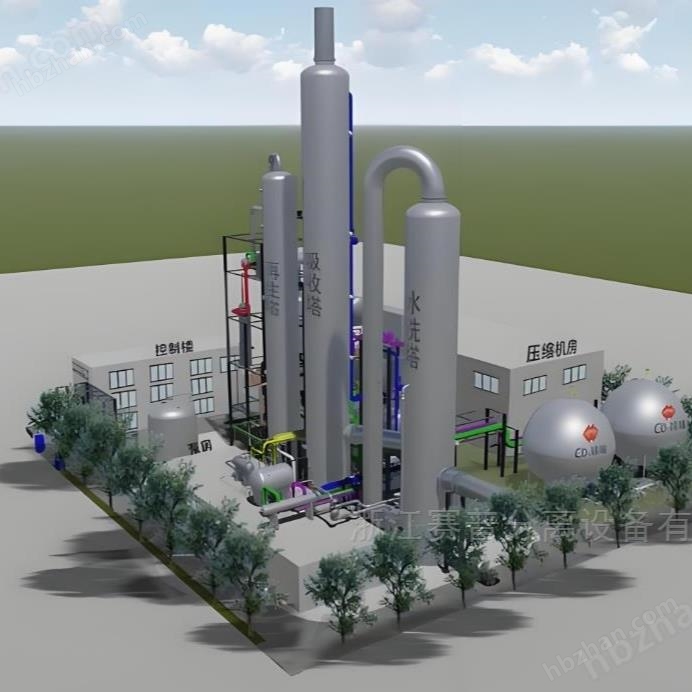
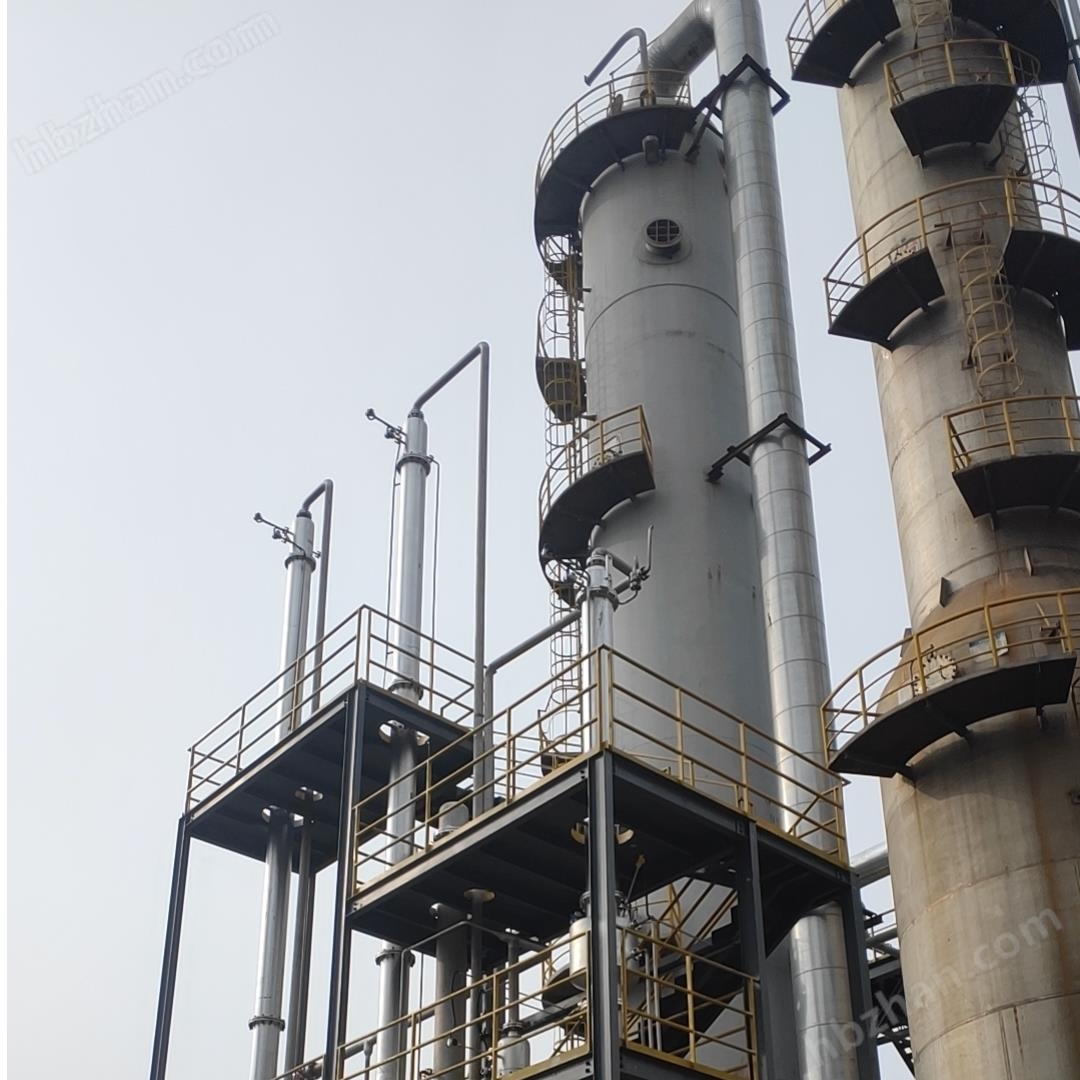
(1) Distillation tower (low-temperature distillation method)
The distillation tower is the core component of the boron 10 isotope device for low-temperature distillation. It is usually equipped with special packing or trays inside, which are designed to provide sufficient contact and separation space for gas-liquid phases. The design of packing or tray directly affects the distillation efficiency and separation effect. The material of the distillation tower is usually selected to have corrosion resistance, high thermal conductivity, and good mechanical properties to ensure long-term stable operation under harsh operating conditions.
(2) Centrifuge (gas centrifugation method)
Centrifuge is a key equipment for the boron 10 isotope device of gas centrifugation method. The core component is a high-speed rotating rotor, which can reach speeds of tens of thousands of revolutions per minute or even higher. The rotor of a centrifuge is usually made of high-strength, corrosion-resistant materials to withstand the enormous centrifugal force generated by high-speed rotation. The internal structure of the centrifuge is carefully designed to ensure effective separation of boron-10 and boron-11.
3、 Application fields of boron-10 isotope device
(1) Nuclear industry
In the nuclear industry, boran-10 isotope devices are mainly used to produce high-purity boran-10 acid. Boron-10 acid is widely used for reactive chemical control in the primary loop of pressurized water reactor nuclear power plants. By adjusting the concentration of boron-10 acid, the progress of nuclear reactions can be precisely controlled to ensure the safe and stable operation of nuclear power plants. Compared with traditional boric acid control methods, the use of boran-10 acid can significantly reduce the overall amount of boric acid used, effectively reduce the risk of boric acid crystallization, slow down corrosion to the cooling system, and thus improve the operational efficiency and economy of nuclear power plants.
Similar Product Recommend