-
E-mail
yctech@vip.163.com
-
Phone
18106211178
-
Address
Gangcheng Avenue, Daxin Town, Zhangjiagang City
Product Categories
Suzhou Yuchuang Fluid Technology Co., Ltd

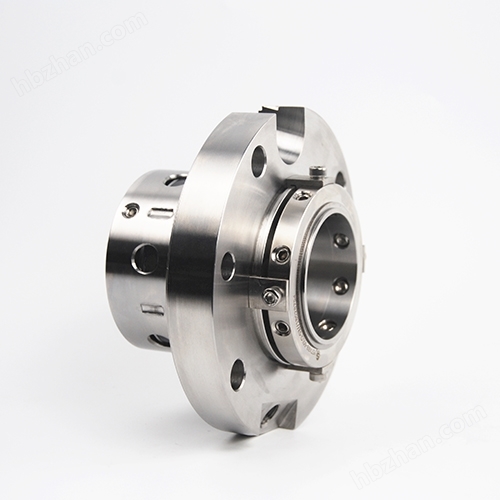


Mechanical seals for seawater pumps
NegotiableUpdate on 01/27
- Model
- Nature of the Manufacturer
- Producers
- Product Category
- Place of Origin
Overview
Mechanical seals for water supply pumps and seawater pumps are widely used in centrifugal pumps. Whether they are single or double seals, they can be equipped with all auxiliary sealing system components and are made of high-quality materials. Therefore, they are suitable for normal working conditions and can be stored as spare parts. Structural features: box seal, balanced type, no rotation requirement.
Product Details
Mechanical seals for seawater pumps
1、 Main technical conditions:
1. Working medium: seawater; Temperature: room temperature; Shaft diameter speed: 2950r/min; Normal pressure of working medium: 0~ 1.6MPa
2. Installation method: Vertical installation
Appearance installation: There should be a vent hole on the upper part of the machine seal Rc1/4”Two flushing holes are connected to the inlet and outlet of the pump, and the flushing hole size Rc1/4 ”; 3. Reliability: Safe continuous operation time ≥ 10000h, leakage rate q ≤ 3.0ml/h
Mechanical seals for seawater pumps
environmental conditions
☆ Tilt and Swing: Longitudinal tilt: ± 5 ° ; Lateral tilt: ± 15 °
Pitch: ± 10 °, period 5~ 7s
Roll: ± 45 °, period 6~ 10s ☆ Working environment temperature and humidity
Environmental temperature: 45 ℃( 5~ Can still work normally at 55 ℃) Relative humidity: 40%~ 95% (with condensation)
The working environment has impacts, vibrations, salt spray, oil mist, andFungi, etc
Mechanical seals can be classified into high-temperature and low-temperature resistant mechanical seals, high-pressure and corrosion-resistant mechanical seals, high-speed mechanical seals, and granular medium resistant mechanical seals based on the working conditions and medium properties of the seal. According to the different equipment used, it can be divided into mechanical seals for pumps, kettles, compressors, specialized equipment, etc. When selecting, different structural types and materials should be chosen according to their different uses. At the same time, appropriate auxiliary system solutions such as flushing, cooling, lubrication, etc. should be selected based on temperature and medium properties.
To fully utilize the performance of mechanical seals, it is necessary to select the correct type according to the usage conditions. Each seal can only effectively function within the specified usage range. If the selection and material selection are improper or exceed the specified usage conditions of the seal, it will significantly reduce the performance of the mechanical seal, shorten its service life, and even damage it quickly.
The main parameters to be considered for selection are:P- Sealed chamber pressure(MPa)TheT- Fluid temperature (℃)V- Sealing shaft speed(m/s)The characteristics of the sealed fluid, sealing life requirements, leakage requirements, and the effective space allowed for installing the sealed chamber.
The relationship between the working parameters of sealing and the structural materials of mechanical seals can be roughly summarized as follows:
pressPValue determination → non-equilibrium, balanced, single end face, double end face, multi end face (multi-stage);
pressVValue determination → rotary, static, fluid dynamic, non-contact;
by temperatureTConsider factors such as flash evaporation of liquid film between end faces, thermal shock resistance during temperature fluctuations, viscosity reduction and lubricity with temperature rise, heat resistance limit of auxiliary sealing rings, increased corrosion caused by temperature rise, brittleness of low-temperature materials, material aggregation or precipitation crystallization to determine the sealing structure, friction pair and auxiliary sealing ring materials, lubrication and cooling methods, flushing and insulation measures, and cold insulation measures.
Considering the properties of the fluid, corrosion reduces the service life, abrasive particles accelerate seal wear, fluid saturation vapor pressure makes the end face easy to open, low viscosity or inclusions may cause dry friction problems, flammable, explosive, toxic, and may endanger environmental safety. Special design is required to determine the sealing structure, sealing material, lubrication method, isolation measures, and safety measures.
Considering the size of the sealing chamber → The space size of the sealing chamber is limited, and standard mechanical seals cannot be installed. Therefore, a special design of elastic element structure is adopted. Considering the service life requirements, such as rockets and launch devices with short service life but reliability requirements, special design and use of high-performance materials are determined.
The above parameters not only need to be studied one by one, but also need to be considered comprehensively, as they both affect and depend on each other.


