-
E-mail
18721931244@139.com
-
Phone
18721931244
-
Address
Room 1441, Zone F, No. 40, Lane 689, Luofen Road, Baoshan District, Shanghai
Product Categories
- Multi functional nuclear radiation detector
- α. β surface contamination detector
- Neutron peripheral dose equivalent rate meter
- Personal dose alarm device
- X-ray quality analyzer
- Metrological calibration and verification agency service
- Portable nuclide identifier
- Radiation dose rate meter
- Portable high-voltage ionization chamber
- Online radiation monitoring system
- Channel based radioactive monitoring system
- Gamma camera
Bojiang Environmental Protection Technology (Shanghai) Co., Ltd
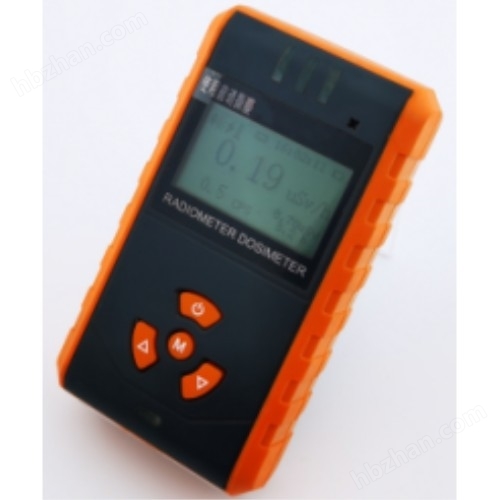
Metrological calibration and verification services
NegotiableUpdate on 01/09
- Model
- Nature of the Manufacturer
- Producers
- Product Category
- Place of Origin
Overview
To solve the problems of time-consuming, labor-intensive, and inconvenient transportation for customers' calibration/verification of measuring instruments, the company provides one-stop purchasing, inspection, and maintenance services.
Product Details
Metrological calibration and verification services
To solve the calibration of customer measuring instruments/Due to the challenges of time-consuming, labor-intensive, and inconvenient transportation, the company provides one-stop purchasing, inspection, and maintenance services.
1Service Content
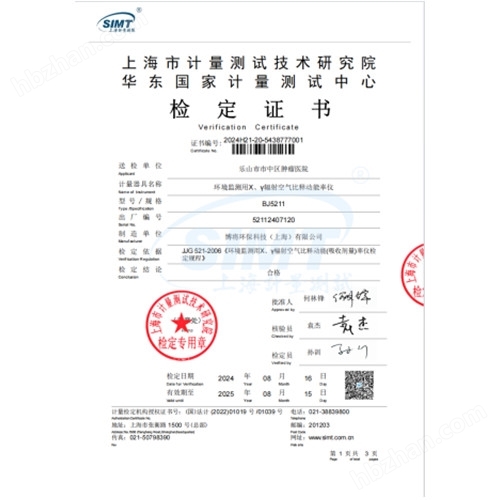
1Express delivery or door-to-door delivery of instruments, one-stop calibration, inspection, and issuanceShanghai Institute of Metrology and Testing Technology, East China National Institute of Metrology Quantity Testing Center、Calibration of radioactive metrology stations at the China Institute of Radiation Protectioncalibration、testcertificate(According to the contract agreement);
2Maintenance and repair services for various types of measuring instruments and equipment within the scope of the company's operating instruments;
3Purchasing and selling measuring instruments within the company's business scope.
IIservice process
1Customers can make appointments through phone, email, or online communication, and confirm the service time, content, and fees with both parties(Simple instrument calibration and verification costs)After waiting for the details, determine the instrument receiving and dispatching method and make an appointmentMetrological calibration and verification services;
2After receiving the instruments and equipment, our company will confirm the type and quantity of measuring instruments through on-site or online video, and inspect the appearance and accessories(If there are special requirements, please indicate them on the sample delivery list)For equipment maintenance, determine the maintenance cost, sign the maintenance and inspection contract, label and register(Inspection Requesting Unit+time+utensil name+Contact F-type);
3The measuring instruments will be sent by our specialist to the metrological verification institution to complete the inspection procedures;
4After the sample testing is completed, our company will follow the agreed upon method toinstrument and equipmentSubmit certificates and additional tickets to the user, and the user will count and confirm.
3、 Payment method
Customers can make payments through cash, transfer, annual settlement, etc. Annual settlement users must sign a service agreement.
Attachment:
Implementation Rules of the Metrology Law of the People's Republic of China
(Approved by the State Council on January 19, 1987, and released by the National Bureau of Metrology on February 1, 1987)
Chapter 1 General Provisions
Article 1: In accordance with the provisions of the Metrology Law of the People's Republic of China, these detailed rules are formulated.
Article 2: The state implements a system of legal units of measurement. The names and symbols of national legal units of measurement and the methods for abolishing non national legal units of measurement shall be implemented in accordance with the relevant provisions of the State Council on the unified implementation of legal units of measurement in China.
Article 3: The state shall develop the metrology industry in a planned manner, equip metrology verification institutions at all levels with modern metrology technology, serve the socialist modernization construction, provide metrology guarantees for industrial and agricultural production, national defense construction, scientific experiments, domestic and foreign trade, as well as the health and safety of the people, and safeguard the interests of the state and the people.
Chapter 2: Measuring Reference Instruments and Measuring Standard Instruments
Article 4: The use of standard measuring instruments (referred to as measurement standards, the same below) must meet the following conditions: (1) be appraised and qualified by the state; (2) Having the necessary environmental conditions for normal work; (3) Having competent personnel for storage, maintenance, and use; (4) Having a sound management system. Those who meet the above conditions can only be used after being approved and issued a metrological benchmark certificate by the metrological administrative department of the State Council.
Article 5: Without the approval of the metrological administrative department of the State Council, no unit or individual shall dismantle, modify or interrupt their metrological verification work on their own.
Article 6: The measurement standards shall be consistent with the international measurement standards. The metrological administrative department of the State Council has the right to abolish metrological benchmarks that are technologically outdated or whose working conditions are not suitable for the needs.
Article 7: The use of measuring standard instruments (referred to as measuring standards, the same below) must meet the following conditions:
(1) Qualified through metrological verification;
(2) Having the necessary environmental conditions for normal work;
(3) Having competent personnel for storage, maintenance, and use;
(4) Having a sound management system.
Article 8: Social public measurement standards have a notarized effect on the implementation of measurement supervision in society. The highest level of social public measurement standards established by the metrological administrative department of the local people's government at or above the county level within its administrative area shall apply for assessment to the metrological administrative department of the higher-level people's government; For other levels, the assessment shall be presided over by the metrological administrative department of the local people's government. Those who meet the conditions stipulated in Article 7 of these detailed rules and obtain a certificate of qualification after assessment shall be approved and issued a social public measurement standard certificate by the metrological administrative department of the local people's government at or above the county level before use.
Article 9: The highest metrological standards established by the relevant competent departments of the State Council and the people's governments of provinces, autonomous regions, and municipalities directly under the Central Government shall be approved for use by the relevant competent departments if they meet the conditions stipulated in Article 7 of these detailed rules and obtain a certificate of qualification after being assessed by the metrological administrative department of the same level of people's government.
Article 10: Enterprises and institutions that establish their own highest measurement standards shall apply for assessment to the metrological administrative department of the people's government at the same level as their competent department. Township enterprises shall apply for assessment to the metrological administrative department of the local county-level people's government. Only enterprises and institutions that meet the conditions stipulated in Article 7 of these detailed rules and obtain a certificate of qualification after assessment can use it and file it with their competent department.
Chapter 3 Metrological Verification
Article 11: Units and individuals who use measurement standards that are subject to mandatory verification shall apply for periodic verification to the relevant metrological administrative department of the people's government in charge of assessing the measurement standard. Units and individuals using work measuring instruments that are subject to mandatory verification shall apply for periodic verification to the metrological verification institution designated by the metrological administrative department of the local county (city) level people's government. For those that cannot be verified locally, apply for periodic verification to the metrological verification institution designated by the metrological administrative department of the higher-level people's government.
Article 12 Enterprises and institutions shall be equipped with measuring and testing facilities that are suitable for production, scientific research, and business management, formulate specific inspection management methods and rules and regulations, specify the detailed list of measuring instruments managed by the unit and the corresponding inspection cycle, and ensure that non mandatory inspection measuring instruments used are regularly inspected.
Article 13: Metrological verification work shall comply with the principles of economic rationality and proximity, and shall not be restricted by administrative divisions or departmental jurisdiction.
Chapter 4 Manufacturing and Repair of Measuring Instruments
Article 14: Enterprises and institutions applying for the "License for Manufacturing Measuring Instruments" shall be assessed by the metrological administrative department of the people's government at the same level as their competent department; Township enterprises are assessed by the metrological administrative department of the local county-level people's government. Those who pass the assessment and obtain the "License for Manufacturing Measuring Instruments" are allowed to use the national unified regulations of the mark, and the relevant competent department can approve production.
Article 15: Enterprises and institutions engaged in commercial repair of measuring instruments in society may apply for a "Repair Measuring Instrument License" directly to the metrological administrative department of the local county (city) level people's government for assessment. Those who cannot be assessed locally can apply for assessment to the metrological administrative department of the higher-level local people's government. Only those who pass the assessment and obtain the "License for Repairing Measuring Instruments" can be allowed to use the national unified regulations and be approved for business.
Article 16: Individual industrial and commercial households engaged in the manufacturing and repair of measuring instruments shall engage in business at fixed locations. The application for the "License for Manufacturing Measuring Instruments" or "License for Repairing Measuring Instruments" shall be processed in accordance with the procedures stipulated in Article 15 of these detailed rules. Any business that operates in a different location must be verified and approved by the metrological administrative department of the local people's government before applying for a business license.
Article 17: The assessment criteria for enterprises, institutions, or individual businesses applying for the "License for Manufacturing Measuring Instruments" and "License for Repairing Measuring Instruments" are as follows:
(1) Production facilities;
(2) Factory inspection conditions;
(3) The technical condition of personnel;
(4) Regarding technical documents and measurement regulations.
Article 18: Any new product of measuring instruments that has never been produced nationwide must undergo formal identification. After passing the formal identification, the type approval procedures should be carried out and a certificate should be issued. New measuring instruments that have been finalized nationwide but have not been produced by our unit should undergo prototype testing. After the prototype test is qualified, a certificate of conformity will be issued. Measuring instruments that have not been approved for their type or have not obtained a certificate of qualification for prototype testing are not allowed to be produced.
Article 19: The formal appraisal of new measuring instruments shall be conducted by technical institutions authorized by the metrological administrative department of the State Council; The prototype test shall be conducted by a technical institution authorized by the metrological administrative department of the provincial people's government where it is located. The type of new measuring instruments shall be approved by the metrological administrative department of the local provincial people's government. The approved form by the metrological administrative department of the provincial people's government, after being reviewed and approved by the metrological administrative department of the State Council, shall be used as the national universal form.
Article 20: Units applying for standardized identification and prototype testing of new measuring instruments shall provide new product prototypes and relevant technical documents and materials. The unit responsible for the standardized identification and prototype testing of new measuring instruments must keep confidential the prototypes, technical documents, and materials provided by the applying unit.
Article 21: The relevant competent departments shall strengthen the management of the quality of measuring instruments manufactured and repaired by enterprises and institutions. The metrological administrative departments of the people's governments at or above the county level have the right to conduct supervision and inspection, including sampling and supervision testing. Measuring instruments without product qualification seals or certificates, or those that have been verified as unqualified, are not allowed to leave the factory.
Chapter 5 Sales and Use of Measuring Instruments
Article 22: Foreign businesses selling measuring instruments in China shall apply for type approval from the metrological administrative department of the State Council in accordance with the provisions of Article 18 of these detailed rules.
Article 23: The metrological administrative department of the local people's government at or above the county level shall supervise and inspect the measuring instruments sold locally. Measuring instruments without product qualification seals, certificates, and the "Manufacturing Measuring Instrument License" mark shall not be sold.
Article 24: No unit or individual shall engage in the sale of defective measuring instrument spare parts, nor shall they use defective spare parts to assemble and repair measuring instruments.
Article 25: No unit or individual shall use measuring instruments that have not been verified with qualified seals or certificates, have exceeded the verification period, or have been verified as unqualified in their work positions. The use of measuring instruments in teaching demonstrations is not subject to this restriction.
Chapter 6 Metrological Supervision
Article 26 The responsibilities of the metrological administrative department of the State Council and the metrological administrative department of the local people's government at or above the county level to supervise and implement metrological laws and regulations are:
(1) Implement the guidelines, policies, and regulations of national metrology work, and promote national legal measurement units;
(2) Develop and coordinate the development plan of the metrology industry, establish metrology standards and social public metrology standards, and organize the transmission of measurement values;
(3) Supervise the manufacturing, repair, sales, and use of measuring instruments;
(4) Conduct metrological certification, organize arbitration and verification, and mediate metrological disputes;
(5) Supervise and inspect the implementation of metrology laws and regulations, and handle violations of metrology laws and regulations in accordance with the relevant provisions of these detailed rules.
Article 27: The metrological management personnel of the metrological administrative departments of the people's governments at or above the county level are responsible for carrying out metrological supervision and management tasks; Measurement supervisors are responsible for conducting patrol inspections in designated areas and places, and may, within their prescribed authority, handle on-site violations of measurement laws and regulations and impose administrative penalties based on different situations. Metrological supervisors must be appointed and issued supervisory certificates by the metrological administrative department of the people's government at or above the county level after passing the assessment.
Article 28: The metrological verification institutions established by the metrological administrative departments of the people's governments at or above the county level in accordance with the law are national statutory metrological verification institutions. Its responsibilities are: responsible for researching and establishing metrological benchmarks, social public metrological standards, transmitting measurement values, carrying out mandatory inspections and other inspection and testing tasks stipulated by law, drafting technical specifications, providing technical guarantees for the implementation of metrological supervision, and undertaking relevant metrological supervision work.
Article 29: The metrological verification personnel of national statutory metrological verification institutions must pass the assessment of the metrological administrative department of the people's government at or above the county level and obtain metrological verification certificates. The metrological verification personnel of other units shall be assessed and certified by their competent department. Those without metrological verification certificates are not allowed to engage in metrological verification work. The series of technical positions for metrological verification personnel shall be formulated by the metrological administrative department of the State Council in conjunction with relevant competent departments.
Article 30: The metrological administrative departments of the people's governments at or above the county level may, as needed, authorize metrological verification institutions and technical institutions of other units in the following forms to carry out compulsory verification and other verification and testing tasks within the prescribed scope:
(1) Authorize professional or regional metrological verification institutions as statutory metrological verification institutions;
(2) Authorize the establishment of social public measurement standards;
(3) Authorize the metrological verification institution of a certain department or unit to perform mandatory verification on the measuring instruments used internally;
(4) Authorize relevant technical institutions to undertake other inspection and testing tasks as stipulated by law.
Article 31: Units authorized under Article 30 of these detailed rules shall comply with the following provisions:
(1) Personnel authorized by the unit to perform verification and testing tasks must pass the assessment of the authorized unit;
(2) The corresponding measurement standards of authorized units must be subject to verification by measurement standards or social public measurement standards;
(3) The authorized unit shall undertake the authorized verification and testing work and shall accept the supervision of the authorized unit;
(4) When the authorized unit becomes a party to a measurement dispute and cannot resolve it on its own through negotiation, the relevant metrological administrative department of the people's government at or above the county level shall mediate and arbitrate for verification.
Chapter 7 Metrological Certification of Product Quality Inspection Institutions
Article 32: Product quality inspection institutions that provide notarized data to society must be certified by the metrological administrative department of the people's government at or above the provincial level.
Article 33: The content of metrological certification by product quality inspection institutions:
(1) Performance of metrological verification and testing equipment;
(2) The working environment of metrological verification and testing equipment and the operational skills of personnel;
(3) Measures to ensure uniform and accurate measurement values, as well as a fair and reliable management system for testing data.
Article 34: After the product quality inspection institution submits an application for metrological certification, the metrological administrative department of the people's government at or above the provincial level shall designate its affiliated metrological verification institution or authorized technical institution to conduct an assessment in accordance with the provisions of Article 33 of these detailed rules. After passing the assessment, the metrological administrative department of the people's government at or above the provincial level that accepts the application shall issue a certificate of metrological certification. Without obtaining the certificate of metrological certification, product quality inspection work shall not be carried out.
Article 35: The metrological administrative departments of the people's governments at or above the provincial level have the right to supervise and inspect the quality inspection institutions of products that have passed metrological certification in accordance with the provisions of Article 33 of these detailed rules.
Article 36: When a product quality inspection institution that has obtained a certificate of metrological certification needs to add new inspection items, it shall apply for single item metrological certification in accordance with the relevant provisions of these detailed rules.
Chapter 8 Metrological Mediation and Arbitration Verification
Article 37 The metrological administrative department of the people's government at or above the county level is responsible for mediating and arbitrating metrological disputes, and may designate relevant metrological verification institutions for arbitration verification upon commission by judicial organs, contract management organs, foreign-related arbitration organs, or other units.
Article 38: In the process of mediation, arbitration, and case review, neither party shall change the technical status of measuring instruments related to measurement disputes.
Article 39: If the parties to a metrological dispute are dissatisfied with the arbitration inspection, they may appeal to the metrological administrative department of the higher-level people's government within 15 days from the date of receiving the arbitration inspection notice. The arbitration verification conducted by the metrological administrative department of the higher-level people's government is final.
Chapter 9 Expenses
Article 40: Fees shall be paid for establishing measurement standards, applying for assessment, applying for calibration using measuring instruments, applying for finalization and prototype testing of new measuring instrument products, applying for licenses for manufacturing and repairing measuring instruments, as well as applying for measurement certification and arbitration calibration. The specific charging methods or standards shall be formulated by the metrological administrative department of the State Council in conjunction with the national finance and price departments.
Article 41: The metrological administrative departments of the people's governments at or above the county level shall not charge any fees for the calibration and testing conducted during supervision and inspection. The inspected unit has the obligation to provide prototypes and verification test conditions.
Article 42 The metrological verification institutions under the metrological administrative departments of the people's governments at or above the county level shall, in accordance with the provisions of the national financial management system, include the funds required for providing technical guarantees for implementing metrological laws and regulations and conducting metrological supervision in the budgets of various levels of finance.
Chapter 10 Legal Liability
Article 43: Those who violate the provisions of Article 2 of these detailed rules by using illegal measurement units shall be ordered to make corrections; For publications, they shall be ordered to stop selling and may be fined up to 1000 yuan.
Article 44: Those who violate the provisions of Article 14 of the Measurement Law of the People's Republic of China by manufacturing, selling, or importing measuring instruments that are not legal units of measurement abolished by the State Council and other measuring instruments prohibited by the State Council shall be ordered to stop manufacturing, selling, and importing, and their measuring instruments and all illegal gains shall be confiscated. They may also be fined 10% to 50% of their illegal gains.
Article 45: Departments, enterprises, institutions, and the highest metrological standards that carry out metrological verification without passing the assessment of the relevant metrological administrative departments of the people's government shall be ordered to stop using them and may be fined up to 1000 yuan.
Article 46: For measuring instruments that fall within the scope of compulsory verification, if they fail to apply for verification in accordance with regulations, or if measuring instruments that do not fall within the scope of compulsory verification fail to undergo regular verification by themselves or are sent to other measuring verification institutions for regular verification, or if they continue to be used after being verified as unqualified, they shall be ordered to stop using and may be fined up to 1000 yuan.
Article 47: Those who manufacture or repair measuring instruments without obtaining a "License for Manufacturing Measuring Instruments" or a "License for Repairing Measuring Instruments" shall be ordered to cease production or business, seal up the manufactured or repaired measuring instruments, confiscate all illegal gains, and may be fined 10% to 50% of their illegal gains.
Article 48: Those who manufacture or sell new measuring instruments without type approval or prototype testing shall be ordered to stop manufacturing and selling, seal the new product, confiscate all illegal gains, and may be fined up to 3000 yuan.
Article 49: If measuring instruments manufactured or repaired are not inspected before leaving the factory or are found to be unqualified after inspection, they shall be ordered to stop leaving the factory and all illegal gains shall be confiscated; If the circumstances are serious, a fine of up to 3000 yuan may be imposed.
Article 50: If imported measuring instruments are sold without passing the inspection of the metrological administrative department of the people's government at or above the provincial level, they shall be ordered to stop selling, seal the measuring instruments, confiscate all illegal gains, and may be fined 10% to 50% of their sales revenue.
Article 51: Those who use unqualified measuring instruments or damage the accuracy of measuring instruments and forge data, causing losses to the state and consumers, shall be ordered to compensate for the losses, have their measuring instruments and all illegal gains confiscated, and may be fined up to 2000 yuan.
Article 52: Those who engage in the operation and sale of defective measuring instrument spare parts shall be ordered to cease such operations and sales, have their defective measuring instrument spare parts and all illegal gains confiscated, and may be fined up to 2000 yuan; If the circumstances are serious, the business license shall be revoked by the administrative department for industry and commerce.
Article 53: Units and individuals who manufacture, sell, or use measuring instruments for the purpose of deceiving consumers shall have their measuring instruments and all illegal gains confiscated, and may be fined up to 2000 yuan; Those who constitute a crime Z shall be held criminally responsible in accordance with the law for the individuals or units directly responsible.
Article 54: If an individual industrial and commercial household manufactures or repairs measuring instruments outside the scope of national regulations or engages in business activities in a place that does not comply with regulations, it shall be ordered to stop manufacturing or repairing, all illegal gains shall be confiscated, and a fine of up to 500 yuan may be imposed.
Article 55: If a product quality inspection institution that has not obtained a certificate of metrological certification provides notarized data to the society, it shall be ordered to stop inspection and may be fined up to 1000 yuan.
Article 56: Anyone who forges, misappropriates, or exchanges compulsory inspection seals or certificates shall have their illegal inspection seals, certificates, and all illegal gains confiscated, and may be fined up to 2000 yuan; Those who commit crime Z shall be held criminally responsible in accordance with the law.
Article 57: If metrological supervision and management personnel violate the law, neglect their duties, engage in favoritism and fraud, and the circumstances are minor, they shall be given administrative sanctions; Those who commit crime Z shall be held criminally responsible in accordance with the law.
Article 58: If the unit responsible for the standardized identification and prototype testing of new measuring instruments violates the provisions of Article 20, paragraph 2 of these detailed rules, it shall compensate the applicant unit for its losses in accordance with relevant national regulations and impose administrative sanctions on the directly responsible personnel; Those who commit crime Z shall be held criminally responsible in accordance with the law.
Article 59: If metrological verification personnel engage in any of the following behaviors, they shall be subject to administrative sanctions:; If the offense constitutes Z, criminal responsibility shall be pursued in accordance with the law:
(1) Falsifying verification data;
(2) Providing incorrect data, causing losses to the party submitting for inspection;
(3) Violating the metrological verification regulations for metrological verification;
(4) Using measurement standards that have not been assessed as qualified for verification;
(5) Those who carry out metrological verification without obtaining metrological verification certificates.
Article 60: The administrative penalties stipulated in these detailed rules shall be decided by the metrological administrative department of the local people's government at or above the county level. If a fine of more than 10000 yuan is imposed, it shall be reported to the metrological administrative department of the provincial people's government for decision. All confiscated illegal gains and fines shall be turned over to the national treasury. The administrative penalties stipulated in Article 51 of these detailed rules may also be decided by the administrative department for industry and commerce.
Chapter 11 Supplementary Provisions
Article 61: The meanings of the following terms in these detailed rules are:
(1) Measuring instruments refer to devices, instruments, measuring tools, and standard materials used to directly or indirectly measure the value of the measured object, including measuring standards, working measuring instruments, and reference materials for unified measurement.
(2) Metrological verification refers to all the work carried out to evaluate the metrological performance of measuring instruments and determine whether they are qualified.
(3) Formal identification refers to a comprehensive review and assessment of the metrological performance of new product prototypes of measuring instruments.
(4) Metrological certification refers to the assessment and certification conducted by government metrology administrative departments on the ability and reliability of relevant technical institutions in metrological verification and testing.
(5) Metrological verification institutions refer to relevant technical organizations that undertake metrological verification work.
(6) Arbitration verification refers to the metrological verification and testing activities conducted with the purpose of arbitration using metrological standards or public metrological standards.
Article 62: This detailed rule also applies to the supervision and management of metrology work outside of the Chinese People's Liberation Army and the national defense science and technology industry system.
Article 63: The management measures, scope, and various printing and certification marks related to these detailed rules shall be formulated by the metrological administrative department of the State Council.
Article 64: These detailed rules shall be interpreted by the metrological administrative department of the State Council.
Article 65: These detailed rules shall come into effect from the date of their promulgation.
Similar Product Recommend