-
E-mail
lixinghua@yunjingtianhe.com
-
Phone
13276363035
-
Address
Building 1, Weifang High tech Zone Optoelectronic Industry Accelerator (Phase I), No. 155 Guangdian Circuit, Weifang High tech Zone, Shandong Province
Product Categories
Shandong Tianhe Environmental Technology Co., Ltd
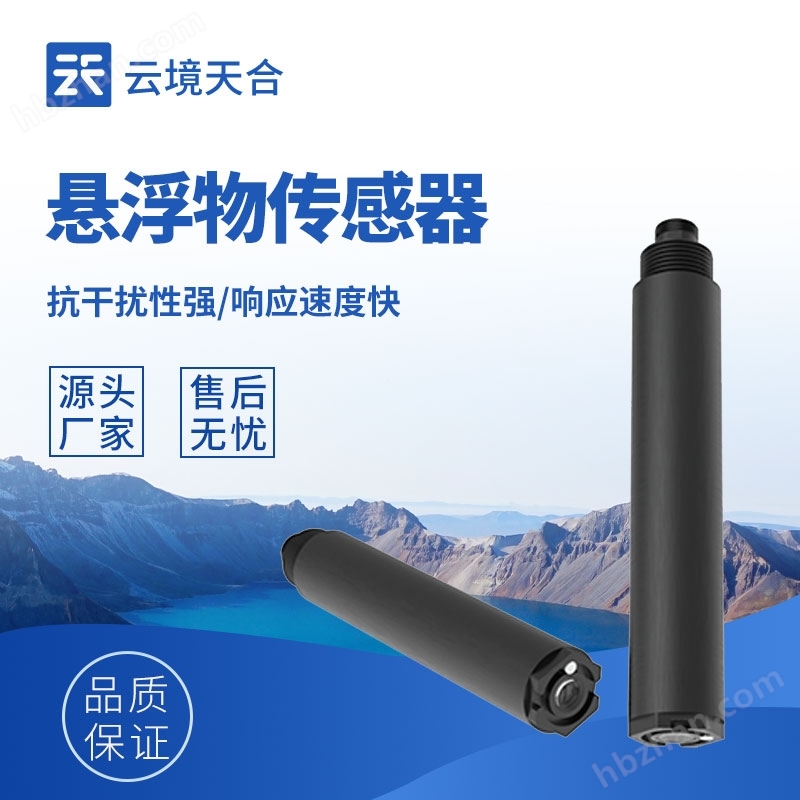


Online suspended solids sensor
NegotiableUpdate on 01/09
- Model
- Nature of the Manufacturer
- Producers
- Product Category
- Place of Origin
Overview
Online suspended solids sensor is a device that uses optical scattering to monitor the concentration of suspended solids in water in real time. By emitting light signals at specific frequencies, it captures the intensity changes of scattered light from suspended particles and calculates the concentration value using algorithms. It has the characteristics of high sensitivity, fast response, and strong anti-interference, with a measurement range covering 0-50000mg/L and a resolution of 0.1mg/L. It can be deployed in scenarios such as rivers, sewage treatment plants, and industrial pipelines for a long time, providing accurate data support for water quality monitoring, pollution warning, and process control.
Product Details
Online suspended solids sensorIt is a device that uses optical scattering to monitor the concentration of suspended solids in water in real time. By emitting light signals at specific frequencies, it captures the intensity changes of scattered light from suspended particles and calculates the concentration value using algorithms. It has the characteristics of high sensitivity, fast response, and strong anti-interference, with a measurement range covering 0-50000mg/L and a resolution of 0.1mg/L. It can be deployed in scenarios such as rivers, sewage treatment plants, and industrial pipelines for a long time, providing accurate data support for water quality monitoring, pollution warning, and process control.

OneOnline suspended solids sensorApplication Environment Description
Using the scattering or absorption characteristics of light to measure the concentration of suspended solids in water. It has high sensitivity, fast response, and real-time monitoring capabilities, and is widely used in fields such as water quality monitoring and sewage treatment.
Signal output: RS485 (MODBUS-RTU). Infrared LED light source with strong anti-interference ability.
Internal signal isolation technology has strong interference.
Good reproducibility, thermal stability, low drift, small size, fast response speed
Easy to install, simple, 3/4NPT pipe thread, easy to sink or install in pipelines and tanks, stable performance, long service life
IP68 waterproof standard
2、 Technical performance and specifications
1. Technical parameters
| Measuring principle | scattered light method |
| Signal mode | RS485(MODBUS-RTU) |
| measurement range | 0~2000mg/L |
| measurement resolution | 0.1mg/L |
| measurement accuracy | ± 5% (depending on sludge homogeneity) |
| Shell material | Glass and ABS |
| cable length | Standard 5-meter configuration |
| power supply voltage | 12-24VDC( 0.4W@12V ) |
| calibration method | two-point calibration |
| measurement environment | Temperature 0~50 ℃ (non freezing),<0.2MPa |
| waterproof rating | IP68 |
| Installation method | Immersion installation, NPT3/4 thread |
2. Dimensional drawing
The sensor connector is an M12 aviation plug connector with a 5-pin female socket
3、 Installation and electrical connections
1. Installation

Attention: The sensor should not be installed upside down or horizontally, and should be installed at an angle of at least 15 degrees.
2. Electrical installation
The cable is a 5-core shielded wire, and the line sequence is defined as follows:
Brown - Power cord (12~24VDC) Black - Ground wire (GND)
Green -485B Yellow -485A
Before powering on, carefully check the wiring sequence to avoid unnecessary losses caused by wiring errors.
4、 Maintenance and upkeep
1. Use and maintenance
The measurement window of a sensor is one of the key components to ensure its normal operation and accurate measurement. The cleanliness requirements are crucial to ensure the accuracy and reliability of the measurement.
1.1 Maintenance Methods
1. Regular cleaning: The measuring window should be cleaned regularly to remove dirt, sediment, and other impurities attached to the surface. The cleaning frequency depends on the measurement environment, but it is usually recommended to clean daily or weekly.
2. Use gentle cleaning agents: When cleaning, choose gentle cleaning agents and avoid using cleaning agents containing abrasives or acidic or alkaline components to prevent damage to the surface of the measurement window.
3. Soft cloth or sponge: During the cleaning process, a soft cloth or sponge should be used to gently wipe the surface of the measuring window to prevent scratches or wear.
4. Avoid direct contact: During the cleaning process, avoid direct hand contact with the surface of the measurement window to reduce contamination from fingerprints and grease.
5. Rinse: After cleaning, rinse the measuring window with clean water to ensure the removal of residual cleaning agents and dirt.
6. Drying: After cleaning, gently wipe the surface of the measuring window with a dry soft cloth to remove water stains and ensure dryness.
7. Regular inspection: Regularly inspect the surface of the measurement window for damage or wear to maintain the normal operation of the sensor.
8. Avoid exposure to chemicals and high temperature environments: Avoid exposing the measurement window to harmful chemicals or high temperature environments to prevent damage or corrosion to its surface
When the sensor has been used for a long time and measurement errors occur, it can be calibrated and corrected by cooperating with the instrument. If the above methods of maintenance and upkeep still cannot calibrate and measure the sensor, it indicates that the sensor has failed and should be replaced.
5、 Precautions
1. The measurement window contains glass components, so sharp or hard objects should be avoided from scratching the surface to prevent scratches and damage.
2. It contains sensitive optical components and precision electronic equipment inside, avoiding exposing the sensor to severe vibration or impact to prevent displacement or damage of the optical parts and electronic equipment. No maintenance is required inside the device.
When not in use, appropriate dust covers or sleeves should be used to protect the optical parts from dust and pollutants.
Similar Product Recommend