-
E-mail
841106043qq.com
-
Phone
13645368788
-
Address
No. 155 Optical Circuit, Weifang High tech Zone, Shandong Province, China. First Accelerator, Weifang High tech Zone Optoelectronic Industry Park
Product Categories
Shandong Wanxiang Environmental Technology Co., Ltd


Orchard Rainfall Meteorological Monitoring Station
NegotiableUpdate on 02/12
- Model
- Nature of the Manufacturer
- Producers
- Product Category
- Place of Origin
Overview
Orchard rainfall meteorological monitoring station, this product has the characteristics of low power consumption, small size, high reliability, and easy maintenance; The measurement process is not affected by factors such as temperature, sediment, river pollutants, and floating debris on the water surface.
Product Details
Orchard Rainfall Meteorological Monitoring Station
1、 Product Overview
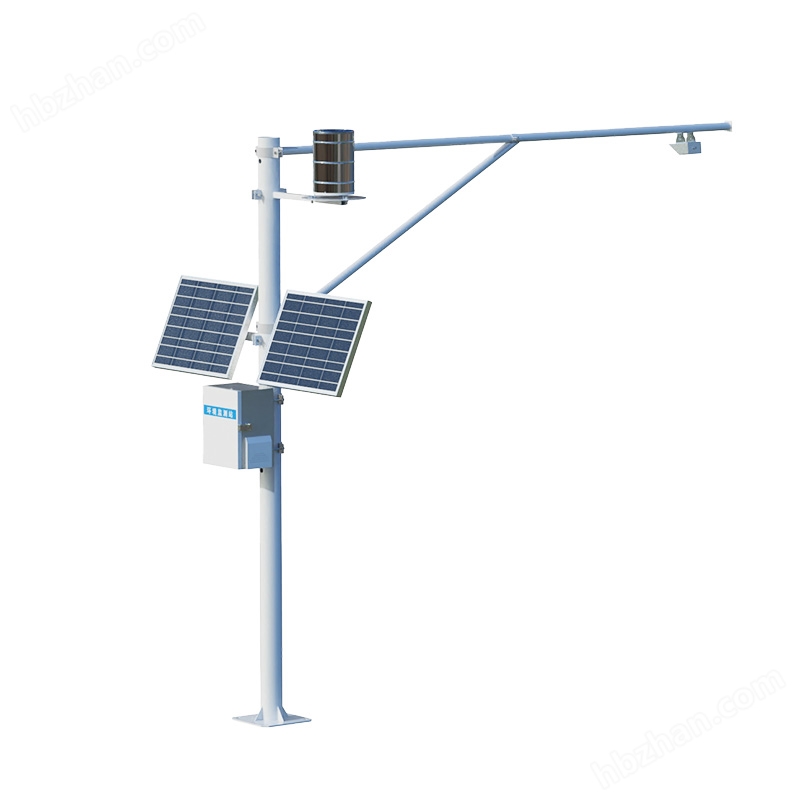
SW3Orchard Rainfall Meteorological Monitoring StationIt is a fully automatic hydrological online monitoring system based on microwave technology, which can simultaneously measure water level, flow velocity, flow rate, and rainfall in channels. It adopts excellent K-band planar radar technology to measure the flow velocity and water level of water bodies in a non-contact manner. According to the built-in software algorithm, it calculates and outputs real-time cross-sectional flow and cumulative flow; Can be used for non-contact flow measurement in rivers, irrigation channels, underground drainage networks, flood prevention warnings, and other occasions; This product has the characteristics of low power consumption, compact size, high reliability, and easy maintenance; The measurement process is not affected by factors such as temperature, sediment, river pollutants, and floating debris on the water surface.
2、 Application Fields
1. Measurement of velocity, water level, flow and rainfall of rivers, lakes, tides, reservoir gates, underground water pipe networks, irrigation canals and canals.
2. Auxiliary water treatment operations, such as urban water supply, sewage monitoring, etc.
3. Flow calculation, monitoring of inflow and outflow flow, etc.
3、 Product Features
1. Non contact measurement, combined with cross-sectional parameters to calculate flow rate, not affected by wind, temperature, haze, sediment, floating debris, etc.
2. It is suitable for a variety of measurement conditions and is not affected by corrosion and foam. It can output the measurement data of flow rate, water level and flow.
3. The flow rate and water level are measured using a planar array radar antenna with built-in angle measurement function. The device is compact in size and easy to install.
4. Convenient configuration software that can easily configure parameters according to actual needs to adapt to different usage conditions.
5. Not affected by changes in water vapor, temperature, and pressure in the atmosphere
4、 Monitoring platform
1. CS architecture software platform, supporting direct observation through mobile and PC browsers without the need for additional software installation.
2. Support multi account and multi device login
3. Support real-time data display and historical data display dashboard
4. Cloud servers and cloud data storage are stable, reliable, easy to scale, and load balanced.
5. Support SMS alarm and threshold setting
6. Support map display and viewing device information.
7. Support data curve analysis
8. Support data export in tabular format
9. Support data forwarding, HJ-212 protocol, TCP forwarding, HTTP protocol, etc.
10. Support data post-processing function
11. Support external running of JavaScript scripts
5、 Summary indicators
Power supply voltage: 100mA (working), < 1mA (sleeping);
Working voltage: 12V power supply
Operating temperature: -35 ℃~60 ℃;
Storage temperature: -40 ℃~60 ℃;
Outdoor protection level: IP68
Signal output: RS485/MODBUS protocol;
6、 Technical parameters
Water level measurement
Ranging range: 0.1-40 meters
Distance measurement accuracy: ± 5mm
Distance measurement resolution: 1mm
Interval time: 1-5000min
Flow velocity measurement
Ranging range: 0.15-15m/s
Speed measurement accuracy: ± 2%
Speed resolution: 0.01m/s
flow measurement
Flow rate=average flow velocity x cross-sectional area x correction factor
The average flow velocity is obtained by collecting the surface flow velocity of the fluid using a flowmeter and calculating it through a model
The cross-sectional area of the overcurrent is calculated based on the water level measured by the water level gauge and the cross-sectional information
rainfall monitoring
Measurement range: Rain intensity 0-4mm/min
Measurement accuracy: ± 0.2mm
Resolution: 0.2mm
Rain bearing diameter: 200mm
Power supply method: solar panel+battery combination power supply
Solar power:100W(Optional)
Battery parameters: DC3.7V 10Ah
Bracket height: upright pole3Mi horizontal arm3rice
Work environment:-45℃~85℃ (non freezing state)
7、 Installation precautions
1. Installation environment
There are no huge stones blocking the water in the test channel section, and there are no phenomena such as huge eddies or turbulence
The testing channel section should be straight, stable, and have concentrated water flow
The test channel section needs to be hardened, and the measurement section should be regular
The testing channel section should be kept smooth to prevent the accumulation of floating debris
2. Installation height
Suggested installation height of 3-4 meters
3. Installation direction of flowmeter
The beam of the flowmeter is recommended to face the incoming water direction
Attachment: Construction Manual for Hydrological Monitoring Station
1、 Distribution principle:
1. The land use within 1000 meters of the monitoring point is relatively stable;
2. The horizontal plane around the monitoring point should ensure a capture space of 270 ° or more. If the monitoring point is close to a building, there should be a free space of 180 ° or more in the horizontal plane around the monitoring point;
3. The environmental conditions around the monitoring point are relatively stable, and the location conditions need to be long-term stable and sufficiently solid, with safety and fire prevention measures guaranteed;
4. There is no strong electromagnetic interference or oscillation source near the monitoring point, and there should be stable lightning protection equipment around as much as possible;
5. It should be considered that the monitoring points have unobstructed and convenient access channels and conditions for maintenance;
6. The height of the monitoring point sensor should be within 2-5 meters above the ground;
7. There are no obvious fixed pollution sources within 50 meters around the monitoring point;
8. When installing meteorological stations on non customized monitoring poles, the load-bearing capacity of the foundation poles should be considered;
9. Monitoring points should be located in areas with sufficient sunlight (with daylight hours of at least 6H) or in areas with stable and reliable AC220V power supply.
2、 Point confirmation
After selecting the points, mark them on the monitoring area plan. Submit the floor plan with monitoring point orientation markers to Party A for confirmation and signature.
3、 Construction
1. Pre embedded monitoring pole ground cage
1) According to the actual geological conditions on site, the pre embedded pit for the monitoring pole foundation will be constructed manually with the assistance of excavators. The size of the pre embedded pit is 100cm (length) * 100cm (width) * 100cm (depth). If over excavation occurs, it is not allowed to use abandoned soil for on-site backfilling. Instead, crushed stone or sand should be used to backfill to the design value. The pre buried pit edge should be aligned in the direction of due south and due north;
2) The thread of the embedded part should be raised vertically in the pit, and concrete (cement: sand=1:3) should be filled into the pit until it is slightly above the ground level;
3) According to the season and local climate environment, air dry for about 3 days until the cement foundation solidifies and the pre embedding is completed.
2. Equipment installation and standing of monitoring poles
1) Fix the equipment on the equipment bracket with matching bolts, paying attention to the installation of flat spring pads;
2) Fix the equipment bracket to the monitoring pole about 3 meters away with matching bolts;
3) Install the solar panel onto the solar panel bracket using matching bolts;
4) Install the radar water level sensor onto the flange using matching fasteners and secure the flange to the bracket.
4、 Quality control requirements and safety precautions for construction
The entire process of monitoring pole construction should be carried out in sequence, with a straight, streamlined, smooth, and vertical appearance;
2. The solar panel is tilted 45 degrees towards the south;
3. The rust proof layer of the monitoring pole shall not be damaged;
4. The cable joints are firm and reliable, waterproof and insulated, and not easily exposed;
5. Pay attention to the safety of pedestrians and vehicles during hoisting;
When lifting the monitoring pole, it is necessary to tie a walking rope to control the stable posture of the lifted object;
7. Warning signs should be set up during lifting.
5、 Construction quality assurance measures
The main materials required should comply with the design documents and current standards, and must have a factory certificate of conformity. If necessary, tests should be conducted.
2. Construction shall strictly follow the requirements of the specifications for quality control. And carry out process inspection. Only after the previous process is qualified can the next process be constructed.
3. Strengthen quality awareness, strictly organize construction in accordance with the design, current construction specifications, rules, as well as the owner's special requirements and on-site instructions, implement excellence work throughout the entire construction and production process, and ensure project quality.
4. Strengthen process quality control, strictly organize production according to the quality assurance system, formulate operational standards, process standards, and inspection standards for each process and link, keep records of the implementation of process standards, and ensure that each process is connected in an orderly manner and traceable.
5. Strengthen engineering management, implement technical responsibility system, develop targeted special construction plans, and conscientiously carry out technical disclosure.
6. Ensure that each sub project is of high quality as the standard during construction, and that all quality is qualified. Establish a model project to drive the implementation of the entire project.
6、 Construction period guarantee measures
1. Strengthen technical guidance, strictly manage, and effectively organize and coordinate.
2. Strengthen management, improve internal economic responsibility system, leverage the role of economic leverage, fully mobilize the enthusiasm and consciousness of construction teams, as an organizational and ideological guarantee to ensure the construction period.
3. Organize teams with rich experience and strong construction capabilities to take the field; The personnel and mechanical equipment are well configured and complete, ensuring the completion of the construction plan every day.
4. Grasp the node goals in stages. For the convenience of inspection, assessment and adjustment, under the control of the overall construction plan, the construction plan objectives are prepared in left and right sections, emphasizing the progress of nodes, in order to effectively control and achieve the overall plan.
5. Strengthen the management of material procurement and supply, and ensure timely supply of materials to meet the needs of engineering construction.
6. Actively coordinate relationships and create a favorable construction environment. Organize construction according to procedures to effectively control various factors that affect progress.
7、 Safety construction management measures
During the implementation process, strictly comply with relevant laws and regulations on safety, health, and environmental hygiene. Safety devices, equipment, and protective devices, as well as other effective measures taken to protect the lives, health, and safety of on-site construction and supervisory personnel;
8、 Environmental protection measures
1. Waste disposal: Materials that are not suitable for filling should be promptly stacked neatly or transported to designated locations;
2. Construction wastewater shall be discharged into the sewer in a timely manner and shall not pollute natural water sources. The construction site should prevent and control noise pollution, and construction vehicles should not honk;
3. Prevent the excavated soil from being washed away or overflowing by rainwater, which can easily generate secondary dust in dry weather. The transportation crossing near the excavator needs to be cleaned in a timely manner.