-
E-mail
3555146626@qq.com
-
Phone
18965427808
-
Address
Xiamen
Xiamen Yuanhang Machinery Equipment Co., Ltd


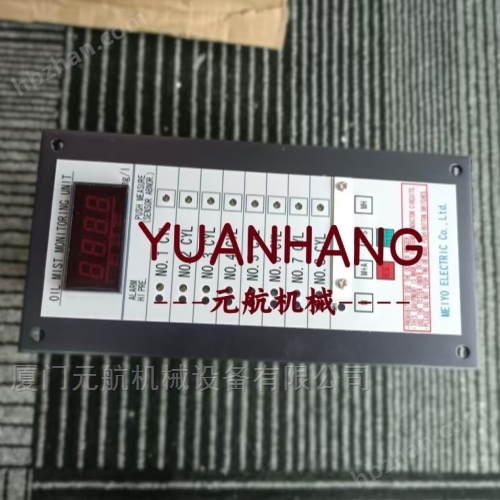

PTR-SD Temperature Resistance 47RB L 200 D 23/20 MEIYO
NegotiableUpdate on 01/09
- Model
- Nature of the Manufacturer
- Producers
- Product Category
- Place of Origin
Overview
PTR-SD Temperature Resistance 47RB L 200 D 23/20 MEIYO $r $nSMP-MB 0~1.5 MPa PRESSURE TRANSMITTER $r $nPTR-LN7 Temperature Resistance 49RB L=100 D=12 $r $nPTR-LN7 Temperature Resistance 50RB L=80 D=12 $r $nPTR-SD Temperature Resistance 48RB L=150 D=23/17 $r $nPTR-SD Temperature Resistance 47RB L=200
Product Details
PTR-SD Temperature Resistance 47RB L 200 D 23/20 MEIYO
A thermometer is a tool that can accurately determine and measure temperature, divided into pointer thermometers anddigital thermometerAccording to the different purposes of use, various thermometers have been designed and manufactured.
Salary principle
According to the different purposes of use, various thermometers have been designed and manufactured. The basis for its design is to utilize the influence of temperature on solids, liquids, and gasesthermal expansion and contractionThe phenomenon; Under constant volume conditions, the pressure of a gas (or vapor) varies with temperature; The role of thermoelectric effect; Resistance changes with temperature; The impact of thermal radiation, etc.
1. Gas thermometer: mostly uses hydrogen orheliumAs a temperature measuring substance, becausehydrogenandheliumThe liquefaction temperature is very low, close to absolute zero, so its temperature measurement range is very wide. This thermometer has high accuracy and is often used for precise measurements.
2. Resistance thermometer: It is divided into metal resistance thermometer and semiconductor resistance thermometer, both of which are made based on the characteristic of resistance value changing with temperature. Metal thermometers are mainly made of pure metals such as platinum, gold, copper, nickel, as well as rhodium iron and phosphor bronze alloys;Semiconductor thermometerMainly using carbon, germanium, etc.resistanceThe thermometer is easy to use and reliable, and has been widely used. Its measurement range is around -260 ℃ to 600 ℃.
3. Thermocouple thermometer: It is a widely used temperature measuring instrument in industry. Made using the thermoelectric phenomenon. Two different types of metal wiresweldingTogether form the working end, and the other two ends are connected to the measuring instrument to form a circuit. When the working end is placed at the measured temperature and the temperature of the working end is different from that of the free end, an electromotive force will occur, resulting in current passing through回路By measuring electrical quantities and utilizing the temperature at a known location, the temperature at another location can be determined. It is suitable for measuring high temperature and low turbidity between two substances with large temperature differences. Some thermocouples can measure high temperatures up to 3000 ℃, while others can measure low temperatures close to absolute zero
PTR-SD Temperature Resistance 47RB L 200 D 23/20 MEIYO
SMP-MC1 0~0.4 MPa Pressure TransmitterMEIYO ELECTRIC DC24V 4-20mA
SMP-MC1 0~1.6 MPa Pressure Transmitter MEIYO ELECTRIC DC24V 4-20mA
SMP-MC1 0-1.0MPa MEIYO
SMP-MC2 0-0.6MPa
Japanese MingsunMEIYO SMWB-C pressure sensor 0.17-0.36MPA
Japanese MingsunMEIYO SMWB-B pressure sensor 0.08-0.21MPA
Japanese Mingsunsensormeiyo sensor PTR-SD 30YM
Japanese Mingsunsensorenvironment sensor SMP-MB W535
Japanese MingsunMEIYO pressure transmitter SMP-MB5
Japanese Mingsunsensormeiyo sensor PTR-M MN83
SMWB-L1 0.003-0.016 MPapressure switchPRESSURE SWITCH
K9-5458 Oil Mist Transmitter MEIYO
Temperature sensor:
PTR-SD L=100/150/200/250/300/400
PTR-LN7 L=80/100/150
Pressure sensor:
SMP-MB 0-1.5/4.0 MPa
Oil mist detector:
MOT-05M9R5A
Angle sensor:
SMA-2LB/DAS-D
SMP-MB 0~1.5 MPa PRESSURE TRANSMITTER
PTR-LN7 temperature measurement antibody 49RB L=100 D=12
PTR-LN7 temperature measurement antibody 50RB L=80 D=12
PTR-SD temperature resistance body 48RB L=150 D=23/17
PTR-SD temperature resistance body 47RB L=200 D=23/20
MOT-05M9R5A Mini Fan 12VDC, 25x25x10mm withconnection MEIYO
4. Pointer thermometer: It is a thermometer shaped like a dashboard, also known asthermometerIt is used to measure room temperature and is made based on the principle of thermal expansion and contraction of metals. It is based onbimetal stripAs a temperature sensing element, it is used to control the pointer. Bimetallic sheets are usually riveted together with copper and iron sheets, with the copper sheet on the left and the iron sheet on the right. Due to the more significant thermal expansion and contraction effects of copper compared to iron, when the temperature rises, the copper sheet pulls the iron sheet to bend to the right, and the pointer deflects to the right (pointing to high temperature) under the drive of the bimetallic sheet; On the contrary, as the temperature decreases, the pointer deflects to the left (pointing to low temperature) under the drive of the bimetallic strip.
5.Glass tube thermometerGlass tube thermometer uses the principle of thermal expansion and contraction to measure temperature. Due to the differences in the expansion coefficient, boiling point, and solidification point of the temperature measuring medium, the commonly used glass tube thermometers include:Kerosene thermometerMercury thermometer, redpenWater thermometer. His advantages are simple structure, easy use, relatively high measurement accuracy, and low price. The disadvantage is that the measurement upper and lower limits and accuracy are limited by the quality of the glass and the properties of the temperature measuring medium. And it cannot be transmitted far away, it is fragile.
6. Pressure type thermometer: A pressure type thermometer uses the volume expansion or pressure change generated by heating liquid, gas, or saturated vapor in a closed container as a measurement signal. Its basic structure is composed of a temperature bulbcapillary tubeIt consists of three parts: the indicator table. The advantages of pressure thermometers are: simple structure, high mechanical strength, and no fear of vibration. Low price and no need for external energy. The disadvantage is that the temperature measurement range is limited, generally between -80~400 ℃; High heat loss and slow response time.
7.mercury thermometerIt is a type of expansion thermometer, with a freezing point of -38.87 ℃ and a boiling point of 356.7 ℃ for mercury. It is used to measure temperatures within the range of 0-150 ℃ or 500 ℃ and can only be used as an on-site monitoring instrument. Using it to measure temperature is not only simple and intuitive, but also can avoid errors in external remote thermometers
Similar Product Recommend


