-
E-mail
pitt@qianxiegroup.com
- Phone
-
Address
Building 60, Lane 818, Xianing Road, Jinshan Industrial Zone, Shanghai 201506
Product Categories
Shanghai Qianta Electromechanical Technology Co., Ltd
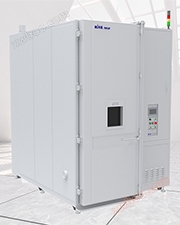
Photovoltaic module wet freezing cycle test chamber/high and low temperature cycle test chamber/high temperature and high humidity test chamber
NegotiableUpdate on 04/28
- Model
- Nature of the Manufacturer
- Producers
- Product Category
- Place of Origin
Overview
Photovoltaic module wet freezing cycle test chamber/high and low temperature cycle test chamber/high temperature and high humidity test chamber
Product Details
Photovoltaic module wet freezing cycle test chamber/high and low temperature cycle test chamber/high temperature and high humidity test chamber
(Programmable


Product Usage:Thin film solar cells can be manufactured using low-cost materials such as glass, plastic, ceramics, graphite, metal sheets, etc. as substrates. The measurement and voltage input methods of thin film solar cells in temperature cycling, wet freezing, and wet heat tests are different from those of wafer types, so the measurement methods are also different and cannot be confused. The test specifications based on thin film solar cells are
IEC61215,
IEC61646,
UL1703,
IEC62108,IEEE1513,IEC61730,GB9535,
GB18911
... wait.
The thickness of the thin film that can generate voltage is only a few μ m, so the amount of raw materials used can be significantly reduced compared to silicon wafer solar cells under the same light receiving area (the thickness can be less than 90% of silicon wafer solar cells),At present, the highest conversion efficiency can reach 13%. In addition to being flat, thin-film solar cells can also be made into non flat structures due to their flexibility. They have a wide range of applications and can be combined with buildings or become a part of building structuresIn the manufacturing of thin-film solar cells, various deposition techniques can be used to grow p-type or n-type materials layer by layer. Common thin-film solar cells include amorphous materialsSilicon CuInSe2 (CIS)、CuInGaSe2 (CIGS)、 And CdTe... etc.Introduction to the Catalog of Relevant Regulatory Materials:Silicon crystal solar energy
:IEC61215、UL1703、
GB9535Per Watt: IEC61646、
GB18911Concentrated solar energy:IEC62108
IEEE1513After the relevant tests, all inspection items required by the specifications must be carried out(
Appearance, insulation resistance, maximum output power)
Detailed introduction of relevant regulatory materials:
Thermal cycle test(
Temperature cycling test
)
Purpose:
|
Determine the thermal failure of components caused by fatigue and other stresses due to repeated temperature changes. |
requirement: |
1. During the entire testing process, record the temperature of the module, and the accuracy of the instrument used to measure and record the temperature of the module is ± 1 ℃ |
2. Throughout the testing process, instruments are used to monitor the electrical continuity within each module |
3. Instrument for monitoring the insulation integrity between one hidden end of each module and the frame or support frame |
4. Monitor any possible open circuit or ground failure (without intermittent open circuit or ground failure during the testing process). |
|
Temperature cycle comparison |
-40low temperature2high temperature |
85Temperature variation rate2residence time |
Number of cycles100IEC61215± |
℃± |
50℃200 |
|
maximum |
-40℃2/h |
85least210min |
、100GB9535± |
℃± |
50℃200 |
|
maximum |
-40℃2/h |
85least210min |
、100IEC61646± |
℃± |
50℃200 |
|
maximum |
-40℃2/h |
85least210min |
、100GB18911± |
℃± |
50℃200 |
|
maximum |
-40℃2/h |
90least210min |
、120UL1703± |
30℃± |
200 |
|
℃ |
-40maximum2℃ |
65/h85~110105min |
IEC62108 |
± |
500℃1000℃2000 |
|
℃ |
-40℃ |
6510cycle/day8510min110、 |
、 |
IEC62108 |
500℃1000℃2000 |
|
℃ |
-40℃ |
9018cycle/day11010min |
0.9、7.5、IEEE1513 |
℃℃ |
250℃500 |
|
~ |
-40℃ |
90/min110least |
10min100、IEEE1513 |
℃℃ |
100℃200 |
|
maximum |
-40℃ |
60/h90least |
10min100、IEEE1513 |
℃℃ |
50℃200 |
least10min
、
Humidity-freeze test(
humidity-freeze test
)
Purpose:
|
Determine the ability of the component to withstand the effects of high temperature, high humidity, and subsequent sub zero temperatures. |
requirement: |
1. During the entire testing process, record the temperature of the module, and the accuracy of the instrument used to measure and record the temperature of the module is ± 1 ℃ |
2. Throughout the testing process, instruments are used to monitor the electrical continuity within each module |
3. Instrument for monitoring the insulation integrity between one hidden end of each module and the frame or support frame |
|
4. Monitor any possible open circuit or ground failure (without intermittent open circuit or ground failure during the testing process). |
85Temperature cycle comparisonHigh temperature and humiditylow temperatureTemperature variation rate |
-40Number of cyclesIEC61215℃/85 |
±5%(20h)℃(0.5 |
10 |
|
℃ |
85/h)Low temperature rise and fall(200℃ |
-40/h)GB9535℃/85 |
±5%(20h)℃(0.5 |
10 |
|
℃ |
85/h)Low temperature rise and fall(200℃ |
-40/h)IEC61646℃/85 |
±5%(20h)℃(0.5 |
10 |
|
℃ |
85/h)Low temperature rise and fall(200℃ |
-40/h)GB18911℃/85 |
±5%(20h)℃(0.5 |
10 |
|
℃ |
85/h)Low temperature rise and fall(200℃ |
-40/h)UL1703℃/85 |
±2.5%(20h)℃(0.5 |
10 |
|
℃ |
85/h)Low temperature rise and fall(200℃ |
-40/h)IEEE1513℃/85 |
±2.5%(20h)℃(0.5 |
20 |
|
℃ |
85/h)Low temperature rise and fall(200℃ |
-40/h)IEC62108℃/85 |
±2.5%(20h)℃(0.5 |
20℃40 |
℃/h)
、Damp Heat(

damp heat)Purpose:Determine the module's ability to resist long-term moisture infiltration.
-
Experimental conditions:eighty-five
-
± 2 ℃/85 ± 5%/1000h (IEC61646-10.13, GB18911-10.13, CNS15115-10.13)
-
Optional items(
-
option):USB
-
Experimental data reading device
-
Sample surface temperature control
-
Unable to open the door device during operation
-
Tempered glass inner door
-
(Attached operating hole
-
)

Pure water treatment deviceHoneycomb Chemical Dehumidification System

Operation record software
LN2 Rapid cooling system
|
Infinite remote control network system Controller photo: |
Temperature and humidity curve chart3800 |
:6000 |
Specific specifications/SPEC:86※ |
Other size requirements can be customized according to customer requirements8320 |
Model9500 |
model0800 |
|
Q- WI- Q- WI-Q- WI- |
9000W265Q- WI-160 |
130Q- WI-280Q- WI-1170 |
200Internal Dim160Internal dimensions270 |
200W*H*D(cm)260×160 |
200×280×170 |
235×270×170 |
|
× × ××× × |
×Recommended Capacity |
pv module( |
220*110*5cm |
)Suggested quantity for placement |
3~6a flat |
188~1020a flat |
|
8~10 a flat |
12~15a flat a flatTemp. Range |
|||||
|
, B: ℃,C:℃ |
, |
|||||
|
D:-60 ℃ |
, E:-70 |
|||||
|
( Only humidity type |
) ℃)/ ±1.5 ℃(-40.1~-70℃ |
|||||
|
;100.1~130 ℃ |
1)± 3% R.H (
2>75%)
3.3/±5% R.H ( |
|||||
|
≤ 75%) |
1Heat-up Speedheating rate
2℃/min ;
3.3℃/min; |
|||||
Similar Product Recommend