-
E-mail
1743251064@qq.com
-
Phone
13403270026
-
Address
Botou Development Zone, Hebei Province
Product Categories
- Pulse dust collector
- Star shaped unloader
- Dust bag
- Spiral conveyor
- Cyclone dust collector
- Dust humidifier
- Dust removal framework
- Low temperature plasma exhaust gas treatment equipment
- precipitator
- Dust removal accessories
- Single dust collector
- Boiler dust collector
- bag-type dust collector
- Plasma oxygen integrated machine
- Catalytic combustion equipment
- Industry dust collector
- Welding smoke purification equipment
- other
- UV photo oxygen exhaust gas treatment equipment
Botou Longnuo Environmental Protection Equipment Co., Ltd

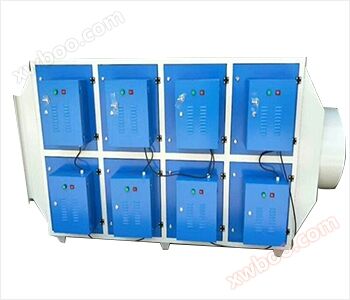
Plasma honeycomb electric field module
NegotiableUpdate on 07/21
- Model
- Nature of the Manufacturer
- Producers
- Product Category
- Place of Origin
Overview
Introduction to plasma honeycomb electric field module: In the chemical reaction process of plasma honeycomb electric field module, electric field+electrons → high-energy electrons, high-energy electrons+molecules (or atoms) → (excited atoms, excited groups, free groups) active groups
Product Details

During the chemical reaction process of the plasma honeycomb electric field module, the chemical energy transmitted by the plasma equipment in the reaction process is roughly as follows:
(1) Electric field+electrons → high-energy electrons
(2) High energy electrons+molecules (or atoms) → (stimulated atoms, stimulated groups, free groups) active groups
(3) Active groups+molecules (atoms) → products+heat
(3) Active groups+molecules (atoms) → products+heat
(4) Active groups+active groups → products+heat
From the above process, it can be seen that the electrons in plasma devices first obtain energy from the electric field, and transfer the energy to molecules or atoms through excitation or ionization. The molecules or atoms that obtain energy are excited, while some molecules are ionized, thus becoming active groups; Afterwards, these active groups collide with molecules or atoms, as well as with each other, to generate stable products and heat. In addition, high-energy electrons can also be captured by substances with strong electron affinity such as halogens and oxygen, becoming negative ions. These negative ions have excellent chemical activity and play an important role in chemical reactions.
The basic process of plasma removal of pollutants
Oxidation of OH radicals H2O+e → OH+H H2O+O → 2OH H+O2 → OH+O
Molecular fragments react with OH radicals and O (reactive oxygen species) to form inorganic substances H2O and CO2