-
E-mail
941593506@qq.com
-
Phone
1516964627915169646279
-
Address
Building 67, 14278 Jiankang East Street, Kuiwen District, Weifang City, Shandong Province
Product Categories
Shandong Runchuang Environmental Protection Equipment Co., Ltd

RCHB Integrated Tongchuan Hospital Wastewater Treatment Equipment
NegotiableUpdate on 06/24
- Model
- Nature of the Manufacturer
- Producers
- Product Category
- Place of Origin
Overview
As a high-quality wastewater treatment enterprise with a high starting point, our company has provided products for multiple water treatment projects both domestically and internationally. High quality and high-performance professional technical products and excellent after-sales technical services have been recognized by a large number of users and have gained a good reputation.
Product Details
| brand | Runchuang Environmental Protection | Customized processing | correct |
|---|---|---|---|
| Processing capacity | 10m³/h | rated voltage | 380v |
| rated power | 1.5kw | Diameter of water outlet pipe | 110mm |
| Inlet pipe diameter | 110mm |
Tongchuan Hospital Wastewater Treatment Equipment
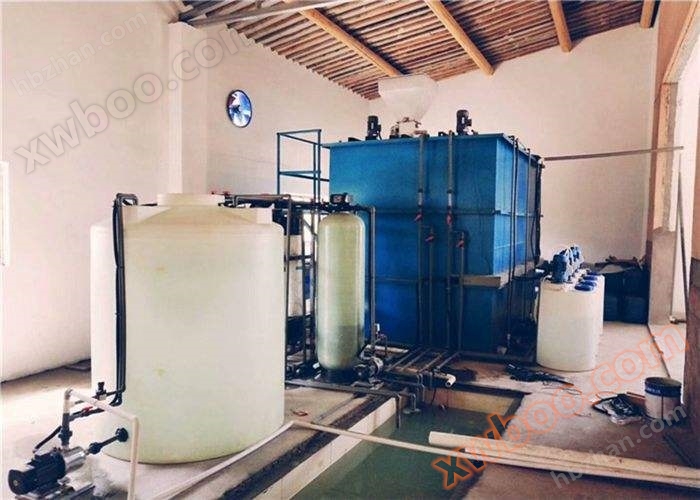
Although the amount of hospital sewage discharged is less than that of domestic sewage and general industrial wastewater, hospital sewage has its own characteristics, mainly including the sewage discharged from the hospital's diagnosis and treatment rooms, laboratories, wards, laundry rooms, X-ray photography rooms, and operating rooms. It contains youbing precursor and has strong infectivity.
If hospital wastewater containing pathogenic microorganisms is discharged into urban sewage pipes or environmental water bodies without disinfection treatment, it often causes water pollution, leading to various diseases and infectious diseases, seriously endangering people's health. If hospital sewage that has been disinfected does not meet the national purification standards during discharge and is directly discharged into rivers, it will not only increase the chance of people who come into direct contact with water (such as fishermen and swimmers) to contract diseases, but also have adverse effects on the health of some susceptible populations and those with low immunity when drinking.

The company's independently developed RC chlorine dioxide disinfection series, RC ozone disinfection series, underground integrated sewage treatment series, RC reclaimed water reuse system, industrial circulating cooling water system, cascade filter press, air flotation machine, flocculation dosing device, oil separation device, sewage lifting and strong discharge device and other products have won multiple product awards and been selected as quality Service Integrity AAA enterprise, national consumer satisfaction brand, quality inspection National standard products, ISO9001-2008 quality system certification, outstanding contribution to promoting the development of green, low-carbon, energy-saving and environmental protection industries For many years, it has made significant contributions to the sewage treatment issues of enterprises of all sizes across the country.
The main business of the company:
Medical sewage treatment equipment, domestic sewage treatment equipment, industrial wastewater, washing, breeding, slaughtering, food, printing and dyeing, tourism areas, urban and rural sewage transformation and treatment equipment, processes, small footprint, low investment, and stable effluent standards. Welcome new and old customers to visit and purchase at the factory.
Product images

On site pictures:

Regulation of medical wastewater
Due to the significant fluctuations in water quality and quantity of medical wastewater, it is necessary to strengthen regulation to stabilize the water quality and quantity of the wastewater, in order to ensure the effectiveness of subsequent biochemical treatment.
Hydrolysis acidification reaction
Due to the low organic concentration of this type of wastewater, based on our company's experience in treating low concentration organic wastewater, anaerobic digestion treatment is not necessary and only hydrolysis acidification process is required. The bacteria involved in the hydrolysis and acidification process are hydrolysis bacteria and acid producing bacteria, both of which operate under anaerobic conditions and do not require dynamic aeration. Therefore, the hydrolysis and acidification tank can partially degrade organic matter without energy consumption, reducing operating costs; At the same time, acid hydrolyzing bacteria can convert large molecules of difficult to degrade organic matter into small molecules of easily degradable organic matter, improving the treatment efficiency of subsequent aerobic treatment units. The use of hydrolysis acidification process can greatly shorten the time required for aerobic biochemistry; After simultaneous treatment, the effluent quality is better, which not only saves investment and operating costs, but also improves environmental benefits.
Aerobic contact oxidation reaction
Biochemical treatment mainly uses aerobic treatment to remove the vast majority of organic matter in wastewater by relying on the adsorption and degradation of aerobic microorganisms, while providing sufficient dissolved oxygen in the wastewater.
The aerobic biological treatment methods for wastewater are mainly divided into activated sludge method and biofilm method, both of which are commonly used domestically and internationally and have relatively mature processes. The biofilm method is divided into three categories based on the attachment of different biofilm materials: biological disc, biological filter, and contact oxidation method. With the development of the chemical industry, biological fillers are constantly being updated, from plastic honeycomb fillers to soft fillers and then to semi soft fillers. The contact oxidation method is increasingly demonstrating its superiority. Due to the rich biological phase of contact oxidation, especially in low concentration wastewater treatment, the contact oxidation method has gradually replaced the activated sludge method.
sedimentation tank
The sedimentation tank is used to remove suspended solids in water through sedimentation, and the removal of SS in sewage mainly relies on sedimentation. The sedimentation tank consists of five parts: inlet area, outlet area, sedimentation area, sludge storage area, and buffer zone. The function of the inlet and outlet zones is to maintain a uniform and smooth flow of water in and out, in order to improve sedimentation efficiency. The sedimentation zone is the main part of the pond. The sludge storage area is a place where sludge is stored, concentrated, and discharged. The buffer zone is located between the sedimentation zone and the sludge storage zone, and its function is to prevent water flow from carrying away the sludge settled at the bottom of the tank.
Disinfection treatment
After biochemical treatment, except for some bacteria that settle with the sludge, most pathogenic bacteria such as Escherichia coli and fecal streptococcus still exist in the sewage and must be disinfected. At present, there are many disinfection methods for domestic sewage, such as Yelv method, ozone method, chlorine dioxide method, etc. The sodium hypochlorite method has the advantages of convenient dosing, low cost, and high reliability. This system uses sodium hypochlorite for disinfection. The disinfection pool adopts a laminar flow partition contact reaction device to improve the contact time and achieve better disinfection effect.
Installation service
After receiving the buyer's request for our company to send technical personnel to the site for installation, testing, and debugging, our technical personnel will arrive within 2 days. During equipment installation, we will follow the detailed construction drawings approved by the user and complete them on our behalf. We are responsible for the specific installation work, and the next debugging stage can only be carried out after we confirm that the installation is correct.
Run debugging services
After the equipment installation work is completed, the equipment enters trial operation, and we are responsible for implementing guidance and debugging work.
After sales service commitment
All products sold by our company come with a one-year warranty, lifetime warranty, free design and selection, and free technical consultation.
- Assist customers in selecting suitable matching equipment models.
- Provide technical information related to the equipment and be responsible for guiding installation and debugging.
- Provide information on raw material suppliers.
- Free training for operators and provision of technical consultation.
- Undertake the quality responsibilities stipulated in the Quality Law of the People's Republic of China.
- During the warranty period, if any problems occur under normal use, our company will unconditionally provide unlimited service to customers, and even replace the equipment.
- Product maintenance: Respond within 24 hours after receiving a repair report and promptly dispatch maintenance personnel to the scene to solve the problem.
- Free development of operating procedures for customers and free training of operators.
Dr. Qi Peishi from the School of Municipal Environmental Engineering at Harbin Institute of Technology said: Due to the presence of bacteria and viruses in hospital wastewater, if left untreated, it can pose a threat to human health. Currently, many small-scale hospitals or private clinics are mixed in residential areas and use water and sewage together with residents, which increases the difficulty of wastewater treatment. It is recommended that medical management departments limit the treatment content and scope of these hospitals, and further refine national policies. On the other hand, there are still loopholes in management, such as lax enforcement and failure to prosecute illegal activities. Hospitals spend tens of thousands or even millions of dollars on sewage treatment facilities. Although there is no economic benefit, the social and environmental benefits it brings to people are considerable. We hope that hospital managers can increase their environmental awareness. Hospitals should actively come up with plans, submit applications to Zhengfu, and strive for financial support from relevant departments. They should update and replace the aging and outdated sewage treatment facilities in hospitals as soon as possible, and try their best to achieve harmless treatment of hospital sewage. Further conduct in-depth research on the problems of small and medium-sized hospitals mixed in residential areas, and come up with effective treatment methods to prevent hospital sewage from threatening people's health.
Tongchuan Hospital Wastewater Treatment Equipment


Similar Product Recommend


