-
E-mail
yinyangyang@yunjingtianhe.com
-
Phone
13276363313
-
Address
Room 206, Building 1, Weifang High tech Zone Optoelectronic Industry Accelerator (Phase I), No. 155 Guangdian Circuit, Weifang High tech Zone, Shandong Province
Product Categories
Shandong Tianhe Environmental Technology Co., Ltd
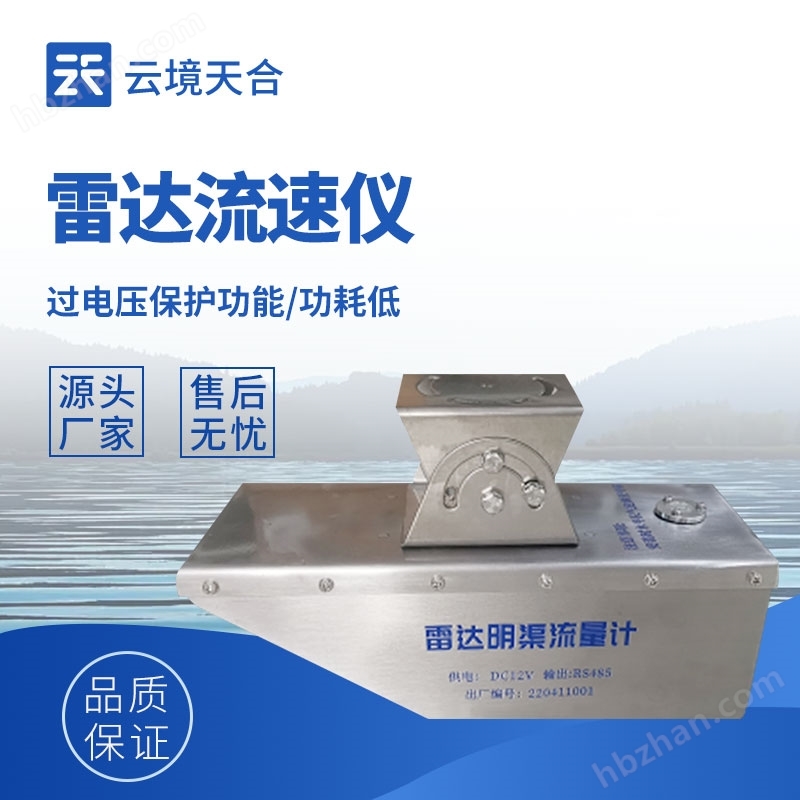
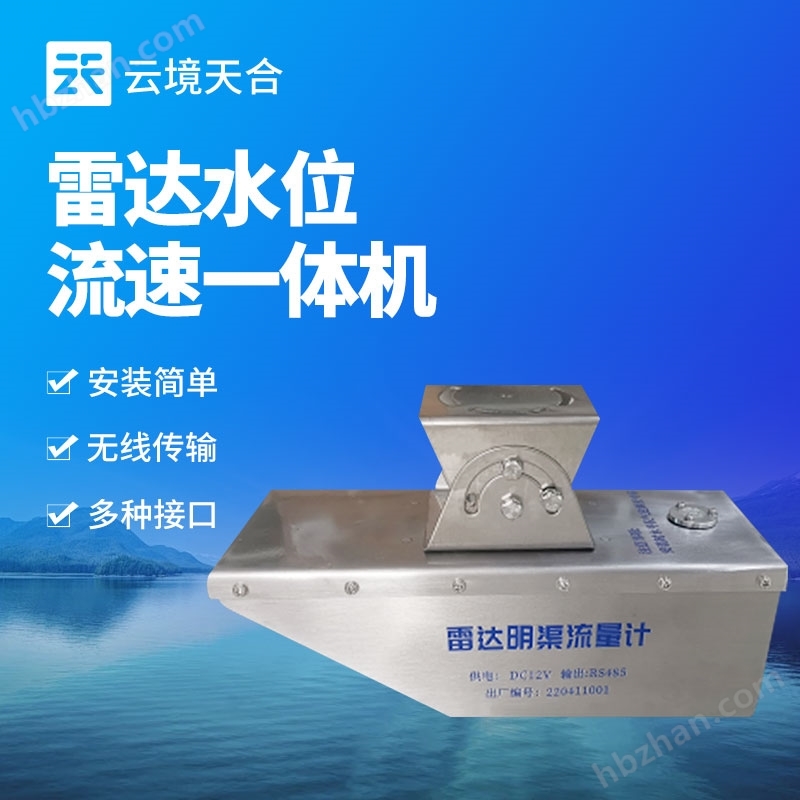


Radar flowmeter
NegotiableUpdate on 02/11
- Model
- Nature of the Manufacturer
- Producers
- Product Category
- Place of Origin
Overview
The radar flowmeter is based on the Doppler effect principle, which accurately calculates the water flow velocity by emitting high-frequency electromagnetic waves and capturing the frequency offset of the reflected waves on the surface of the water flow. Its non-contact measurement method does not require immersion in water, which can avoid interference from sediment and floating objects and adapt to complex hydrological environments. The device integrates water level and flow velocity measurement functions, combined with built-in algorithms to achieve real-time flow calculation, and supports multiple cross-sectional parameter settings such as trapezoidal and circular shapes. Featuring low power consumption, compact size, and easy installation, it is suitable for scenarios such as rivers, irrigation channels, flood warning, and emergency monitoring, providing reliable data support for water management.
Product Details
Radar flowmeterBased on the principle of Doppler effect, the water flow velocity is accurately calculated by emitting high-frequency electromagnetic waves and capturing the frequency shift of the reflected waves on the surface of the water flow. Its non-contact measurement method does not require immersion in water, which can avoid interference from sediment and floating objects and adapt to complex hydrological environments. The device integrates water level and flow velocity measurement functions, combined with built-in algorithms to achieve real-time flow calculation, and supports multiple cross-sectional parameter settings such as trapezoidal and circular shapes. Featuring low power consumption, compact size, and easy installation, it is suitable for scenarios such as rivers, irrigation channels, flood warning, and emergency monitoring, providing reliable data support for water management.
1、 Product Introduction
Our company's research and developmentRadar flowmeterAdopting K-band planar microstrip array antenna, energy concentration and low power consumption; The instrument integrates functions such as vertical angle compensation, flow velocity averaging, signal strength detection, and serial communication control. The non-contact radar flow measurement system ensures that the equipment is not corroded by sewage or affected by sediment during speed measurement. The civil engineering is simple, less affected by water damage, easy to maintain, and ensures personnel safety. Not only can it be used for regular environmental monitoring, but it is also particularly suitable for undertaking urgent, difficult, dangerous and heavy observation tasks.
2、 Product Features
1. Non contact, safe, low loss, minimal maintenance, and not affected by sediment
2. Capable of measuring under high flow velocity conditions during flood periods
3. It has anti reverse connection and overvoltage protection functions
4. The system has low power consumption and is generally powered by solar energy to meet the needs of current measurement
5. Multiple interface modes, including both digital and analog interfaces, compatible with the standard Modbus RTU protocol for easy access to the system;
6. Equipped with wireless data transmission function (optional)
7. It can independently connect with the currently running automatic monitoring and reporting systems for urban water conditions, sewage, and environment
8. Wide speed measurement range, effective measurement distance up to 10m
9. Multiple triggering modes: cycle, trigger, manual, automatic
10. The installation is particularly simple, with very little civil engineering work
11. Fully waterproof design, suitable for outdoor use
3、 Technical parameters
| measurement range | 0.1-20m/s liquid level 0-30m |
| measurement accuracy | Speed measurement accuracy: ± 0.01 meters per second; ±1%FS |
| radar antenna | Planar microstrip array antenna |
| Radar vertical tilt angle correction | Automatic correction |
| Flow direction recognition | Bidirectional (Floating Point Bidirectional) |
| Measurement duration | Configurable |
| Measurement interval | Continuous measurement after power on |
| radar frequency | 24GHz(K-Band) |
| power supply range | DC12VDC |
| Digital interface | RS485 |
| Analog output (default none) | 4-20Ma can be selected |
| Wireless transmission (optional) | optional |
| Energy consumption of 12V power supply | Approximately 120mA during measurement |
| Shell material | Stainless steel and aluminum alloy casing |
| Protection level | IP68 |
| Operating Temperature | -35℃-70℃ |
| Storage temperature | -40℃-70℃ |
| Lightning protection (optional) | Integrated lightning protection function (optional) |
| Distance between radar and water surface | Effective distance of 40m (related to water surface ripple, the larger the wave, the farther the measurement distance) |
4、 Product Structure Diagram

5、 Product installation diagram


The installation diagram is shown in the figure. On site installation can be carried out with the help of existing building foundations such as bridges and brackets, but it is necessary to ensure that the direction of the radar wave emitted by the flow meter is parallel to the direction of the water flow. The wave emitted by the flow meter is at a 45 ° angle to the water surface, and the default adjustment angle at the factory is 45 °
6、 Installation precautions
1. Installation requires selecting a stable flow state, on a straight channel, away from the gate outlet, and at the channel bend position
2. The installation height should be controlled within 5 meters as much as possible (the closer the distance, the stronger the measurement signal and the more reliable the data)
3. If the water flow rate is below 0.25 and the water ripple is small, there is feasibility for unstable measurement