-
E-mail
info@shouxinpam.com
-
Phone
18929460565
-
Address
Nancheng District, Dongguan City, Guangdong Province
Product Categories
Guangdong Shouxin Environmental Protection Materials Technology Co., Ltd
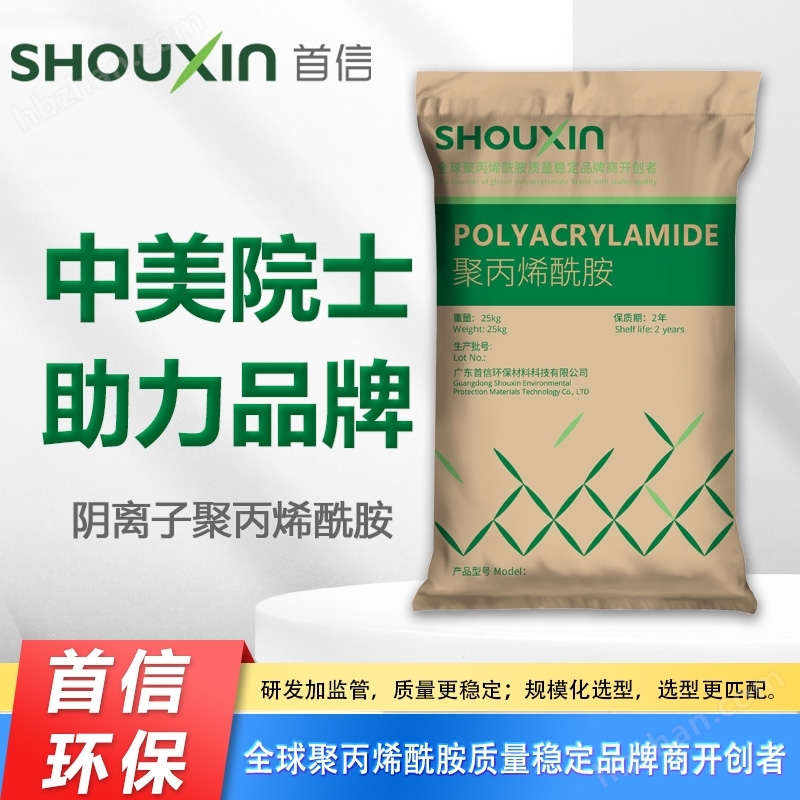


Shouxin brand anionic polyacrylamide - Chinese and American academicians support the brand
NegotiableUpdate on 02/13
- Model
- Nature of the Manufacturer
- Producers
- Product Category
- Place of Origin
Overview
Shouxin brand anionic polyacrylamide - a brand supported by Chinese and American academicians. Anionic polyacrylamide is a high molecular weight chemical substance commonly used as a thickener, antistatic agent, waterproofing agent, etc. in industrial production such as water treatment agents, oilfield oil recovery auxiliary agents, pulp and paper. It has excellent water absorption, dispersibility, stability, and viscosity, which can help precipitate suspended solids, remove organic matter, and prevent soil erosion. In the field of wastewater treatment, it is widely used for flocculation, sedimentation, and clarification treatment of various industrial wastewater, such as steel plant wastewater, electroplating plant wastewater, metallurgical wastewater, coal washing wastewater, and sludge dewatering.
Product Details


Shouxin brand anionic polyacrylamide - Chinese and American academicians support the brand
Polyacrylamide, an anionic flocculant, is a high molecular weight chemical substance commonly used as a water treatment agent, oilfield oil recovery auxiliary agent, thickener, antistatic agent, waterproofing agent, etc. in industrial production such as pulp and paper. It has excellent water absorption, dispersibility, stability, and viscosity, which can help precipitate suspended solids, remove organic matter, and prevent soil erosion.
1) Principle of flocculation: When PAM is used for flocculation, it is related to the surface properties of the flocculated material, especially the dynamic potential, viscosity, turbidity, and pH value of the suspension. The dynamic potential of the particle surface is the reason for particle blockage. Adding PAM with opposite surface charges can reduce the dynamic potential and cause coagulation.
2) Adsorption bridging: PAM molecular chains are fixed on different particle surfaces, forming polymer bridges between particles to form aggregates and settle.
3) Surface adsorption: various adsorption of polar functional groups particles on PAM molecules.
4) Enhancement effect: PAM molecular chains and dispersed phases are linked together through various mechanical, physical, chemical, and other interactions, forming a network.
Shouxin brand anionic polyacrylamide - Chinese and American academicians support the brand:Coagulants are used for flocculation, sedimentation, and clarification treatment of various industrial wastewater, such as steel plant wastewater, electroplating plant wastewater, metallurgical wastewater, coal washing wastewater, and sludge dewatering. It can also be used for clarifying and purifying drinking water. Due to the presence of a certain number of polar groups in its molecular chain, it can adsorb solid particles suspended in water, bridging between particles or aggregating particles to form large flocs through charge neutralization. Therefore, it can accelerate the settling of particles in suspension, significantly improve solution clarification, and promote filtration.
The more polyacrylamide used, the better. Sometimes, adding too much may not have the same effect. As an end customer, how can we maximize the effectiveness of the product and add an appropriate amount during use? Before formal use on the machine, it is necessary to conduct an experimental selection of polyacrylamide. Through laboratory selection experiments, different types of polypropylene products are used for comparative experiments to observe the effects of various models and select products. And by adding different dosages to observe and record the effects, the theoretical addition value at the time of the effect is calculated. When conducting experiments on the machine, the actual addition amount is adjusted and optimized based on this theoretical dosage and some practical situations on site.
Similar Product Recommend