-
E-mail
2575348821@qq.com
-
Phone
13681838039
-
Address
Pudong New Area: Building C, 2977 Chuansha Road, Shanghai
Product Categories
Shanghai Jingsheng Environmental Protection Equipment Co., Ltd

Stainless steel fully automatic backwash filter
NegotiableUpdate on 03/03
- Model
- Nature of the Manufacturer
- Producers
- Product Category
- Place of Origin
Overview
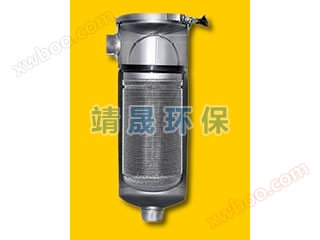
Fully automatic backwash filter, the filtered liquid enters the filter from the inlet, passes through the lower fixed plate and enters the filter screen. The liquid flows from the inside of the filter screen to the outside and exits the filter through the outlet of the filter cartridge; Impurities discharged from backwashing are discharged from the sewage outlet
Product Details
During the process of liquid flow from the inside to the outside of the filter, solid particles are trapped inside the filter With the increase of pollutants, the pressure difference between the polluted side and the clean side of the filter gradually increases. When the pressure difference reaches the set value, the pressure difference gauge sends a signal, and the filter starts the automatic backwashing process.
Working principle diagram of backwash filter
Fully automatic backwashing filter backwashing process:
(1) The deceleration motor drives the flushing arm to rotate through the intermediate shaft, and the rotation angle of the flushing arm is controlled by the positioning switch to align with the cleaned filter screen.
(2) The drain valve opens, creating a pressure difference between the outside (clean side) of the cleaned filter and the drain.
(3) Under the pressure difference, the cleaning side liquid flows from the outside to the inside of the cleaned filter screen for backwashing. The pollutants accumulated on the inside of the filter element are washed away and discharged from the filter through the drain outlet.
(4) The backwash time for each filter has been set. When the backwash set time is reached, the drain valve closes and the backwash process for that filter ends; The deceleration motor drives the flushing arm to rotate again, backwashing the next (group) filter screen and opening the drain valve again. Repeat this process to backwash each (group) filter.
(5) After all the filter screens are cleaned, the flushing arm returns to its original position under the control of the zero position switch, and one backwash cycle ends.
Due to the fact that backwashing is a process of flushing one filter at a time, the filter can still maintain a continuous flow of liquid during the backwashing process.
Automatic backwash filter backwash process setting:
Differential pressure setting: The differential pressure gauge on the filter is equipped with a transmission point for setting the differential pressure of the filter and setting the backwash process of the filter;
Time setting: The filter control box is equipped with a time setting device, which can set the time cycle of the filter backwashing process according to user requirements; The pressure difference setting and time setting are the automatic backwash setting process, and both settings exist simultaneously, with the pressure difference setting taking priority;
Manual start: In addition to setting the pressure difference and time for automatic backwashing, there is also the option to manually start the backwashing process by pressing the TEST button, which is used for debugging and maintenance.
*Standard performance of fully automatic backwash filter:
Minimum working pressure: 2 bar (30 psi)
Maximum working pressure: 7 bar (100 psi)
Cleaning filter pressure loss: 0.1 (2 psi)
Working temperature: 65 ° C (149 ° F)
Filtering accuracy: 25-3000 microns
Control voltage: 24V DC
Rinse water consumption (at minimum working pressure): 50 liters
Filter housing material: carbon steel (spray treated), stainless steel (sandblasted)
Selection Table for Fully Automatic Backwash Filters
Selection Table for Fully Automatic Backwash Filters
|
Product Model |
A |
B |
C |
D |
Inlet and outlet diameter (mm) |
Discharge outlet size (mm) |
Reference flow rate (m3/h) |
|
BW300 |
1690 |
265 |
640 |
300 |
DN50、80 |
DN50 flange |
70 |
|
BW350 |
1720 |
265 |
660 |
350 |
DN80、100 |
DN50 flange |
100 |
|
BW400 |
1750 |
255 |
680 |
400 |
DN100、150 |
DN50 flange |
130 |
|
BW500 |
1860 |
290 |
715 |
500 |
DN200 |
DN80 flange |
200 |
|
BW600 |
1910 |
270 |
755 |
600 |
DN250 |
DN80 flange |
280 |
|
BW700 |
2040 |
335 |
755 |
700 |
DN300 |
DN100 flange |
450 |
|
BW800 |
2090 |
320 |
770 |
800 |
DN350 |
DN100 flange |
600 |
|
BW1000 |
2220 |
335 |
800 |
1000 |
DN400 |
DN100 flange |
800 |
|
BW1200 |
2360 |
365 |
825 |
1200 |
DN500 |
DN100 flange |
1000 |
Application scope of backwash filter:
Steel: used for water treatment filtration in raw material yards, sintering pellet plants, cooling water filtration in blast furnaces, rolling mills, continuous casting machines and other systems, and impurity filtration in high-pressure water phosphorus removal systems
Automobiles: Painting production lines are widely used in the manufacturing of water and treatment systems for automobiles, tractors, motorcycles, and engines
Power plant: used for precision pretreatment of high-purity water preparation for power plant boilers, filtration of generator cooling water and sealing water, and can be used as a side filter treatment when the water consumption of the 13-4 series is extremely large
Petrochemical industry: Performing side filtration treatment in circulating water plants, which can replace filter media filtration with single or multi machine parallel main treatment, reduce filter media filtration load, avoid a large amount of flushing water consumption, and save costs
Agricultural landscaping and paper mills: In sprinkler and nozzle systems, equipment blockage and wear caused by impurities should be reduced. Therefore, high-precision and highly automated filtration products such as machinery, food or others should be selected to automatically and accurately filter the system to prevent blockage of the cooling water system. Mining: Filter underground sprinkler water to ensure normal system operation.
Water supply and sewage treatment: used in pre-treatment systems to improve system operating efficiency
Widely used in drinking water treatment, building circulating water treatment, industrial circulating water treatment, sewage treatment, mining industry water treatment, golf course water treatment, construction, steel, petroleum, chemical, electronics, power generation, textile, paper, food, sugar, pharmaceutical, plastic, automotive industries and other fields.