-
E-mail
479333214@qq.com
-
Phone
15857728857
-
Address
Jiaoxia Industrial Zone, Oubei Town, Wenzhou City, Zhejiang Province
Product Categories
Zhanye Valve Co., Ltd

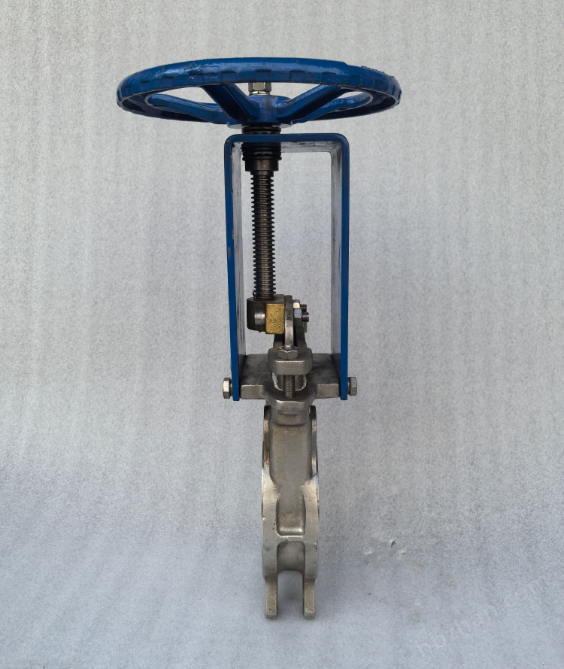
Stainless steel knife gate valve
NegotiableUpdate on 03/09
- Model
- Nature of the Manufacturer
- Producers
- Product Category
- Place of Origin
Overview
Stainless steel knife gate valves are suitable for cutting off or circulating media in transportation pipelines such as chemical, petroleum and light industry, medicine, papermaking, environmental wastewater, coal mines, etc. It is one of the commonly used shut-off valves, suitable for installation on medium pipelines such as coal ash, sewage, pulp dust, etc., as an opening and closing device to control the flow of medium.
Product Details
The use of knife gate valves has evolved from ordinary fields to a wider range of applications. From mining slag discharge to urban sewage treatment; From general industrial pipelines to food hygiene pipeline systems. The ultra-thin design of the knife gate valve solves the difficult problems of high flow resistance, bulky installation, and wide footprint that exist in ordinary gate valves, flat gate valves, ball valves, globe valves, regulating valves, butterfly valves, etc. After the emergence of knife gate valves, a large number of general-purpose cut-off and regulating valves have been replaced by metal sealed knife gate valves.
Knife gate valves are suitable for cutting off or circulating media in transportation pipelines such as chemical, petroleum and light industry, medicine, papermaking, environmental wastewater, coal mines, etc. It is one of the commonly used shut-off valves, suitable for installation on medium pipelines such as coal ash, sewage, pulp dust, etc., as an opening and closing device to control the flow of medium. The fully circular DC channel design has no slag or blockage. The bottom of the blade is processed into a blade shape, which has cutting function for soft materials such as fibers, pulp, and wood pulp, and also has good opening and closing function. The adjustable gate can scrape off the adhesive on the sealing surface and automatically remove debris.
2、 Scope of application:
Nominal pressure: 0.6MPa-1.6MPa
Nominal diameter: DN50~DN2400
IIIStainless steel knife gate valvePerformance characteristics:
1) Short structural length can save raw materials, installation space, and effectively support pipeline strength;
2) The guide block on the valve body enables the gate to move correctly, while the compression block ensures effective sealing of the gate;
3) The triangular bracket saves raw materials and ensures the required mechanical properties;
4) Internally, it can be made into V-shaped or triangular shapes to meet the requirements of fluid regulation and control.
4Stainless steel knife gate valveWorking principle and main technical parameters:
4.1 Opening process
When in the closed position, the gate is tightly inserted between the valve seat and the sealing ring under the mechanical pressure of the valve stem. When the handwheel is turned counterclockwise, the valve stem drives the gate to move upward, the gate moves away from the sealing ring, and the valve stem continues to lift the gate (while also restoring the elastic fatigue state of the sealing ring, thereby improving the service life of the sealing ring). When the gate leaves the sealing surface and reaches the top position of the diameter, the knife gate valve is opened to the full through position.
4.2 Closing process
When closing, turn the handwheel clockwise and the valve stem begins to descend, causing the gate to start moving downwards. Continue to turn the handwheel and the valve stem pushes the gate down, pushing it to the closed position. When the handwheel can no longer rotate, the gate surface has covered the channel, and at the same time, the gate is subjected to the pressure of the upper and lower wedge blocks on the other side, causing the gate surface to press the sealing ring, thus playing a sealing role.
4.3 Main Technical Parameters
Main performance specifications
Project Name |
unit |
numerical value |
|
Nominal diameter DN |
mm( in ) |
50(2″)--2000(80″) |
|
Nominal Pressure PN |
Mpa(CLASS) |
1.0、1.6、150Lb |
|
Test pressure PN |
Mpa(CLASS) |
seal |
1.1PN |
Shell strength |
1.5PN |
||
medium temperature |
℃ |
-29℃-+1000℃ |
|
Applicable Medium |
Pulp, mud, sewage, mortar, slag, alkali solution, mine tailings, syrup |
||
Operation method |
Manual, chain wheel, lever, pneumatic, electric, hydraulic |
||
5、 Main component materials:
Part Name |
Materials |
Valve body |
WCB |
Gate plate |
Stainless Steel 201 |
Bracket |
WCB |
Valve stem |
2Cr13 |
Packing material |
asbestos rope |
6、 Valve sealing structure form:
Knife gate valve is a type of valve with advantages such as lightweight, simple and compact structure, reliable sealing performance, long service life, and the ability to cut off media. The sealing structure of knife gate valve includes valve body, gate plate, sealing ring, valve seat, and wedge block. The sealing effect is achieved by pressing the gate plate against the sealing ring installed on the valve seat.
7、 Reference standards
Design and Manufacturing Standard: JB/T8691-1998
Structural length: GB/T15188.2-94
Connecting flange: GB/T9113.1-2000
Testing and Inspection Standards: GB/T13927
8、 Maintenance, upkeep, installation, and usage precautions
8. Installation, use and maintenance
8.1 Installation
Before installation, carefully read the user manual and verify whether the model, specifications, and other markings match the on-site usage requirements.
During pipeline installation, valves should be installed in a reasonable manner according to the flow direction of the medium, and the operating position should be placed in a location that is convenient for valve opening and closing operations and wiring.
Before installation and use, a comprehensive performance inspection of the valve must be conducted. The sealing ring and transmission parts of the valve, as well as the stroke control mechanism and opening (position) indicator mechanism of the pneumatic and electric devices, must be inspected item by item.
8.1.3.1 No dirt is allowed to adhere to the valve cavity and sealing surface.
8.1.3.2 Check if all connecting bolts are evenly tightened.
8.1.3.3 Valves should be cleaned thoroughly and lubricating oil (grease) should be added to each rotating part
8.1.3.4 The comprehensive performance inspection of the pneumatic and electric devices of the valve must be carried out without any obstruction during valve opening and closing.
8.2 Precautions for Debugging and Use
8.2.1 The grounding core wire of the electric valve cable must be safely and reliably connected to the internal grounding screw.
8.2.2 During use, lubricating oil (grease) should be added to the rotating parts of the valve every week.
8.2.3 Check if the packing is evenly compressed and sealed, but not too tight to prevent the gate from lifting.
8.2.4 If the motor overheats or operates abnormally, or the control mechanism malfunctions during use, the power should be cut off in a timely manner and the machine should be stopped for inspection.
8.3 Storage, maintenance and upkeep
8.3.1 This valve should be stored in a dry and ventilated room, and the gate should be closed to prevent dirt from entering the chamber.
Valves stored for a long time should be inspected regularly, and rust proof oil should be applied to the processing surface.
8.3.3 After the valve is put into use, the following contents should be checked regularly.
8.3.3.1 Wear degree of gate sealing surface, valve seat, and sealing ring surface
8.3.3.2 Wear of valve stem and valve stem nut
8.3.3.3 Check if the packing is outdated or ineffective. If it is damaged, it should be replaced in a timely manner. Generally, the packing gland can be tightened after six months of use to ensure the upper seal.
4.3.3.4 The cleaning chamber should be cleaned regularly after the system is depressurized to remove dirt, and lubricating oil (grease) should be added to each rotating part
9、 Possible faults and their elimination methods
Possible faults that may occur |
Reason for malfunction |
Elimination methods |
|
Sealing leakage |
1. Valve switch malfunction. 2. Damaged sealing ring |
1. Clean the sealing surface 2. Replace the sealing ring or grind the sealing surface |
|
Leakage of upper sealing surface |
Loose upper sealing packing
|
1. Tighten the two nuts evenly on the packing gland and tighten the packing tightly 2. Add fillers 3. Replace with new packing material |