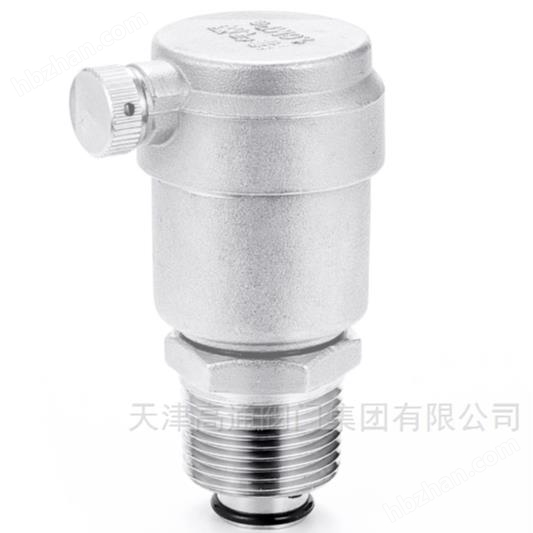
ZP88-16P is a stainless steel threaded exhaust valve with external thread connection and pressure resistance PN16. With the help of a float that links the valve opening and closing with the liquid level rise and fall, the gas in the pipeline can be automatically discharged to prevent corrosion, gas blockage, and noise. It can also balance the negative pressure protection system and is suitable for HVAC, water supply, and other scenarios.
ZP88-16P is designed specifically for fluid systemsStainless steel threaded exhaust valveUsing external thread (threaded) connection method, it is compatible with common specifications such as DN15, DN20, DN25, etc. The "16P" in its model represents a pressure resistance level of PN16 (1.6MPa), which can withstand medium temperatures ranging from 0 ℃ to 110 ℃. Its core function is to automatically discharge the accumulated gas in the pipeline system, avoid problems such as gas blockage and corrosion, and ensure efficient operation of the system.
The product structure is compact, mainly composed of valve body, valve cover, float ball and sealing components:
Main materialThe valve body and valve cover are both made of stainless steel, with common grades including SS304, SS316, etc. They have excellent corrosion resistance and structural strength, and are suitable for various media environments.
key componentThe floating ball is made of high-temperature resistant synthetic plastic material, which can flexibly rise and fall with changes in liquid level; The sealing gasket is made of high-temperature resistant synthetic rubber, combined with a nickel plated stainless steel spring valve core component to ensure sealing performance and operational reliability.
Convenient designThe valve cap adopts a detachable structure for easy maintenance and operation in the later stage.
Relying on the float linkage mechanism to achieve fully automatic exhaust without manual intervention:
Gas collectionThe gases generated during system operation (such as hydrogen and oxygen) have a lower density than water and rise along the pipeline to the valve body installed at the high point of the system, where they accumulate in the upper space.
exhaust processAs the gas increases, the pressure inside the valve rises, the liquid level drops, and the floating ball moves down synchronously with the water level. The exhaust port is opened in linkage, and the pressurized gas is discharged in the same direction. The exhaust pressure range covers 0.5-7 bar.
Close the sealAfter the gas is discharged, the pressure inside the valve decreases, the liquid level rises, the float rises, and under the action of spring elasticity and buoyancy, the exhaust port automatically closes, restoring the sealed state.
Efficient exhaustThe exhaust volume is directly proportional to the system pressure, and it can respond quickly to both large amounts of exhaust during the initial water addition operation of the system and small amounts of exhaust during normal operation.
Reliable sealingSpecialized high-temperature resistant rubber seals combined with precision valve core structures eliminate water leakage hazards, with a small sealing pressure of up to 0.2 bar.
Easy to maintainWithout shutting down the system, the valve cap can be directly unscrewed for cleaning. The individual components are cast with high precision, with high assembly accuracy and low failure rate.
Strong adaptabilityStainless steel material and wide temperature and pressure range design can adapt to various fluid media, and the external thread connection method is easy to install and suitable for most pipeline systems.
Widely used in fluid systems that require steam water separation, with core scenarios including:
Heating system: independent heating, centralized heating, floor radiant heating, solar heating, and heat pump system, which can solve the problem of local heat dissipation of radiators.
Air conditioning and boilers: central air conditioning water circulation system, heating boiler and related supporting pipelines, reducing pipeline noise and circulating pump vortex phenomenon.
Water supply and drainage system: various civil and industrial water supply and drainage pipelines to prevent corrosion and uneven flow caused by gases.
Each valve undergoes strict exhaust performance and pressure sealing tests before leaving the factory to ensure stable operation within the rated pressure and temperature range, providing reliable guarantees for system safety.