-
E-mail
1743251064@qq.com
-
Phone
13403270026
-
Address
Botou Development Zone, Hebei Province
Product Categories
- Pulse dust collector
- Star shaped unloader
- Dust bag
- Spiral conveyor
- Cyclone dust collector
- Dust humidifier
- Dust removal framework
- Low temperature plasma exhaust gas treatment equipment
- precipitator
- Dust removal accessories
- Single dust collector
- Boiler dust collector
- bag-type dust collector
- Plasma oxygen integrated machine
- Catalytic combustion equipment
- Industry dust collector
- Welding smoke purification equipment
- other
- UV photo oxygen exhaust gas treatment equipment
Botou Longnuo Environmental Protection Equipment Co., Ltd

Steel plant dust collector
NegotiableUpdate on 08/20
- Model
- Nature of the Manufacturer
- Producers
- Product Category
- Place of Origin
Overview
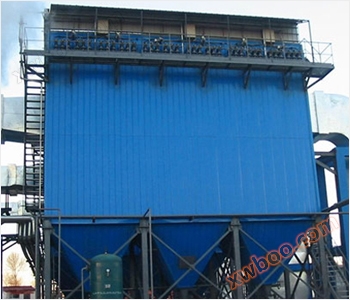
Introduction to Steel Plant Dust Collector: The layout of steel plant dust collector pipelines should be coordinated with the structure of the plant, occupying less effective space, not hindering operation, and facilitating installation and maintenance
Product Details

The layout of dust collector pipelines in steel plants is similar to that of dust collector pipelines in steel plants and cement plants, mainly adhering to the following principles: not affecting process production, easy installation and maintenance, reducing dust removal pipe network resistance, saving investment for users, and considering dust collector pipelines in conjunction with production equipment to make the process flow reasonable.
(1) The layout of the dust collector pipeline in the steel plant should be coordinated with the structure of the plant, occupying less effective space, not hindering operation, and facilitating installation and maintenance.
(2) The dust collection system of the steel plant dust collector should not have too many suction points, generally no more than 5 suction points per system. When the distance between the suction points of the dust collector is not large or the resistance between the parallel branch pipes can still be balanced, the number of suction points of the dust collector can be appropriately increased, but it should not exceed 10. The dust collection system of a dust collector with multiple suction points can be connected to various branch pipes of the dust collector using a large cross-section collection pipe to facilitate the balance of resistance between each branch pipe.
(3) To prevent dust from settling in the pipeline of the steel plant dust collector, the dust collection pipeline of the dust collector should be avoided from being arranged horizontally as much as possible, especially for pipelines transporting coal powder. The angle between the industrial dust collector pipeline and the horizontal plane shall not be less than 55 °. Steel plant dust collectors can also be horizontally arranged for non explosive pipelines with a dust concentration of less than 5g/m3 and a flow velocity greater than 18m/s. Due to various special reasons of the dust collector in the steel plant, when the pipeline must be arranged horizontally, the length of the horizontal pipeline should be shortened as much as possible, and cleaning holes or compressed air pipe joints should be set near the dust collector pipeline elbow tees and other fittings for regular cleaning. Branch pipes should be connected from the top or side of the main pipe.
(4) In order to adjust the air volume and detection needs of the dust collector in the steel plant, measuring holes should be reserved on the outlet connecting pipe of the dust hood and the inlet and outlet pipes of the dust collector and fan. The measuring hole should be located on a straight pipe section with stable airflow, as far away as possible from irregular fittings such as elbows and tees, to reduce the influence of eddy currents on the measurement results. Do not open the measuring hole above the dust collector air duct to avoid affecting the measurement results. The bag filter dust collection system of large steel plants can be equipped with instruments for online measurement of parameters such as air volume, air pressure, CO content analysis, and temperature according to specific situations.
The necessity of environmental governance in steel enterprises
Environmental protection has become a focus of global attention, and China is sparing no effort to increase environmental protection work, especially in today's severe haze. People's attention to the environment is indispensable after meals. As a major emitter of pollution, steel companies are also aware of their social responsibility and believe that building a green, energy-saving, and environmentally friendly steel industry is urgent.
1. Environmental governance of steel enterprises is an urgent need to change the current environmental situation in China. Human society is experiencing various environmental disasters caused by industrial manufacturing, including air pollution, water pollution, and garbage pollution. Especially with the rapid development of the steel industry, the continuously emitted exhaust gases such as sulfur dioxide, nitrogen oxides, industrial wastewater, and waste residue cannot be effectively disposed of and utilized, leading to further deterioration of environmental pollution. Since 2013, the number of haze days in various parts of China has gradually increased, especially in the North and East China regions where pollution levels are severe. According to data jointly released by the Ministry of Environmental Protection and Greenpeace, Hebei Province accounted for 7 out of the 10 cities with poor air quality in China in 2013, and air pollution showed obvious regional characteristics. The pollutants emitted during the steel production process mainly include sulfur dioxide, nitrogen oxides, smoke, dust, etc., which are the main causes of haze weather.
2. Environmental governance of steel enterprises is a requirement of national energy conservation, emission reduction, and environmental protection. The steel industry, as a typical heavy polluting industry, has become a key focus of governance. The government is intensifying efforts to address environmental issues in the steel industry, with the aim of accelerating the industry's efforts to solve environmental pollution problems. In addition to the already released Action Plan for Air Pollution Prevention and Control, the Ministry of Environmental Protection has also released the Technical Policy for Pollution Prevention and Control in the Steel Industry. The new Environmental Protection Law has been implemented since January 1, 2015. The country has begun to take strong measures to strictly regulate the energy-saving and emission reduction targets of steel enterprises, control pollution emissions, require zero tolerance for some major pollution projects, increase assessment of steel enterprises, and accelerate the elimination of outdated production capacity.
3. Environmental governance in steel enterprises is a high standard for building green steel. In recent years, China's steel production has been increasing day by day, with obvious overcapacity. The smelting processes of steel enterprises coexist with backwardness, and some high energy consuming, high emission, and high polluting backward steel enterprises have seriously constrained the process of environmental governance in the steel industry. As a large state-owned steel enterprise, Handan Iron and Steel implements the environmental protection policy of "complying with environmental regulations, insisting on continuous improvement, implementing pollution prevention, achieving clean production, and creating a green Handan Iron and Steel", adheres to resource utilization, strengthens the promotion and application of environmental protection technologies, deeply promotes the company's environmental performance management, strengthens the management of environmental protection facilities and the control of key environmental factors, and continuously improves the quality of environmental protection system operation.