-
E-mail
2843593679@qq.com
-
Phone
13564080845
-
Address
Building 24, No. 1661 Jialuo Road, Jiading District, Shanghai
Product Categories
Shanghai Boke Biotechnology Co., Ltd


Trace Method for Coenzyme I NAD (H) Content Test Kit
NegotiableUpdate on 02/19
- Model
- Nature of the Manufacturer
- Producers
- Product Category
- Place of Origin
Overview
The Coenzyme I NAD (H) Content Test Kit Micro Method Company is selling products: IgG Fc Fragment Low Affinity IIIb Receptor (Fc γ R3B) Recombinant Protein Recombinant Fc Fragment Of IgG Low Affinity IIIb Receptor (FcgR3B) Juxtanodin Protein (JN) Recombinant Protein Recombinant Juxtanodin (JN) Kruppel like Factor 4 (KLF4) Recombinant Protein Recombinant
Product Details
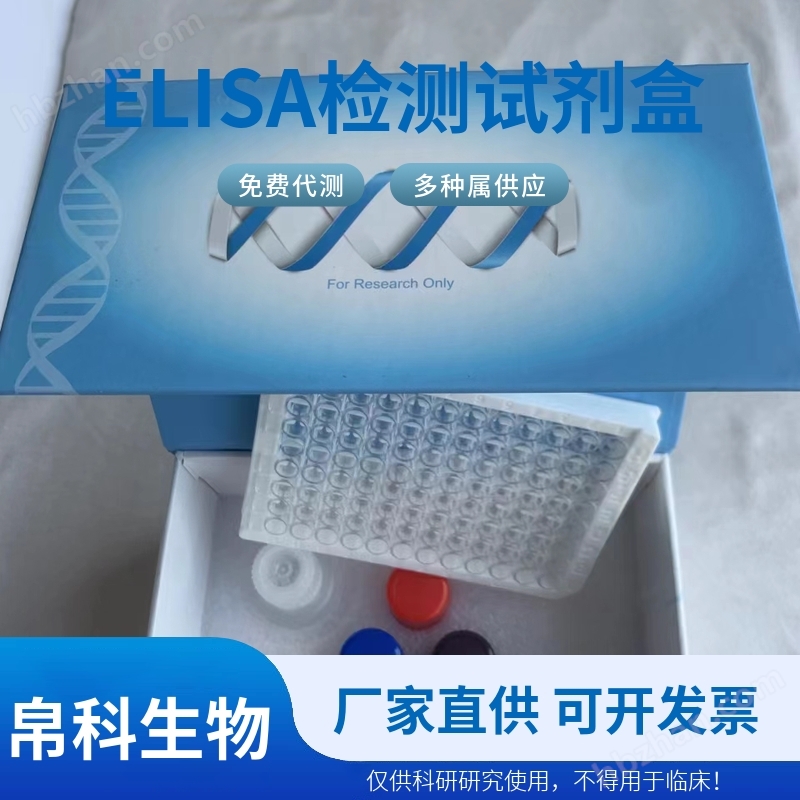
This reagent kit is for research purposes only. The company's laboratory provides free proxy testing, and the results will be available after 7 working days. The original data is provided!
| Product Name | Specifications | detection method | Item Number |
| Trace Method for Coenzyme I NAD (H) Content Test Kit | 100 tubes/48 samples | Micro method | BK-S01321 |
Product Introduction:
| Measurement significance Coenzyme I NAD (H) is widely present in animals, plants, microorganisms, and cultured cells. NAD+is the main hydrogen receptor for glycolysis (EMP) and tricarboxylic acid cycle (TCA), and the generated NADH is transferred to oxygen through the respiratory electron chain (ETC) to form a large amount of ROS while synthesizing ATP. At the same time, NADH is regenerated into NAD+. The oxidation reactions involved in the breakdown of the three major metabolites of sugar, lipids, and proteins are mostly carried out through this system. The levels of NAD (H) content and NADH/NAD+ratio can be used to evaluate the strength of glycolysis and TCA cycle. A higher NAD (H) and NADH/NAD+ratio indicates a higher oxygen consumption in cellular respiration and a state of peroxidation. In addition, an increase in the NADH/NAD+ratio can also inhibit glycolysis and TCA cycle. In addition, NAD+degradation products play important regulatory roles in cellular signaling, metabolism, and gene expression. Measurement principle Extract NAD+and NADH from the sample using acidic and alkaline extraction solutions, respectively. NADH is reduced to MTT by PMS hydrogenation, and the absorbance value is detected at 570nm; And NAD+can be reduced to NADH by ethanol dehydrogenase, further detected by MTT reduction method. Equipment and supplies that need to be self provided Visible spectrophotometer/microplate reader, desktop centrifuge, pipette, trace quartz colorimetric dish/96 well plate, mortar, ice, and distilled water. |
Reagent composition and preparation:
Extraction solution: Liquid 100 mL x 1 bottle, stored at 4 ℃.
Reagent 1: Liquid 5 mL x 1 bottle, stored at 4 ℃ in the dark.
Reagent 2: Liquid 15 mL x 1 bottle, stored at 4 ℃.
Reagent 3: Liquid 3 mL x 1 bottle, stored at 4 ℃.
Reagent 4: Liquid 3 mL x 1 bottle, stored at 4 ℃.
The experimental results indicate that I have a clever trick:
1. Quantitative determination results are calculated based on the standard curve to determine the content of the analyte in the sample.
2. The threshold for positive results is set as the OD value of the sample well being greater than the negative control OD value by+2-3SD.
3. A P/N value (positive pore OD value/negative pore OD value) greater than or equal to 2.1 is considered positive, a P/N value less than 2.1 but greater than 1.5 is suspicious, and a P/N value less than 1.5 is negative.
4. ELISA assay kit quantitative method: After adding substrate, enzymatic hydrolysis and termination of reaction, the color of the positive well is significantly darker than (the competition rule is lighter than) the negative control by naked eye observation. If the color is close to that of the negative control, it is judged as negative.
Sharing with you the classification and requirements of commonly used unstable reagents:
① Volatile and low ignition point reagents should be sealed and stored in a cool, ventilated, and away from sources of fire.
② Substances that react with water vapor and water should be sealed and stored away from water sources.
③ Reagents that are prone to react with oxygen should be stored in solid or crystalline form and should not be stored in aqueous solutions for a long time. Sulfuric acid and hydrogen sulfate solutions should be stored in sealed form, and potassium, sodium, and white phosphorus should be stored in liquid sealed form.
④ Substances that react with carbon dioxide should be sealed and stored, as their corresponding solutions are more reactive than solids, so it is even more important to pay attention to sealed storage.
⑤ Volatile or self decomposing reagents should be sealed and stored in a cool and ventilated place.
Operation steps:
1. Sample preparation:
a. Preparation of cell samples: Collect cells and wash 1-2 times with PBS or physiological saline pre cooled at 4 ℃ or in an ice bath. Pre cooled tissue cell lysate at 4 ℃ or ice bath homogenate for precipitation (glass homogenizer or various common electric homogenizers can be used). Subsequently, centrifuge the homogenate at 4 ℃ and take the supernatant as the sample to be tested.
b. Preparation of tissue samples: Animals were perfused with physiological saline (0.9% NaCl, containing 0.16mg/ml) to remove blood and obtain tissue samples. Add 500-1000ul of tissue cell lysate per 100mg, homogenize at 4 ℃ or in an ice bath (glass homogenizer or various common electric homogenizers can be used). Subsequently, centrifuge the homogenate at 4 ℃ and take the supernatant as the sample to be tested.
d. Measure protein concentration using BCA protein concentration assay kit (P1511). Usually, the average SOD activity in cell or tissue homogenate samples with 10-20 μ g protein is about 1 activity unit (the differences between different cells and tissues may be significant, and this activity range is only used as a preliminary reference). Preparing 20-100 ug of protein for each sample is usually sufficient for subsequent testing.
e. Dilute the sample appropriately with the SOD detection buffer provided by the kit based on the protein concentration and expected protein usage. For example, mouse liver typically needs to be diluted 10-100 times. If the prepared samples are measured on the same day, they can be stored in an ice bath; If the measurement cannot be completed on the same day, it can be frozen at -70 ℃, but it is recommended to complete the measurement on the same day as much as possible.
2. Preparation of reagent kit:
a. Preparation of WST-8 enzyme working solution: Refer to the table below and prepare an appropriate amount of WST-8 enzyme working solution based on the number of samples (including standard samples) to be tested. The prepared WST-8 enzyme working solution should be stored at 4 ℃ or in an ice bath and can be used on the same day, but it is recommended to prepare and use it as soon as possible.
Attention: Due to the small amount and easy settling of enzyme solution, it is necessary to gently centrifuge it before use, and then mix it properly before use.
b. Preparation of reaction initiation working solution: Dissolve the reaction initiation solution (40X) provided by the reagent kit, mix well, and dilute it by adding 1 μ l of reaction initiation solution (40X) to 39 μ l of SOD detection buffer. This is the reaction initiation working solution. Stored at 4 ℃ or in an ice bath, it can be used on the same day, but it is recommended to prepare and use it as soon as possible.
c. (Optional) Preparation of SOD standard: Self prepared SOD standard is required. Dilute the SOD standard with the diluent provided in this kit to the following series of concentrations: 20U/ml, 10U/ml, 5U/ml, 2.5U/ml, 1.25U/ml, 0.625U/ml. In the subsequent testing, 20 microliters can be taken each as a reference sample for testing. Explanation: To avoid a decrease in SOD enzyme activity after dilution, SOD standard should be diluted and used immediately; This kit does not require SOD as a standard for SOD detection, but SOD standard can be used as a positive control or as a reference for quantifying SOD activity.
AHA3 AHA3 antibody (Arabidopsis thaliana)
Phospho-ATP1A1 (Ser23) phosphorylated sodium potassium ATPase protein a1 antibody
Phospho-ASK1 (Ser83) phosphorylated cell apoptosis signal regulated kinase 1 antibody
AADAC1 neutral ester hydrolase 1 antibody
Astrocyte human astrocytes antibody
Aldolase A aldolase A antibody
Annexin VI membrane adhesion protein 6 antibody
Beta amyloid (25-35) antibody
Angiotensin I antibody
Adrenomedullin antibody (N-terminal 20 peptide)
Arfaptin 2 ADP ribosylation factor binding protein 2 antibody
AVPR2 vasopressin receptor 2 antibody
ASC apoptosis related spotted protein ASC antibody
Afadin Filamentous Actin Binding Protein Antibody
Antithrombin III 抗3抗体
Serum albumin (3F4) monoclonal antibody against human serum albumin
CUB and Zong Pellucida Like Domains Protein 1 (CUZD1) recombinant protein
C-type lectin domain family 11 member A (CLEC11A) recombinant protein Recombinant C-type lectin domain family 11, Member A (CLEC11A)
C-type lectin domain family 2 member C (CLEC2C) recombinant protein Recombinant C-type lectin domain family 2, Member C (CLEC2C)
Dermokine protein (DMKN) recombinant protein Recombinant Dermokine (DMKN)
Recombinant Dickkopf Related Protein 2 (DKK2)
Discs Large Homologg Associated Protein 5 (DLGAP5) recombinant protein Recombinant Discs
EGF Like Domain Protein 6 (EGFL6) recombinant protein Recombinant EGF Like Domain Protein, Multiple 6 (EGFL6)
EGF Like Domain Protein 7 (EGFL7) recombinant protein Recombinant EGF Like Domain Protein, Multiple 7 (EGFL7)
Recombinant Enah/Asp Like Protein (EVL)
FK506 Binding Protein Like Protein (FKBPL) Recombinant Protein FK506 Binding Protein Like Protein (FKBPL)
Trace Method for Coenzyme I NAD (H) Content Test KitFMS like Flt3 recombinant protein Recombinant FMS like Tyrosine Kinase 3 (Flt3)
Recombinant GATA Binding Protein 3 (GATA3)
Recombinant GATA Binding Protein 4 (GATA4)
Recombinant G Protein Coupled Receptor, Family C, Group 5, Member A (GPRC5A)
HtrA肽酶1 (HTRA1) 重组蛋白 Recombinant HtrA Serine Peptidase 1 (HTRA1)
Recombinant HtrA Serine Peptidase 4 (HTRA4) recombinant protein
Similar Product Recommend