- Phone
-
Address
3-3, Enterprise Shushang District, No. 18 Jingxing Street, Changping District, Beijing
Product Categories
- stereoscopic monitoring
- Monitoring the hygroscopic growth characteristics of particulate matter
- Ozone/photochemical pollution monitoring
- Greenhouse gas monitoring
- Carbon aerosol monitoring
- Haze monitoring
- Monitoring of particulate matter source apportionment components
- AQI monitoring of ambient air quality
Beijing Saikema Environmental Protection Instrument Co., Ltd
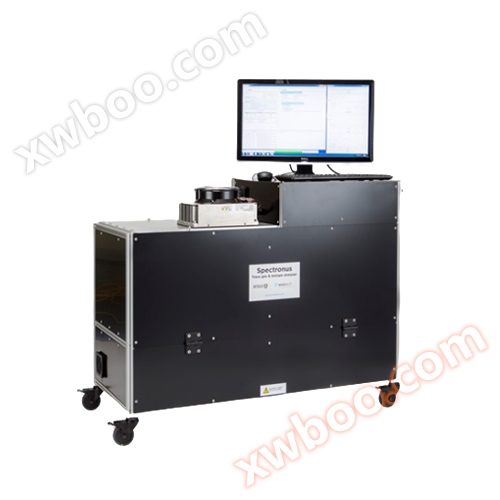
UoW FTIR Greenhouse Gas Online Analyzer
NegotiableUpdate on 01/06
- Model
- Nature of the Manufacturer
- Producers
- Product Category
- Place of Origin
Overview
Instrument Introduction:
Product Details
Instrument Introduction:
The UoW FTIR greenhouse gas online analyzer is developed by Wollongong University in Australia, produced in collaboration with Ecotech, and provides global distribution and ISO9001 compliant after-sales service. The UoW FTIR greenhouse gas online analyzer applies multi path Fourier transform infrared (FTIR) spectroscopy measurement and analysis technology and high-performance infrared detection components, combined with a complete control software system, which can operate fully automatically and continuously measure the concentrations and stable isotope ratios of various greenhouse gas components in the ambient atmosphere (or other types of mixed gases) online. It has low operating costs and is suitable for long-term continuous observation. It is also possible to adjust the configuration and measure other types of trace gases according to user needs.
Since the first UoW FTIR greenhouse gas online analyzer was put into on-site observation and application, over the past 10 years, multiple users around the world have used this instrument for greenhouse gas observation in environmental and background atmospheres, and developed measurement functions beyond greenhouse gases. These users include: China Meteorological Administration (CMA), Dalian Environmental Monitoring Center Station, Australian Nuclear Science and Technology Organization (ANSTO), University of Wollongong, University of Melbourne, Public Wealth Science and Industry Research Organization (CSIRO), Science and Technology Organization (ANSTO), National Institute of Water and Atmosphere (NIWA) in New Zealand, University of Heidelberg, University of Bremen, Max Planck Society (MPG) in Germany, Korean National Standards Institute, etc.
Background introduction:
Greenhouse gases are trace gases in the atmosphere with infrared radiation activity, including more than 30 types such as carbon dioxide, methane, nitrous oxide, fluorocarbons, and water vapor. Greenhouse gases are transparent to short wave radiation from the sun, but have a significant absorption effect on long wave (infrared) radiation from the sun and the Earth's surface. Therefore, greenhouse gases have a significant warming effect on the Earth's atmosphere. Global climate change will have serious impacts on the human living environment, such as climate anomalies, rising sea levels, glacier retreat, permafrost melting, significant changes in biodiversity and distribution, and so on.
Instrument features:
* Simultaneously measuring the concentrations and stable isotope ratios of multiple greenhouse gases online, with a wide and diverse range of applications;
* Simultaneously measure the atmospheric concentrations of CO2, CO, CH4, N2O, as well as the δ 13C in CO2;
*It can continuously inject one or more samples to measure the concentrations and stable isotope ratios of various greenhouse gases;
*Collect samples at different heights of the measuring tower to measure the vertical profile of greenhouse gases (including δ 13C in CO2);
*Can be continuously monitored in vehicles;
*Connect static boxes for measuring greenhouse gas flux in soil;
*Batch measurement of air samples in sampling bottles or bags in the laboratory;
*Standard transmission measurement: In the laboratory, the quantitative relationship of high-grade standard gases is transmitted to lower grade standard gases through measurement;
* Infrared spectroscopy quantitative measurement has good measurement stability and accuracy;
Due to the stable performance of the instrument and the ability to perform reanalysis calculations on spectral data, there is no need to use expensive standard gases for frequent calibration in long-term continuous observations. Only reference gases (clean air) are needed for daily inspection and testing.Utilizing multiple greenhouse gases inThe strong absorption in the infrared band can achieve measurement accuracy of 1-5% by fitting spectral data to calculate its atmospheric content without using any calibration gas. When calibrated with high-level calibration gases (NIST, CMDL, GASLAB, etc.), the measurement accuracy and precision of CO2, CO, CH4, N2O can fully meet or even exceed the data quality requirements published by the World Meteorological Organization's Global Atmosphere Watch (WMO-GAW).
Existing comparative observation data shows that the UoW FTIR greenhouse gas online analyzer has a high linear fit and good comparability with other methods when using calibration gases of the same level.
* Fully automatic operation, remote control, low maintenance cost, and low consumption;
*One instrument can simultaneously measure multiple greenhouse gas concentrations and their stable isotope ratios, with low overall operating costs;
*No need for liquid nitrogen or cryogenic dehumidification;
*Randomly carry a sampling gas dryer and multiple injection ports;
*Fully automatic operation and can be remotely controlled through the network;
Instrument composition:
*Sample injection system, which completes the processes of sample processing, selection of injection ports, emptying and purging of measurement chambers;
*FTIR spectrometer, record the infrared spectrum of gas samples;
*Spectral analysis processing system, which completes quantitative calculation of measured spectra and displays the results in real time;
*Recording system, used to record measurement results, instrument parameters, etc., and form a readable text file.
Instrument hardware system:
*Chassis: Constant temperature control to improve measurement stability;
*The sample injection system has four injection pipelines, all of which can use Nafion filter membrane and Mg (CLO4) to dry the sample gas;
*Control the flow rate, solenoid valve, vacuum pump, as well as the measurement of pressure, temperature, and flow rate in/out of the measuring chamber by computer;
*The sample injection system can also provide 12 external event switch control interfaces, which can simultaneously control the operation of up to 12 solenoid valves; Can provide 8 external analog/digital signal input interfaces for collecting auxiliary information such as flow rate, air pressure, temperature, etc;
*FTIR spectrometer resolution: 0.5 or 1 cm-1. Equipped with a Bruker IR light source and an electronically cooled MCT (mercury cadmium telluride) detector (frequency range 1800-5000cm-1), the multi path gas measurement chamber has an optical path length of 24m and a volume of 3.5L;
*Computer fully automatic control, real-time measurement, display, and recording of observation results, without the need for human intervention during normal operation;
*External operating environment and conditions:
*Working environment: 10-30 ℃,<90% RH;
*Power supply: 220VAC, 50Hz, 500VA;
*Gas supply: High purity nitrogen gas (N2) (0.2L min-1, 2m3 week-1) and standard gas are used for blowing.
Software Description:
The software is written based on the industrial standard language (Visual Basic). The software program controls each experimental cycle, which includes blowing, sampling, measuring spectra, spectral analysis, displaying observation results, and generating record files. It is possible to manually modify the periodic program and define continuous repeated measurement sequences, and remote control can also be achieved through a Windows remote desktop control connection. The main functions of the software are as follows:
*Control the operation of the sample injection system, including controlling the emptying and purging of the measurement chamber, switching the intake pipeline, measuring and recording pressure, temperature, and flow rate, etc;
*Control the spectrometer to collect spectral data;
*Online quantitative analysis of spectral data;
*Real time display of measurement results;
*Generate observation record files (CSV format);
*Perform 24-hour continuous operation according to the set measurement cycle;
*Periodic maintenance operations (measuring background spectra and reference or standard gas spectra);
*Realize remote control through the network.
Technical indicators:
* Measuring species
*Atmospheric concentrations of CO2, CO, CH4, N2O;
*δ 13C in CO2;
Time resolution:
For all species, 1-60 minutes (measurement accuracy and time resolution vary)
More information
>Greenhouse gases
Greenhouse gases are trace gases in the atmosphere with infrared radiation activity, including more than 30 types such as carbon dioxide, methane, nitrous oxide, fluorocarbons, and water vapor. Greenhouse gases are transparent to short wave radiation from the sun, but have a significant absorption effect on long wave (infrared) radiation from the sun and the Earth's surface. Therefore, greenhouse gases have a significant warming effect on the Earth's atmosphere. If there were no greenhouse gases, the global average atmospheric temperature would drop from the current 15 ℃ to minus 19 ℃.
Since the Industrial Revolution in the 19th century, humans have emitted a large amount of greenhouse gases into the atmosphere. By 2005, the concentrations of carbon dioxide, methane, and nitrous oxide in the global atmosphere had risen from 280 ppm, 715 ppb, and 270 ppb in the early stages of the Industrial Revolution to 379 ppm, 1774 ppb, and 319 ppb, respectively. During the same period, the global average temperature had risen by 0.74 ℃. If greenhouse gases maintain their current growth rate, the global average temperature will rise by 1.1-6.4 ℃ by the end of this century. Global climate change will have serious impacts on the human living environment, such as climate anomalies, rising sea levels, glacier retreat, permafrost melting, significant changes in biodiversity and distribution, and so on. In order to protect humanity from the threat of climate change and prevent further deterioration of the human living environment, it is necessary to conduct systematic long-term monitoring and research on the concentration and changes of major greenhouse gases in the atmosphere, in order to facilitate collective action by all mankind to reduce greenhouse gas emissions.
MALT 5- Spectral Analysis Software:
MALT5 is a software for simulating and matching infrared spectra, especially for meteorological Fourier transform infrared spectra. There are two modes:
*Simulation mode: MALT combined with linear (ILS) measurement instruments to calculate the transmission, absorption, and emission spectra of gas mixtures. The sample may contain more than one absorption layer, and different absorption layers have different compositions, temperatures, and pressures.
*Matching mode: By continuously iterating calculations, the mean square error between the measured spectrum and the calculated spectrum is minimized, resulting in a matched spectral calculation result.
Calculation Explanation:
Spectral calculations are generally based on the HITRAN linear parameter database; HITRAN provides a range of information on spectral line position, peak intensity, peak width, pressure conversion, and temperature (please refer to www.hitran. com for details). MALT calculates the true absorption coefficient, including the molecular absorption coefficient at the desired temperature and pressure from the aforementioned database; Then, the spectrum obtained through absorption coefficient simulation measurement. For gases, due to the lack of linear parameter data, quantitative reference spectra can be used to calculate absorption coefficients, and the resolution is higher than that based on sample spectra.