-
E-mail
lixinghua@yunjingtianhe.com
-
Phone
13276363035
-
Address
Building 1, Weifang High tech Zone Optoelectronic Industry Accelerator (Phase I), No. 155 Guangdian Circuit, Weifang High tech Zone, Shandong Province
Product Categories
Shandong Tianhe Environmental Technology Co., Ltd

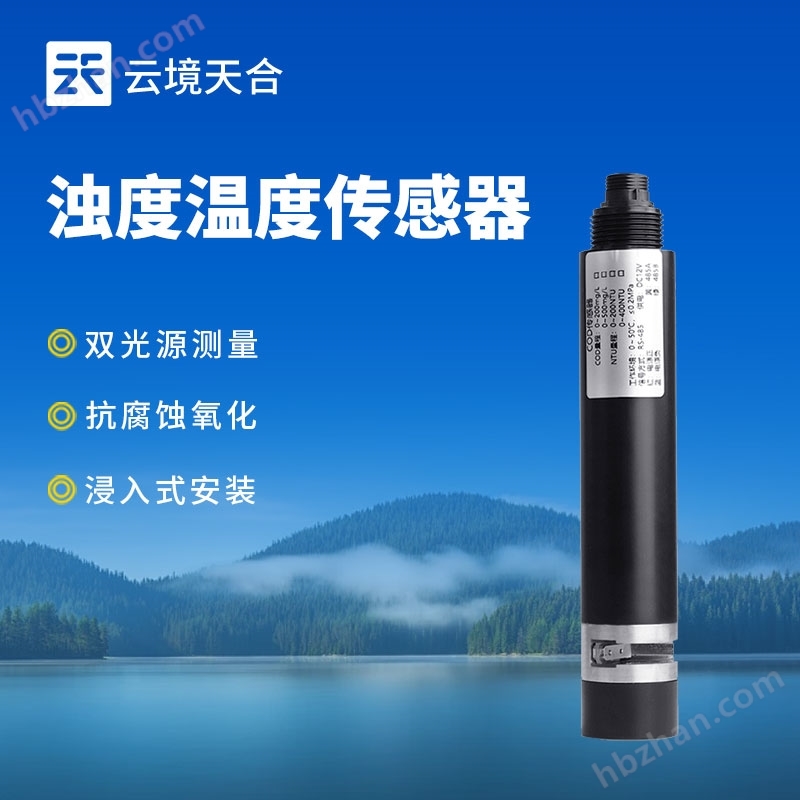


Water quality COD turbidity sensor
NegotiableUpdate on 01/09
- Model
- Nature of the Manufacturer
- Producers
- Product Category
- Place of Origin
Overview
The water quality COD turbidity sensor is an intelligent device that integrates chemical oxygen demand (COD) and turbidity monitoring functions. It uses ultraviolet absorption spectroscopy to measure COD and captures the absorption characteristics of organic matter using 254nm wavelength ultraviolet light. It does not require chemical reagents and has a fast response speed; Turbidity detection adopts 90 #176; Scattering light method has strong anti-interference ability. This sensor has high-precision, real-time online monitoring, automatic calibration and self diagnosis functions, and can be widely used in fields such as sewage treatment, industrial discharge control, aquaculture, etc., providing efficient and accurate technical support for water quality assessment and pollution prevention and control.
Product Details
The water quality COD turbidity sensor is an intelligent device that integrates chemical oxygen demand (COD) and turbidity monitoring functions. It uses ultraviolet absorption spectroscopy to measure COD and captures the absorption characteristics of organic matter using 254nm wavelength ultraviolet light. It does not require chemical reagents and has a fast response speed; The turbidity detection adopts the 90 ° scattered light method, which has strong anti-interference ability. This sensor has high-precision, real-time online monitoring, automatic calibration and self diagnosis functions, and can be widely used in fields such as sewage treatment, industrial discharge control, aquaculture, etc., providing efficient and accurate technical support for water quality assessment and pollution prevention and control.

1、 Working principle
Water quality COD turbidity sensorThe sensor uses two light sources for measurement, one for COD measurement and the other for turbidity measurement,
Because organic matter dissolved in water has an absorption effect on ultraviolet light, COD values can be measured through the transmittance of the light source, and turbidity compensation can be automatically performed through turbidity measurement. At the same time, temperature is collected for temperature compensation.
2、 Technical parameters
| Measuring principle | Dual light source measurement using UV254 absorption method |
| COD range | Default 0~500mg/L, 0~200mg/L can be customized |
| resolution | 0.1mg/ L |
| precision | ±5% , ±0.3℃ |
| NTU range | Default 0-400NTU, 0-200NTU can be customized |
| resolution | 0.1NTU |
| temperature compensation | Automatic temperature compensation |
| Self-cleaning function | Equipped with an automatic cleaner, it can prevent biological attachment, avoid light window pollution, and ensure long-term monitoring stability; Automatic cleaning time and frequency can be set, with a power consumption of 0.7W |
| output method | RS-485(Modbus/RTU) |
| Storage temperature | -5-+65℃ |
| working environment | 0~50℃ , ≤0.2MPa |
| Installation method | Immersion installation, 3/4NPT installation thread |
| Cable length | 5m |
| power supply | DC:12V-24V |
| Protection level | IP68 |
| calibration method | two-point calibration |
| Shell material | ABS+316L stainless steel |
3、 Size/Installation
1. Dimensional drawing

2. Wiring diagram
The cable is a 5-core shielded wire:
Red wire - power wire, black wire - ground wire, green wire -485A, white wire -485B
3. Installation

Attention: The sensor should not be installed upside down and should be installed at an angle of at least 15 degrees.
4、 Maintenance and upkeep
Sensor maintenance:
If the sensor needs to be cleaned, warm water and an appropriate amount of detergent can be used for cleaning.
Note:
Avoid strong vibrations that can damage the transparent glass in front of the ring, and do not scratch it with hard objects.
5、 User calibration
The sensor has undergone rigorous calibration before leaving the factory and generally does not require user calibration. If user calibration is performed, the command to restore the factory can be executed.
5.1 Zero point calibration
Insert the sensor into the container, use distilled water or purified water for the solution, wait for 30 seconds for the value to stabilize, and then perform turbidity zero calibration and COD zero calibration according to the communication instructions.
5.2 Slope calibration
Insert the sensor into the solution container, and once the turbidity value of the solution is known, wait for 30 seconds for the value to stabilize before calibrating the turbidity slope according to the communication instructions.
Insert the sensor into the solution container, and once the COD value of the solution is known, wait for 30 seconds for the value to stabilize before calibrating the COD slope according to the communication instructions.
Similar Product Recommend