-
E-mail
qq@591pv.com
-
Phone
15967796919
-
Address
No. 19, Zhongxin Road, Hetian Village, Dongou Street, Yongjia Oubei, Wenzhou, Zhejiang Province
Product Categories
Qinquan Pump Valve Co., Ltd

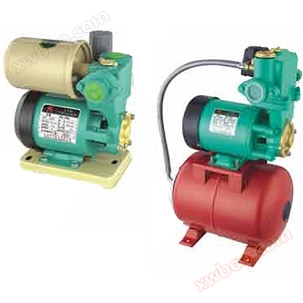
XBD-HL constant pressure fire tangent pump
NegotiableUpdate on 03/08
- Model
- Nature of the Manufacturer
- Producers
- Product Category
- Place of Origin
Overview
XBD-HL constant pressure fire tangent pump
Product Details
XBD-HL constant pressure fire tangent pump

The difference between XBD-HL constant pressure fire tangent pump and domestic pump
Fire tangent pumpDifferent from domestic pumps, the difference lies in:
(1) The fire flow is relatively regular. The fire hydrant water supply system increases in stages of 5L/s. The automatic sprinkler fire extinguishing system increases in flow rate values corresponding to the light hazard level, medium hazard level, and severe hazard level.
(2) Fire pumps are used to ensure the volume and pressure of firefighting water, which involves personal safety and property protection, and must operate reliably. Require a reasonable pump body structure, appropriate materials, and high reliability.
(3) Fire pumps generally supply water directly to fire extinguishing facilities (fire hydrants, sprinkler heads) through water pumps. Provide small flow water supply during initial fire extinguishing or self inspection operation, and supply water according to the design flow during the fire development stage. When the flow head curve of the water pump is steep, it is easy to experience overpressure during low flow operation, and corresponding technical measures should be taken to address this issue.
(4) Fire pumps are used for extinguishing fires and require quick and timely response, with corresponding requirements for short water intake time and good start-up performance.
Principle of XBD-HL constant pressure fire tangent pump
XBD-HL constant pressure fire tangent pump is a new principle fire pump, which is a product converted from military to civilian use. When the XBD fire tangent pump is running, the outlet pressure is gentle and the head remains almost unchanged when the flow rate changes. It is particularly suitable for the requirements of variable flow and pressure stabilization in fire protection. There are two types of structures: direct horizontal and direct vertical. XBD consumptionAnti tangent pumpThe entire series uses Y2 type extended shaft motors, with radially open impellers, no mouth rings, and no rust, making the operation particularly smooth and reliable
The tangent pump in this paragraph has now been renamed as a building fire pump
Tangent pumps are now renamed as building fire pumps for firefighting purposes, and as variable flow stabilizing pumps for daily use. The use of tangent pumps brings corresponding changes to the fire water supply network, mainly including:
The main contents related to fixed fire pumps in the standard are as follows:
(1) The code for the fire pump is XB.
(2) The characteristics of the prime mover include electric motor, gasoline engine, and diesel engine, with codes D, Q, and C respectively. The code for the fire pump driven by an electric motor is XBD.
(3) The rated flow Qn of the pump set is 5, 10, 15, 20, 25, 30, 35, 40, 45, 50, 55, 60, 65, 70, 75, 80, 85, 90, 95, 100, 105, 110, 115, 120, 125, 130, 140, 150, 160, 180, 200L/s.
(4) The rated pressure Pn of the pump set is 0.3MPa to 3.0MPa.
(5) At a suction depth of 0m, the requirements for rated flow rate and rated pressure should be met. When the suction depth is 6m, the pressure should be at the rated pressure, and the flow rate should not be less than 50% of the rated flow rate.
(6) The overcurrent cutoff surface of the fire pump should have anti-corrosion performance for the medium; It should have good vacuum sealing performance.
(7) The engine should have good room temperature starting performance, ensuring smooth starting within 5 seconds. Within 20 seconds after water is introduced, the fire pump should be able to reach its rated working condition, with room temperature ranging from 5 ℃ to 35 ℃.
(8) The water pressure test of the water pump is 1.5 times the maximum working pressure and lasts for 5 minutes. During the testing process, the pump casing should not have any defects such as deformation or cracks that affect performance.
(9) Pumps with pump casings made of cast iron, cast aluminum, or cast copper, and other overcurrent components made of highly corrosion-resistant materials such as stainless steel, bronze, or aluminum alloy, may not undergo corrosion resistance testing.
(10) The pump unit should undergo a 10 minute overload test. During the experiment, the pump unit should work normally without excessive vibration, oil leakage, or water leakage.
Classification of XBD-HL constant pressure fire tangent pump
According to the "Code for Fire Protection Design of High rise Civil Buildings" regarding the classification of buildings, building height, indoor fire flow, etc., tangent pumps are currently divided into three series:
The first series can meet the requirements of building fire water supply for buildings ranging from 24m to 100m, with a fire flow rate of 0L/s to 20L/s;
The second series can meet the requirements of building fire water supply for buildings ranging from 24m to 100m, with a fire flow rate of 0L/s to 30L/s;
The third series can meet the requirements of fire water supply for buildings ranging from 50m to 100m with a fire flow rate of 0L/s to 40L/s.
The fire flow of the three series is based on the independent operation of the fire hydrant water supply system and automatic sprinkler system, with separate water pumps as the starting point. When two systems share water pumps, the fire flow of the two systems needs to be correspondingly superimposed. Therefore, new specifications and varieties need to be added to the existing series.
The inevitable trend of the development of XBD-HL constant pressure fire tangent pump
The water pumps used in building water supply and drainage engineering are all universal pumps. Whether it is used for domestic water supply, production water supply, or fire water supply; Regardless of whether it is supplying water to a water tank, a pressurized water tank, or directly supplying water to water facilities, a universal pump is always used. However, in reality, the requirements for water pumps vary for different purposes and occasions, and suitable pumps should be selected according to their different situations. The development of general-purpose pumps towards specialized pumps is an inevitable trend.
Edit the characteristics of the tangent pump in this paragraph
Fire pumps that meet the performance requirements of national standards have been successfully developed and tested by the National Fire Equipment Quality Supervision and Inspection Center
The push tangent pump that is qualified and has been applied in the engineering market. The tangent pump is provided with technical parameters and application conditions by China Northwest Architectural Design and Research Institute, and developed by the Eleventh Research Institute of Aerospace Industry Corporation. At that time, the focus was on designing a pump with a flow head curve close to a smooth straight line, which could be used as the most ideal water pump in high-rise building fire water supply design to solve the problem of overpressure caused by low or zero flow operation of fire pumps. However, other requirements for fire pumps were also considered. Therefore, the flow passage components of the tangent pump are made of stainless steel and aluminum alloy, and the pump and motor are coaxially connected, which has the characteristics of compact structure, small footprint, smooth operation, reliable mechanical seal, low noise, high reliability, easy maintenance, and long service life.
The tangent pump is a horizontal centrifugal pump, and its biggest feature is that the flow head curve is very flat. When the pump flow rate changes from zero to the required maximum flow range, the head change is within 5%. The motor that drives the pump is a regular motor and does not require variable speed. It effectively solves the problem of pressure fluctuations during flow changes in the water supply process and severe overpressure at low flow rates. Compared with parallel operation of multiple water pumps, it can reduce the number of water pumps, reduce the footprint, and simplify operation and management; Compared with variable frequency speed control water pumps, it can save investment, facilitate management, and has many advantages, making it a more complete solution to overpressure.