-
Phone
15906151243
-
Address
Gaocheng Town and Gaolu Fuchun Village, Yixing City
Product Categories
- Internal inflow membrane grille
- Rotary drum precision filter
- Micro filter series
- Scraping and suction mud machine series
- Online dilution device
- dosing system
- Anti pollution and decontamination series
- Sand water separator
- decanter
- Dosing device series
- Fiber disc filter
- Conveyor series
- Sand removal series of sedimentation tank
- Gate opening and closing machine series
- Air flotation series
- Filter press series
- Packing series
- Aerator series
Wuxi Houpu Environmental Protection Technology Co., Ltd
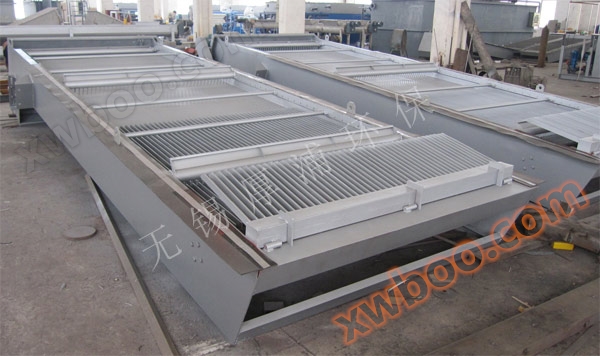
ZHG type reverse fishing grille cleaning machine
NegotiableUpdate on 01/18
- Model
- Nature of the Manufacturer
- Producers
- Product Category
- Place of Origin
Overview
ZHG type reverse fishing grille cleaning machine
Product Details
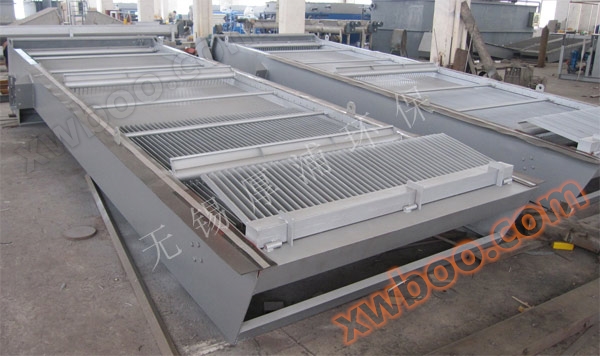
overview
The reverse scoop type grid cleaning machine is a coarse grid, also known as a rainwater grid or a rotary rake grid. It is a large coarse grid equipment used to remove heavy suspended solids in water bodies. This device can continuously remove suspended solids in liquids. It is designed reasonably, structurally simple, safe and reliable to operate, and has a high degree of automation. It can be widely used in urban sewage treatment, water intake of waterworks, rainwater pumping stations, cooling water intake of power plants and other high flow water treatment sites. The equipment structure refers to the advantages of the rotary grid cleaning machine and adopts a unique working principle, that is, the rake chain rotates in front of and behind the grid. When the rake teeth reach the upstream surface of the grid, they are inserted into the gap of the grid and cleaned from bottom to top. The rake chain adopts a closed type to prevent debris from entering and ensure smooth operation of the equipment. When installing the equipment, the whole machine is lifted, and only two steel plates need to be embedded on the floor on both sides of the collection well. The civil engineering is simple and the installation and maintenance are convenient.
Working principle
The reverse scoop type grid cleaning machine consists of a frame, a driving device, a transmission guide wheel, a rake chain combination, rake teeth, and slag blocking bars. Composed of slag blocking plates and other components. Under the drive of the motor, the traction chain rotates from bottom to top on the upstream surface. When the rake shaft on the traction chain rotates to the upstream face of the grid bar. The rake teeth are inserted into the gaps between the bars to perform a cleaning action from bottom to top, scraping off the debris trapped on the bars into the rake with high efficiency and thorough cleaning. When the rake is transported onto the machine, the debris falls off onto the container or conveyor by its own weight and is sent away.
The reverse scoop type grid cleaning machine is a coarse grid, also known as a rainwater grid or a rotary rake grid. It is a large coarse grid equipment used to remove heavy suspended solids in water bodies. This device can continuously remove suspended solids in liquids. It is designed reasonably, structurally simple, safe and reliable to operate, and has a high degree of automation. It can be widely used in urban sewage treatment, water intake of waterworks, rainwater pumping stations, cooling water intake of power plants and other high flow water treatment sites. The equipment structure refers to the advantages of the rotary grid cleaning machine and adopts a unique working principle, that is, the rake chain rotates in front of and behind the grid. When the rake teeth reach the upstream surface of the grid, they are inserted into the gap of the grid and cleaned from bottom to top. The rake chain adopts a closed type to prevent debris from entering and ensure smooth operation of the equipment. When installing the equipment, the whole machine is lifted, and only two steel plates need to be embedded on the floor on both sides of the collection well. The civil engineering is simple and the installation and maintenance are convenient.
Working principle
The reverse scoop type grid cleaning machine consists of a frame, a driving device, a transmission guide wheel, a rake chain combination, rake teeth, and slag blocking bars. Composed of slag blocking plates and other components. Under the drive of the motor, the traction chain rotates from bottom to top on the upstream surface. When the rake shaft on the traction chain rotates to the upstream face of the grid bar. The rake teeth are inserted into the gaps between the bars to perform a cleaning action from bottom to top, scraping off the debris trapped on the bars into the rake with high efficiency and thorough cleaning. When the rake is transported onto the machine, the debris falls off onto the container or conveyor by its own weight and is sent away.

characteristics and application
During operation, debris may enter the traction chain and get stuck, so a closed traction chain is designed. It mainly consists of chain plates, chain pins, and rollers. During operation, it is guided by the rails on the frame, and the rollers roll on the rails with low resistance and smooth operation.
The underwater rotating wheel is made of stainless steel material and equipped with wear-resistant copper sleeve self-lubricating bearings, eliminating the daily maintenance of underwater components.
The slag blocking part adopts a fixed grid form, which has strong impact resistance and can withstand large water level differences.
Based on the above advantages, the reverse fishing grille is applied to large flow water treatment sites such as wide river interception, rainwater pumping stations, river water intakes, and coarse grilles in sewage treatment plants.
Ordering parameters
1. Channel (Equipment) Width 2, Channel Depth 3, Discharge Height 4, Rake Tooth Gap 5, Installation Angle 6, Rack Material 7, Rake Tooth Material 8, Other Requirements
Outline schematic diagram
During operation, debris may enter the traction chain and get stuck, so a closed traction chain is designed. It mainly consists of chain plates, chain pins, and rollers. During operation, it is guided by the rails on the frame, and the rollers roll on the rails with low resistance and smooth operation.
The underwater rotating wheel is made of stainless steel material and equipped with wear-resistant copper sleeve self-lubricating bearings, eliminating the daily maintenance of underwater components.
The slag blocking part adopts a fixed grid form, which has strong impact resistance and can withstand large water level differences.
Based on the above advantages, the reverse fishing grille is applied to large flow water treatment sites such as wide river interception, rainwater pumping stations, river water intakes, and coarse grilles in sewage treatment plants.
Ordering parameters
1. Channel (Equipment) Width 2, Channel Depth 3, Discharge Height 4, Rake Tooth Gap 5, Installation Angle 6, Rack Material 7, Rake Tooth Material 8, Other Requirements
Outline schematic diagram
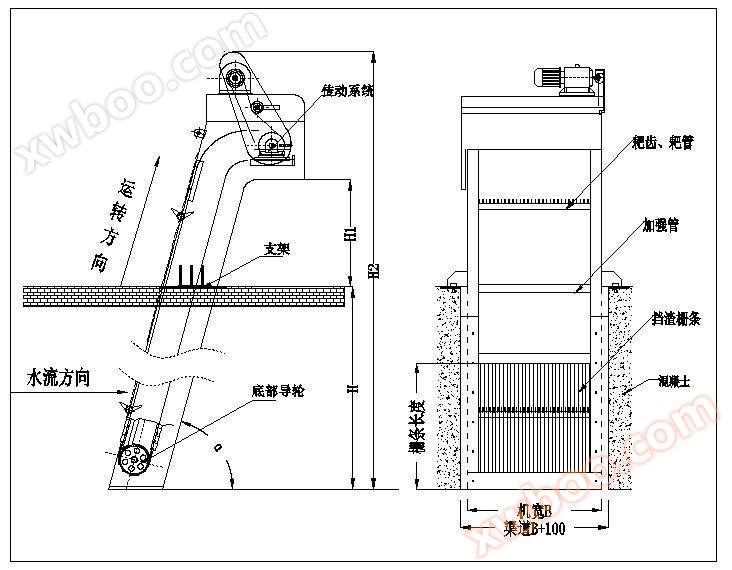
B=machine width; H=Canal depth; H1=slag discharge height; H2=H+H1+2000; α=installation angle.
Calculation of water flow rate
The hourly water flow rate of the reverse fishing grille is Q=K * (B-160) * h * V * 3600, where:
Q=water flow rate (m ³/h); K=flow coefficient related to grille gap (see coefficient table); B=width of the grille machine (m); H=water depth in front of the fence (m), generally set at 1m or 0.3m below the channel depth; V=overcurrent velocity, generally taken as 0.6~1m/s.
Main technical parameters
Calculation of water flow rate
The hourly water flow rate of the reverse fishing grille is Q=K * (B-160) * h * V * 3600, where:
Q=water flow rate (m ³/h); K=flow coefficient related to grille gap (see coefficient table); B=width of the grille machine (m); H=water depth in front of the fence (m), generally set at 1m or 0.3m below the channel depth; V=overcurrent velocity, generally taken as 0.6~1m/s.
Main technical parameters
Overcurrent coefficient K
| Grid gap (mm) | 15 | 20 | 30 | 50 | 80 | 100 | >100 |
| Flow coefficient K | 0.42 | 0.5 | 0.6 | 0.71 | 0.8 | 0.83 | 0.85 |
Note: Interpolation method can be used to obtain approximate values of K values corresponding to other gaps.
Main technical parameters and external dimensions list of ZHG reverse fishing grille cleaning machine
| model (ZHG) |
Device Width (mm) |
Trench width (mm) |
Motor power (kw) | Water flow rate (m ³/h) | |||||
| Grid gap (mm) | |||||||||
| 15 | 20 | 30 | 50 | 80 | 100 | ||||
| 800 | 800 | 900 | 1.1 | 581 | 691 | 829 | 982 | 1106 | 1147 |
| 1000 | 1000 | 1100 | 762 | 907 | 1089 | 1288 | 1452 | 1506 | |
| 1200 | 1200 | 1300 | 1.1~1.5 | 943 | 1123 | 1348 | 1595 | 1797 | 1865 |
| 1400 | 1400 | 1500 | 1125 | 1339 | 1607 | 1902 | 2143 | 2223 | |
| 1600 | 1600 | 1700 | 1306 | 1555 | 1866 | 2208 | 2488 | 2582 | |
| 1800 | 1800 | 1900 | 1488 | 1771 | 2125 | 2515 | 2834 | 2940 | |
| 2000 | 2000 | 2100 | 1669 | 1987 | 2385 | 2822 | 3180 | 3299 | |
| 2200 | 2200 | 2300 | 1851 | 2203 | 2644 | 3129 | 3525 | 3657 | |
| 2400 | 2400 | 2500 | 2032 | 2419 | 2903 | 3435 | 3871 | 4016 | |
| 2600 | 2600 | 2700 | 1.5~2.2 | 2214 | 2635 | 3162 | 3742 | 4216 | 4374 |
| 2800 | 2800 | 2900 | 2395 | 2851 | 3421 | 4049 | 4562 | 4733 | |
| 3000 | 3000 | 3100 | 2576 | 3067 | 3681 | 4355 | 4908 | 5092 | |


