-
E-mail
115251380@qq.com
-
Phone
15930291177
-
Address
5th Floor, Xinghe Lanwan Commercial Building, Nancheng District, Dingzhou City, Hebei Province
Dingzhou Hengkong Environmental Protection Technology Co., Ltd
In depth understanding of aquaculture ultraviolet sterilizers: principles, characteristics, installation guidelines
Date: 2025-12-30Read: 32
In modern intensive and high-density aquaculture, the spread of pathogenic microorganisms (such as bacteria, viruses, parasites) in water bodies is one of the main threats leading to disease outbreaks, affecting survival rates and economic benefits of farmed animals. The traditional chemical disinfection method has problems such as drug residue, drug resistance, and secondary pollution. Therefore, the physical disinfection method - ultraviolet (UV) disinfection technology, due to itsEfficient, environmentally friendly, and residue freeIts significant advantages have become key equipment for ensuring the biological safety of aquaculture water bodies. This article will systematically explain the working principle and core characteristics of aquaculture ultraviolet sterilizers, and provide a detailed installation and operation guide.
1、 Core principle: Using "light" as a blade to destroy genetic material
The core sterilization principle of aquaculture ultraviolet sterilizers is to use short wave ultraviolet radiation (especially UVC band, wavelength 253.7 nanometers) to irreversibly damage microbial genetic material.
When the aquaculture water flows through the disinfection device, the DNA or RNA of bacteria, viruses, fungal spores, algae, and even chlorine resistant parasites (such as Cryptosporidium and Giardia) carried in the water will absorb high-energy UVC photons. This absorption leads to the formation of dimers between adjacent thymines, thereby hindering the replication and transcription of genetic material. Microbial cells rapidly die due to their inability to reproduce and metabolize normally, achieving the purpose of disinfection. The entire process is purely physical and does not alter the chemical properties of the water, nor does it produce any harmful by-products.
2、 Main features: Advantages tailored for aquaculture
Based on the above principles, the aquaculture ultraviolet sterilizer exhibits the following outstanding characteristics, which meet the needs of the aquaculture industry:
Broad spectrum efficiency, comprehensive coverageIt can effectively inactivate almost all common aquatic pathogenic microorganisms, including some parasites that are insensitive to ozone or chlorine agents, building a broad safety barrier for aquaculture organisms.
Instant sterilization, high efficiencyUV irradiation time is measured in seconds and can achieve a sterilization rate of over 99.9% at the moment of water flow, meeting the requirements of aquaculture systemsContinuous high trafficThe requirements for circulating water treatment ensure uninterrupted and safe water supply.
Safety and Environmental ProtectionPure physical process, without adding any chemical agents, thereforeNo secondary pollutionIt will not produce drug residues in fish, shrimp, and crabs, which conforms to the concept of green and healthy aquaculture and ensures the safety of the final aquatic products for consumption.
Efficient operation and easy maintenanceThe main energy consumption is for the electricity of ultraviolet lamps, which consumes less energy.Compact structure and small footprintSave farm space. The daily maintenance work is simple, mainly involving regular cleaning and lamp replacement, thereforeLow operation and maintenance costs.
Easy to install, ready to useModular design enables equipmentQuick and easy installationEasy to integrate into existing circulating water systems or inlet pipelines.
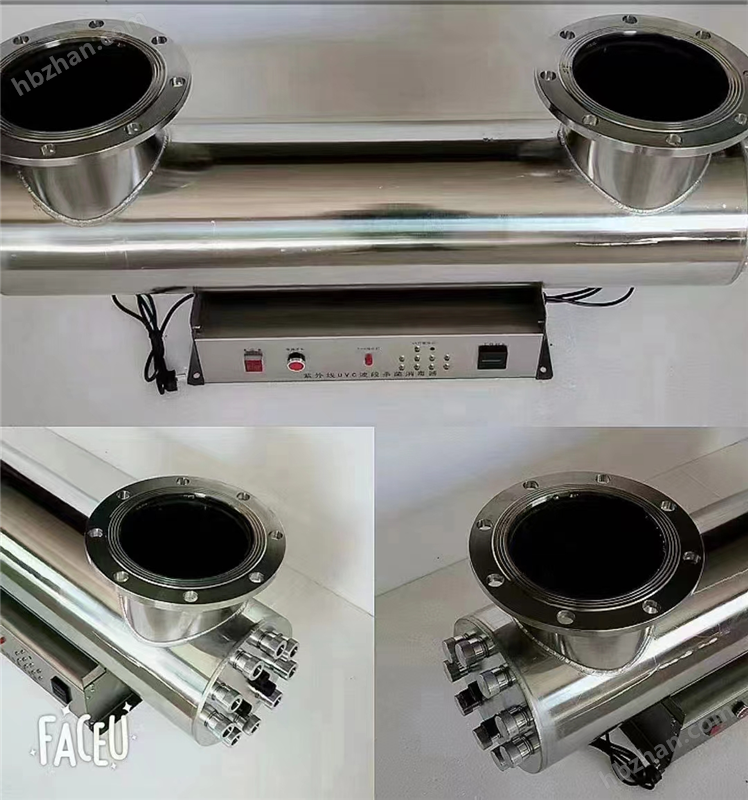
3、 Detailed Installation Guide: Ten Steps to Ensure Safe Operation
Correct installation is the cornerstone of ensuring the maximum effectiveness of disinfectors. Please follow the following steps:
Step 1: Unpacking inspection
After opening the box, please carefully check whether all accessories (stainless steel body, UV lamp tube, quartz sleeve, rectifier/ballast, sealing sleeve, sealing ring, nut, etc.) are complete and intact.
Step 2 to Step 6: Installation and Sealing of Quartz Casing
This is the key to preventing water leakage and protecting the lamp tube.
First, install the dedicated sealing sleeve at the open end of the quartz sleeve.
Carefully place the quartz sleeve into the stainless steel disinfection chamber.
Install the sealing component at the closed end of the quartz sleeve as well.
Tighten the stainless steel large nuts on the open and closed ends of the quartz tube separately (the open end is a perforated nut), and preliminarily fix them.
AttentionWhen inserting the sealing ring into the closed end, if it is too tight, it can be lubricated with soapy water,Do not use force to forcefully coverTo avoid damaging fragile quartz tubes.
Steps 7 to 9: Circuit Connection and Testing
Connect the pins of the ultraviolet lamp tube to the corresponding interface of the rectifier.Please pay attention to the interface direction(Usually designed as a rectangular anti misoperation device), do not use brute force to avoid damaging the pins.
Connect the rectifier power supply and conduct a power on test. During normal operation, the ultraviolet lamp should emit a light blue light, and the rectifier indicator light should display asgreenIf the lamp does not light up and the indicator light isredThis indicates that there may be a malfunction in the lamp or rectifier, which needs to be investigated and replaced.Important safety reminder: During testing, avoid direct eye contact with lit lamps to prevent UV rays from burning the cornea.
After the test is correct, turn off the power and carefully insert the lamp tube into the center position inside the quartz tube from the open end of the quartz tube (the end with a hole nut).
Step 10: Complete the installation
Finally, put on the external sealing protective cover. Connect the inlet and outlet of the sterilizer to the pipeline of the aquaculture water system reliably, ensuring that the direction of water flow is consistent with the equipment markings. After rechecking all circuits and pipelines, they can be powered on and put into formal operation.
Follow up usage tipsDuring the operation of the equipment, the status of the rectifier indicator light should be regularly observed (green indicates normal), and the dirt on the outer wall of the quartz sleeve should be cleaned regularly according to the water quality to ensure UV transmittance and maintain stable sterilization effect.
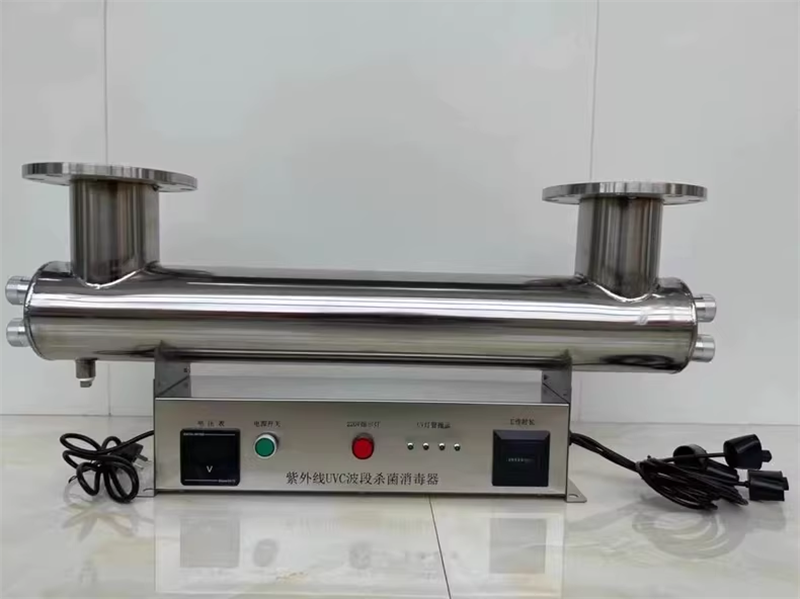
The aquaculture ultraviolet sterilizer provides an efficient, safe, and environmentally friendly water quality assurance solution for modern aquaculture through its scientifically rigorous physical sterilization principle. A deep understanding of its principles, full utilization of its technical characteristics, and strict adherence to specifications for installation and maintenance are important technical guarantees for every aquaculture practitioner to achieve disease prevention and control, and improve the success rate and efficiency of aquaculture.