-
E-mail
njbohai@sina.com
-
Phone
13776512185
-
Address
Chengqiao Economic Development Zone, Nanjing City
Nanjing Ober Environmental Protection Equipment Co., Ltd
Guarding Strong Power: Core Measures for Daily Maintenance of Submersible Propulsion Systems
Date: 2025-12-18Read: 22
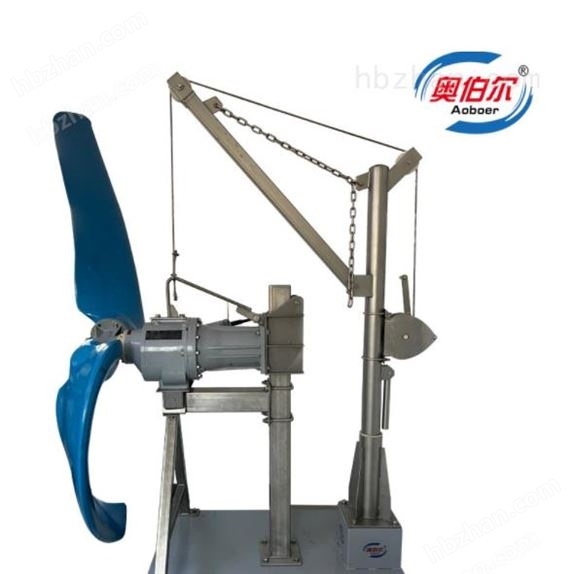
Submersible thrusterAs the core equipment for underwater operations and recreational diving, its power efficiency directly determines the safety and experience of operations. Spiral entanglement, battery degradation, and water corrosion are the three core issues that lead to a decrease in propeller power and frequent malfunctions. These issues are not unavoidable. Through scientific and standardized daily maintenance, the service life of equipment can be effectively extended while ensuring stable and strong power output at all times. Developing precise maintenance strategies for key pain points that affect power efficiency is the skill of every submersible thruster user.
A dual protection mechanism of "pre use inspection and post use cleaning" should be established to address the issue of propeller entanglement. Underwater weeds, fishing nets, plastic bags, and other debris can easily entangle the propeller blades, causing power transmission to be obstructed and, in severe cases, motor overload damage. Before each use, carefully check whether the propeller protective net is intact. If there is any damage, it should be replaced in a timely manner to avoid direct contact between debris and the blades; For multi blade propellers, a small amount of food grade grease can be applied to the blade edges in advance to reduce the probability of debris adhesion. After use, the thruster should be immediately placed in a clean water tank for rinsing, and residual debris should be cleaned with a soft bristled brush along the direction of blade rotation. If stubborn entanglement such as fishing nets is encountered, special tools should be used to carefully peel it off, and do not forcefully pull it to cause blade deformation.
Battery degradation is a key factor affecting endurance and power, and scientific battery maintenance needs to take into account "charging management, storage protection, and regular activation". The lithium batteries commonly used in thrusters have memory effects and cycle life limitations. When charging, it is necessary to use the original factory matching charger to avoid mixing chargers of different specifications, which can cause battery bulging and short circuits. During the charging process, it is necessary to avoid overcharging. When the charger displays full charge, it should be powered off in a timely manner, and the charging time is usually controlled within 2-4 hours. When not in use for a long time, the battery should be kept in the optimal storage state of 50% -70%, and a charge discharge cycle should be performed every 3 months to activate the battery and prevent capacity degradation caused by lithium crystal branch growth. At the same time, it is necessary to regularly check whether there is oxidation or looseness in the battery interface. If rust is found, it should be wiped clean with an alcohol swab in a timely manner to ensure good conductivity.
Corrosion of water quality is a common problem for underwater equipment, and a protective system needs to be constructed from three aspects: material protection, post-treatment after use, and regular maintenance. The salt and chemical substances in seawater and industrial wastewater can cause electrochemical corrosion of the metal components of the thruster, leading to rusting of the motor casing and poor interface contact. After each use, whether in freshwater or seawater environments, neutral water should be used to rinse the entire body of the equipment, with a focus on cleaning areas such as motor cooling holes and battery compartment sealing gaskets that are prone to dirt and grime accumulation. After drying, apply special anti rust oil to the metal connecting parts and silicone grease to the sealing gasket to enhance waterproof and anti-corrosion performance. For propellers frequently used in seawater environments, it is recommended to conduct a comprehensive disassembly and inspection every six months, replace aging seals, and ensure that the equipment meets waterproof standards.
In addition, daily maintenance also requires attention to monitoring the status of detailed parts. Regularly check whether the sound of the thruster motor is normal. If there is any abnormal noise, it may be caused by bearing wear or blade imbalance, and it needs to be repaired in a timely manner; Check for cracks in the device casing to prevent water from seeping into the internal circuit and causing malfunctions; For thrusters with intelligent control systems, it is necessary to regularly upgrade firmware, optimize power control algorithms, and improve energy efficiency.
The maintenance core of submersible thrusters lies in "prevention first, precise policy implementation". Each maintenance measure directly addresses the root cause of power loss, including physical protection against propeller entanglement, electrochemical protection against battery degradation, and multidimensional protection against water corrosion. By establishing regular maintenance habits, not only can the submersible thruster always maintain its optimal power state and reduce the cost of maintenance, but it can also provide solid safety guarantees for underwater operations and leisure activities, making every underwater exploration full of confidence.