-
E-mail
sz1718@163.com
-
Phone
18823665295
-
Address
6F, Building A2, the Pearl River River Plaza, Longgang Central City, Shenzhen
Shenzhen Defeng Measurement and Control Technology Co., Ltd
What are the common types of liquid level switches
Date: 2019-01-15Read: 20
A liquid level switch is a structurally simple, easy-to-use, safe and reliable liquid level control device that can effectively measure liquid levels. Liquid level switch, as a common sensor for measuring liquid level position, has a wide range of applications in industries such as steel, chemical, pharmaceutical, food and beverage. Due to the complex working conditions and diverse requirements on site, there are also many types of liquid level switches that are suitable for them. The most common ones include tuning fork level switches, float level switches, photoelectric level switches, electrode level switches, etc.
1、 Fork level switch
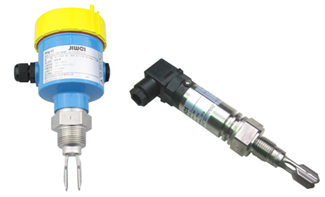
The tuning fork level switch uses piezoelectric devices to drive and detect the vibration of the fork body. When the fork comes into contact with the measured liquid, the resonant frequency of the fork decreases significantly, and the change in vibration frequency is directly reflected in the output signal of the piezoelectric detection device. The detection circuit distinguishes the frequency change and outputs a switch signal. Ring-11 tuning fork liquid level switch and Ring-21 tuning fork liquid level switch have strong anti-interference ability, and are free from the influence of foam, bubbles and vibration, and have high reliability. Due to its compact design, the tuning fork level switch is particularly suitable for measuring liquid levels in narrow spaces such as pipelines.
2、 Float level switch
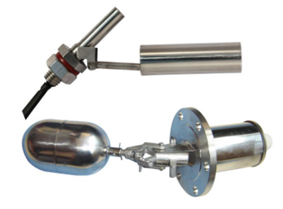
The principle of the float level switch is to use the magnetic float of the float level switch to rise or fall with the liquid level, causing the reed switch chip at the set position in the sensor monitoring tube to produce a suction or disconnection action and issue an alarm signal. The float level switch has a compact structure, easy installation, low price, no need for debugging, and high cost-effectiveness. It is commonly used in situations with simple on-site working conditions.
3、 Photoelectric liquid level switch
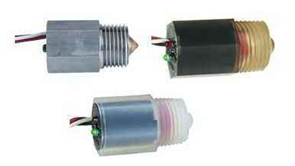
The sensor of the photoelectric liquid level switch contains an infrared light-emitting diode and a photoelectric receiver. The light emitted by the light-emitting diode is directed into the prism at the top of the sensor, and if there is no liquid, the light is directly reflected back to the receiver from the prism. When there is liquid, the light is refracted into the liquid, causing the receiver to receive only a small amount of light or not receive it. The receiver drives the internal electrical switch to work, thereby emitting an alarm signal.
4、 Electrode type liquid level switch
Electrode type liquid level switch uses the conductivity of liquid to monitor the level of liquid. When the medium contacts the electrode, it will conduct electricity and output an alarm signal. This type of liquid level switch can be controlled from multiple points, and the control position is determined by customer needs. It has a surge protection function, which can effectively prevent surge interference. However, electrode type liquid level switches are only suitable for conductive liquids, and the liquid cannot be volatile.
