-
E-mail
41711365@qq.com
-
Phone
18518707030
-
Address
813, 8th Floor, No. 15 Information Road, Haidian District, Beijing
Product Categories
Beijing Duktech Technology Co., Ltd

AMC monitoring of air molecular pollutants
NegotiableUpdate on 03/11
- Model
- Nature of the Manufacturer
- Producers
- Product Category
- Place of Origin
Overview
AMC monitoring is one of the requirements for the semiconductor industry, including rapid monitoring, alarm, extremely low concentration measurement, wide measurement area, and high-sensitivity response to multiple gases.
Product Details
perfectAMC monitoring of air molecular pollutants
Real time monitoring of air molecule pollution (AMC) is extremely important for semiconductor production processes.
AMC monitoring of air molecular pollutantsRapid monitoring, alarm, extremely low concentration measurement, wide measurement area, and high-sensitivity response to multiple gases are among the requirements of the semiconductor industry. The deep ultraviolet lithography process pays special attention to the concentration measurement of ammonia, amines, N-methylpyrrolidone NMP, acids, and other gases. When these gases react with the chemically amplified photoresist, it will deeply affect the quality of semiconductor devices.
Traditional and ancient methods often use indirect measurement analysis methods. Including impact dust filters, ion chromatography, and chemical fluorescence methods, these methods have slow analysis speeds, complex operating processes, are expensive, and inaccurate measurement results.
CEAS (cavity enhanced absorption spectroscopy) - principle
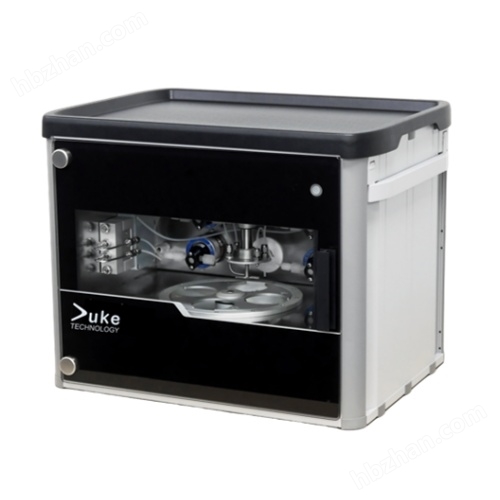
The instrument schematic based on CEAS (cavity enhanced absorption spectroscopy) technology uses near-infrared light for high-sensitivity absorption measurement. The measurement chamber is composed of a cylindrical body composed of a set of high reflectivity multiple reflection lenses. When the laser beam passes through a solid-state calibrator (FSR=2.00GHz), the relative laser wavelength is measured. In order to ensure clarity, the beam that originally shone outside the left measuring unit cavity mirror was ignored.
The enhanced version of EP integrates pressure sensors and internal temperature controllers, with an ultra stable measurement chamber to prevent errors caused by temperature drift, pressure changes, and other factors.
CEAS (cavity enhanced absorption spectroscopy) has many proven advantages over the first generation CRDS (cavity ring down spectroscopy) technology. In short, the laser beam does not require resonant coupling into the measurement chamber (e.g. the beam does not need to be strictly aligned). DUKE analytical instruments and systems have inherent characteristics such as simple installation, mechanical stability, and strong protection.