-
E-mail
huangshujuan13328052090@j-sky.cn
-
Phone
13338055762
-
Address
1388 Chengbei Avenue, Kunshan City
Product Categories
Kunshan Jutian Instrument Equipment Co., Ltd


Analytical balance high-precision electronic scale with alarm printing
NegotiableUpdate on 05/11
- Model
- Nature of the Manufacturer
- Producers
- Product Category
- Place of Origin
Overview
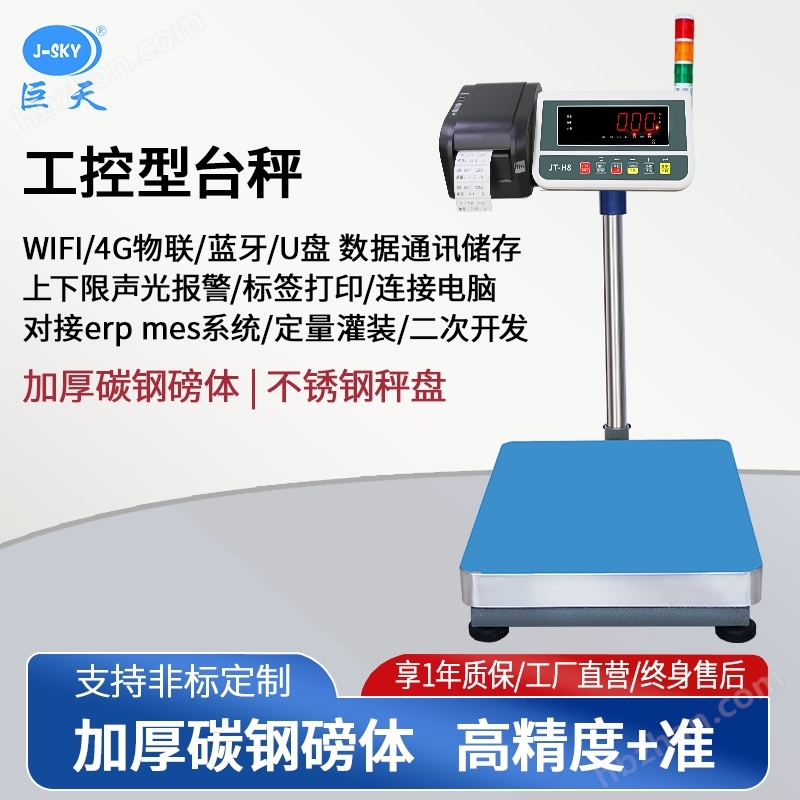
The high-precision electronic scale with alarm printing $r $n for analytical balance has the following alarm methods: $r $n can set the upper limit alarm to light up, and the light can be selected to indicate whether an external sound alarm (exceeding the alarm) is needed. $r $n can select the qualified OK alarm to light up the green light, which is usually a sound prompt. $r $n can also select the lower limit alarm to light up the yellow light, and whether sound is needed can be selected,
Product Details


Analytical balance high-precision electronic scale with alarm printing
Electronic Balance Product Description:
3 weighing units: g/ct/ozt
● Additional simple counting function
● Multi segment linear correction in the factory
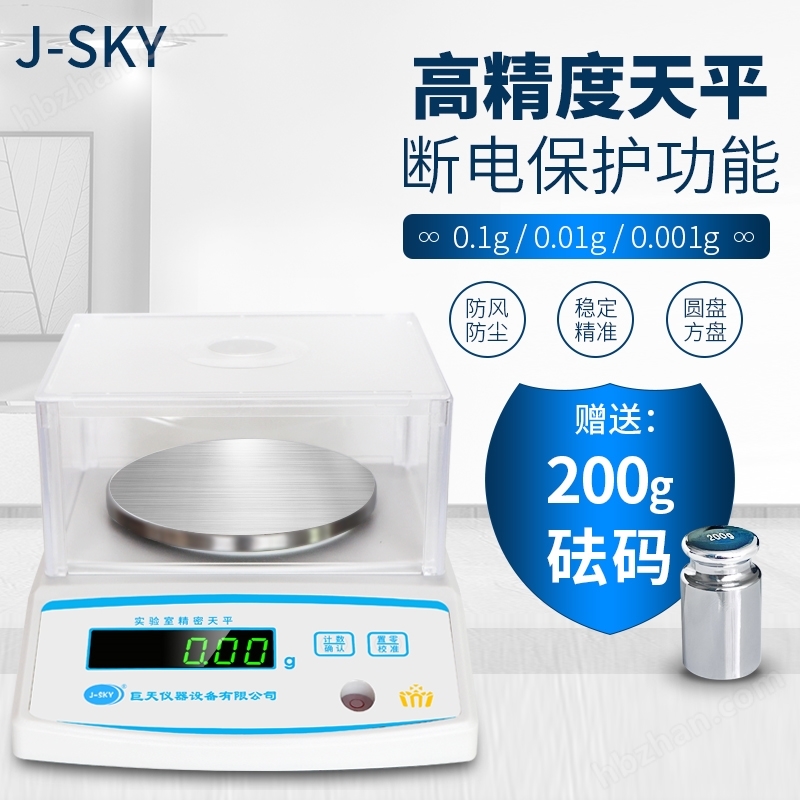
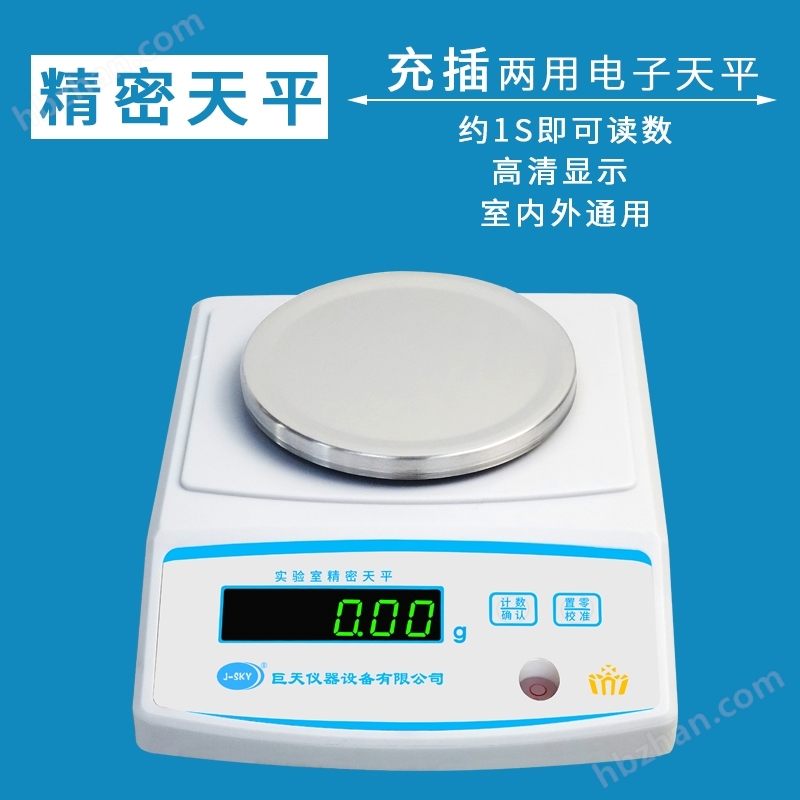
● Dimensions: 26 (L) x20 (W) x8 (H) cm
Scale pan size: Ø 11.6cm (round)/12.4 (L) x 14.4 (W) cm (square)
DC9V/150mA (220V AC)
● Optional wired external display screen (RS-232 interface cannot be selected at this time)
● Optional built-in rechargeable battery (6V/1.3Ah)
● Scale/division value
Analytical balance high-precision electronic scale with alarm printing
The upper limit alarm can be set and the indicator light can be selected to indicate whether an external sound alarm is required (exceeding the alarm),
When the optional qualification is OK, the alarm will light up green, usually as a sound prompt,
You can also choose to turn on the yellow light for the lower limit alarm, and choose whether you need sound or not,
An alarm outside the range can be selected with more red lights on, qualified with green lights on, and less yellow lights on. There is no sound prompt when it is qualified.
The alarm function within the range can also be selected, and the lighting method is the same, except that there is a sound prompt if it is qualified.
The core characteristic of precision balance is high accuracy: the resolution is usually between 0.1 mg (one ten thousandth of a gram) and 0.01 mg (one hundred thousandth of a gram). Repeatability: The results of weighing the same object multiple times are highly consistent. Sensitivity: React quickly to small changes in mass. Stability: Strong anti-interference ability, with minimal impact of environmental changes such as temperature and airflow on the results.
Application field
Laboratory: Chemical reagent preparation, sample weighing, quantitative analysis.
Pharmaceutical: raw material weighing, formulation development.
Materials Science: Quality Inspection of Nanomaterials and Thin Film Coatings.
Food industry: Nutritional analysis, precise addition of additives.
Education: Experimental teaching in universities or research institutions.
In the process of quality control, incoming material inspection, and process research, the core of sampling testing is not only the final result, but also the complete trajectory of sample weight changes. The traditional manual fixed-point recording method is prone to missing key change nodes, and data copying is prone to errors, making it difficult to form an effective electronic traceability chain.
The Jiangsu Jutian JDT-JW-A1 series RS-232/485 communication electronic scale is designed specifically for this type of dynamic sampling test. With the dual guarantee of "real-time data acquisition" and "industrial grade reliable communication", every weight change becomes a key data that can be traced and analyzed.
Core function: Build dynamic data streams, bid farewell to blind spots and errors
Record the weight trajectory throughout the entire process:
During the testing process, the A1 electronic scale can be set to continuous output mode through the upper computer software, sending real-time weight data to the computer at a high frequency (such as 10 times per second). This means that the complete weight curve of the sample, from placement to stability and any possible minor changes, will be accurately captured without any omissions.
Industrial grade communication, stable and reliable:
The RS-232/485 communication protocol is a classic choice for industrial environments. Compared to wireless methods, it has strong anti-interference ability and signal stability, ensuring stable and uninterrupted data flow in complex electrical environments such as workshops or laboratories, and guaranteeing data integrity for long-term testing tasks.
The core value brought by sampling testing
The process is fully transparent: what is obtained is no longer isolated "endpoint data", but a complete "change curve", providing good insights for analyzing material properties, reaction processes, or equipment performance.
Zero tampering of data: Data is transmitted directly from sensors to computer databases, forming raw and reliable electronic records that easily meet the strict requirements of ISO/GMP and other quality systems for data integrity and traceability.
Improve testing accuracy: By replaying the weight change curve, it is possible to accurately determine when the sample reaches true stability, avoiding testing errors caused by early reading.
Similar Product Recommend