-
E-mail
tkjt99@163.com
-
Phone
13721010288
-
Address
No. 20 Renhe South Road, Tianchang City, Anhui Province
Product Categories
Anhui Tiankang (Group) Co., Ltd
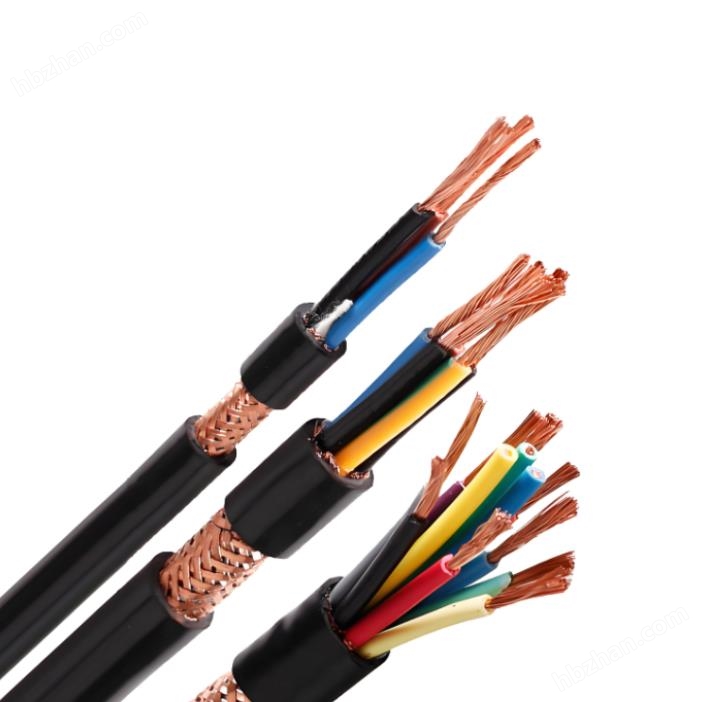
FLGOU control cable
NegotiableUpdate on 05/03
- Model
- Nature of the Manufacturer
- Producers
- Product Category
- Place of Origin
Overview
FLGOU control cables have a smaller cross-section, more cores, and lower voltage compared to power cables; Compared to computer cables, it has higher mechanical strength but weaker shielding performance.
Product Details
FLGOU control cableGenerally used in the following scenarios:
1. Industrial automation control system: Control cables are commonly used in industrial automation control systems to connect various sensors, actuators, and controllers, ensuring the normal operation and precise control of equipment.
2. Mechanical equipment: In mechanical equipment, control cables are used to connect motors, sensors, and various control devices to achieve automated control and monitoring of the equipment.
3. Building automation: In building automation systems, control cables are used to connect various sensors, controllers, and actuators to achieve intelligent control and monitoring of buildings. For example, used to connect temperature sensors, humidity sensors, and lighting control systems.
4. Traffic signal system: In the traffic signal system, control cables are used to connect traffic lights, cameras, and control systems to ensure accurate control and display of traffic signals.
5. Security system: In the security system, control cables are used to connect monitoring cameras, alarm systems, and access control systems to ensure the normal operation and monitoring of the security system.
In these application scenarios, the main function of control cables is to transmit control signals and data, ensuring communication and coordination between various devices, thereby achieving automated control and monitoring.
FLGOU control cableCore features:
1. Electrical performance and structure
Rated voltage: Suitable for control and protection circuits with AC rated voltage of 450/750V and below. The insulation layer is relatively thin, which is different from the high voltage characteristics of power cables.
Conductor material: Copper core is commonly used, with a relatively thin wire diameter (generally not exceeding 10 square millimeters) and a large number of cores (up to 61 cores), suitable for transmitting control signals rather than high-power electrical energy.
Insulation and Sheath: The mainstream insulation and sheath are polyvinyl chloride (PVC), and some environmentally friendly models use low smoke halogen-free polyolefin, which releases no toxic gases during combustion.
2. Mechanical and environmental adaptability
Tensile strength: Steel armored models have high mechanical strength and are suitable for outdoor installation or buried environments, while ordinary models require a bending radius of ≥ 6 times the outer diameter of the cable.
Temperature range: The long-term working temperature is usually 70 ℃ (PVC) or 90 ℃ (cross-linked polyethylene), and the low laying temperature is not lower than 0 ℃.
3. Function and purpose
Signal transmission: specially designed for transmitting control signals, widely used in industrial automation, instrumentation, electrical transmission and other fields, such as control systems for industrial and mining enterprises and energy gates.
Shielding design: Some models are equipped with copper strip shielding layers, but their anti-interference performance is weaker than that of computer cables, which emphasize more on sub shielding and overall shielding structures.
4. Standards and Certification
The national standard GB/T 9330-2008 (formerly GB9330-88) is implemented, and the flame retardant performance complies with GB12666-90.
Compared with other cables: Compared with power cables, control cables have smaller cross-sections, more cores, and lower voltages; Compared to computer cables, it has higher mechanical strength but weaker shielding performance.
Common models and specifications include the following:
1. KVV control cable: KVV control cable is a commonly used flexible control cable, mainly used for control circuit transmission in fixed wiring systems. The number of core wires can be 2-core, 3-core, 4-core, 5-core, etc., and the specifications are usually 0.75mm ², 1.0mm ², 1.5mm ², etc.
2. KYJV control cable: KYJV control cable is a flame-retardant control cable suitable for electrical equipment control systems that require certain fire performance requirements. The number and specifications of its core wires are similar to those of KVV control cables.
3. KVVP control cable: KVVP control cable is a shielded control cable that adopts an aluminum-plastic composite shielding structure, which can effectively reduce the impact of external interference on signal transmission. The common specifications are 3+2-core, 4+1-core, etc.
4. KVV22 control cable: KVV22 control cable is a control cable used in a double-layer steel strip decorative fixed wiring system, with good mechanical strength and resistance to external damage. The common specifications are 4-core, 5-core, etc.
5. KVV32 control cable: KVV32 control cable is an armored control cable suitable for transmitting control signals that need to be used in strong wear and tear environments. The common specifications are 3-core, 4-core, etc.


