-
E-mail
whq698@163.com
-
Phone
13631576199
-
Address
1F, Gongle Fenghe Garden, Xixiang Avenue, Bao'an District, Shenzhen
Product Categories
Shenzhen Chuangxin Instrument Co., Ltd
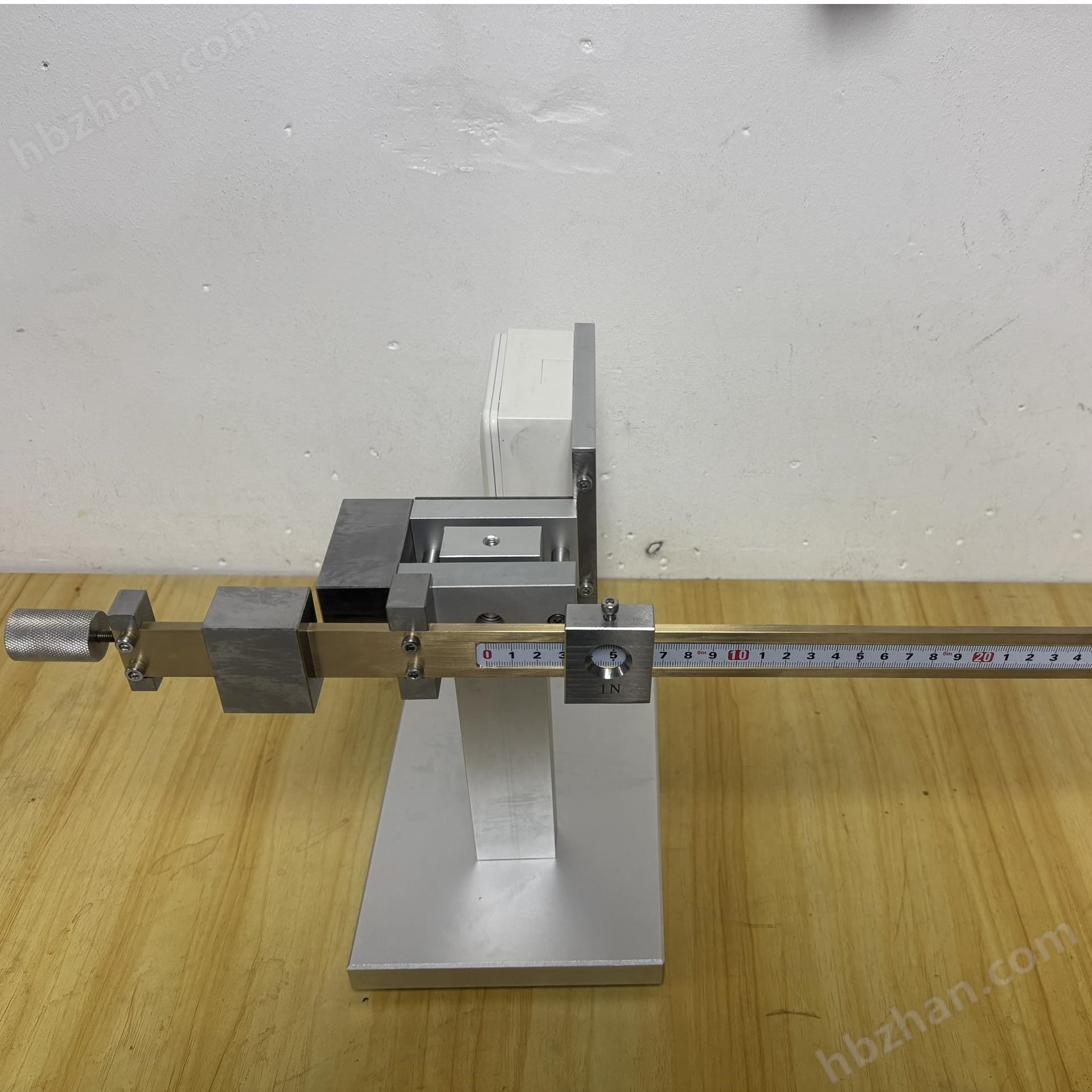
GB4706.1 Plug Torque Test Device
NegotiableUpdate on 05/24
- Model
- Nature of the Manufacturer
- Producers
- Product Category
- Place of Origin
Overview
The plug torque test device complies with the test requirements of Chapter 14.23.3 of GB/T2099.1-2021 standard, Article 22.3 of GB4706, Article 15.4.1 and Figure 11 of GB8898-2001, and Figure 11 of IEC60065 standard. Used to detect whether the mechanical stress generated by plug-in devices with pins on sockets during normal use is within the specified range, and can also be used as a torque testing device for screw socket sockets with additional configurations.
Product Details
GB4706.1 Plug Torque Test Device
Equipment Overview:According to standards such as GB 4943.1, IEC 60335-1, IEC 60884-1, etc., it is used to detect the mechanical torque applied to the socket after the plug of the direct insertion equipment is inserted into the fixed socket. The core judgment limit is 0.25Nm to prevent poor contact or structural damage of the socket due to excessive torque.
Equipment purpose: Used to detect whether the mechanical stress generated by plug-in devices with pins on sockets during normal use is within the specified range. It can also be used as a torque testing device for screw socket holders with additional configurations.
GB4706.1 Plug Torque Test DeviceMain technical parameters:
1. Distance between contact surface and axis surface: 8mm;
2. Arm length: 0-200mm;
3. One weight of 2.5N and 1N can achieve a torque of 0.25N and other torques;
Test Procedure (Standard Operation) Calibration and Leveling: Install the corresponding standard socket, adjust the balance arm to horizontal without load, and confirm that the mating surface is vertical. Sample installation: Insert the plug into the socket, and the device body is only connected to the plug and socket without additional fixation. Torque reading: Move the weight to the balance arm and level it again, and calculate the actual value according to "torque=force x force arm". Result judgment: The measured torque is qualified if it is ≤ 0.25Nm; Exceeding the standard requires optimizing the center of gravity or plug structure of the equipment. Application scenarios and precautions Applicable products: Safety and compliance testing of plugs for direct insertion household appliances, power adapters, IT equipment, etc. Attention: The insertion must be in place to avoid misjudgment of torque caused by poor contact. During the experiment, the equipment has no additional constraints and only relies on plug socket connections. Regularly calibrate weights and balance arms to ensure measurement accuracy of ≤± 1%. After changing the socket specifications, it is necessary to re level it to ensure that the axis distance of 8mm remains unchanged.
Similar Product Recommend


