-
E-mail
guanshikeji@guanshikeji.com
-
Phone
19170336680
-
Address
3-4/F, Building 31, No. 5 Chaoyang 2nd Road, Chaoyang Industrial Park, Xinzhou District, Shangrao City, Jiangxi Province
Product Categories
Jiangxi Guanshi Technology Co., Ltd


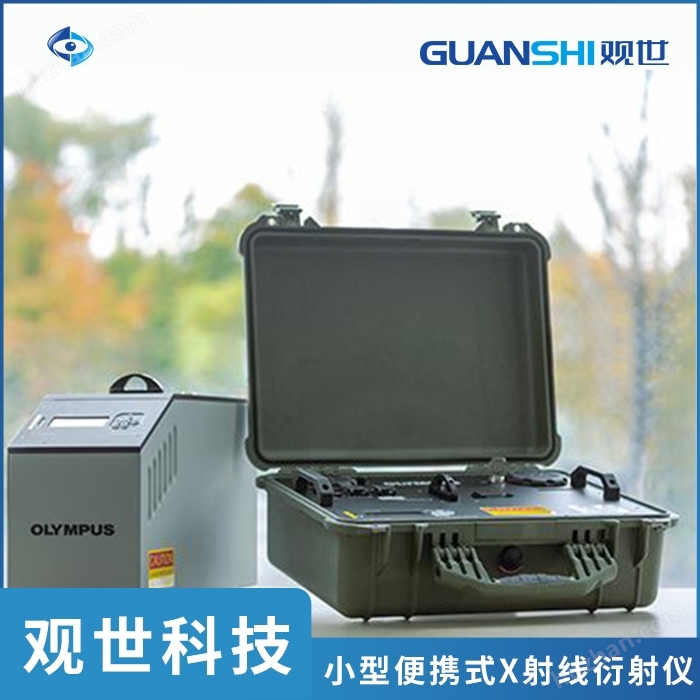
Guanshi small portable X-ray diffractometer XRD analyzer
NegotiableUpdate on 02/02
- Model
- Nature of the Manufacturer
- Producers
- Product Category
- Place of Origin
Overview
Guanshi small portable X-ray diffractometer XRD analyzer, portable X-ray diffractometer: used for powder material identification, phase analysis, qualitative and quantitative analysis of material phases, and crystal structure analysis.
Product Details
Guanshi small portable X-ray diffractometer XRD analyzer
Portable X-ray diffractometer: used for powder material identification, phase analysis, qualitative and quantitative analysis of material phases, and crystal structure analysis.
Product Parameters:

Guanshi small portable X-ray diffractometer XRD analyzer
Product application: Portable X-ray diffractometer: used in cultural and archaeological fields, material phase analysis, explosive composition analysis, oil logging, shale gas exploration, geological survey, whole rock mineral composition analysis, refractory materials, ceramic materials and other phase analysis.
Advantages and Characteristics of XRD Analyzer
Convenient sample preparation: Traditional desktop XRD instruments generally require testing personnel to perform a large amount of sample collection and preparation work, as large quantities of samples must be ground into powder and carefully rolled into small spherical shapes. If the sample is ground too finely or the compaction force is too strong, it may cause sample preparation effects, such as preferential orientation issues. However, Guanshi's XRD analyzer is different in that it only requires 15 milligrams of sample to obtain high-quality detection results, and the testing personnel can easily prepare the sample using the sample toolkit provided with the instrument.
Simultaneous measurement: Traditional desktop XRD instruments require several seconds to obtain each 2-theta measurement value, so obtaining all 2-theta measurements may take up to several hours. The Guanshi XRD analyzer is equipped with a charge coupled device (CCD) detector, which can simultaneously obtain all 2-theta measurement values, making it possible to display the complete diffraction pattern almost immediately on the screen.
2D X-ray diffractometer: Many XRD tools use X-ray detectors that can only capture photons that fall off the sample in one plane, completing one-dimensional experiments. The XRD analyzer equipped with a charge coupled device (CCD) detector can collect slices of the diffraction ring to help users understand whether the sample has been prepared correctly (particle statistics and/or preferred orientation of grains). Based on this information, users can confirm the accuracy and representativeness of the quantitative data obtained.
Perspective geometry: Unlike large traditional XRD instruments that use reflection geometry techniques, Worldview's XRD analyzer uses transmission geometry techniques at the location where the X-ray beam passes through the sample. The sample volume in the sample pool remains fixed, so changes in sample density will not affect resolution. This feature is particularly important for low-density materials, such as drug samples. Compared to instruments based on reflective geometry technology, our instrument can achieve higher resolution with fixed penetration performance.
Energy differentiated X-ray detector: Larger traditional desktop XRD instruments generally cannot use detectors that are more sensitive to energy, so the detector will be affected by photons that are not used in XRD experiments. In contrast, Worldview's XRD analyzer can remove photons that are not directly involved in X-ray diffraction experiments, such as X-ray fluorescence photons, thus providing better signal-to-noise ratio modes.
Cobalt tube and copper tube options: The standard configuration of the Worldview XRD analyzer comes with a sturdy and durable cobalt (Co) target X-ray tube. This type of anode ray tube is widely favored by geologists and mineralogists because it can perform excellently in analyzing samples with high iron (Fe) content. However, in certain applications (such as high manganese content in samples), copper (Cu) target X-ray tubes are required. According to the specific application needs of users, Guanshi can provide either of these two types of anode target X-ray tubes.

Industry applications:
Minerals and ores
Rich iron ore: Analyze iron rich ores, even in the absence of certain mineral phases.
quartz
hematite
goethite
magnetite
Potassium carbonate: Analyze potassium carbonate for crystal phase identification and semi quantitative analysis of certain identified minerals, including the following minerals:
potassium salt
rock salt
Anhydrous potassium magnesium aluminate
Potassium magnesium alum
Limestone and cement: Easily perform quantitative XRD analysis on ordinary minerals mixed with limestone. When the ores in the quarry contain different contents of dolomite, this analyzer can quickly determine ores with dolomite content ranging from 0.5% to 9%, with an error of only 0.02%.
Alpha quartz
Asbestos ore
calcite
dolomite
Calcite in coal: Quantitative analysis of calcite (CaCO3), a mineral that reduces the combustion efficiency of raw materials in coal-fired power plants, can improve combustion efficiency and reduce carbon emissions by identifying calcite.
Oil and gas
Logging/Mud Logging: Mineral identification and quantification of shale cuttings in oil fields to quickly obtain feedback on geological guidance and horizontal drilling sites. Simplified the work of "tracking the direction of mineral veins" for specific mineral layers.
silicate
carbonate
clay
pyrite
Pipeline: Energy sensitive detectors can optimize peak, back, and bottom to identify and quantify corrosive materials in pipelines. XRF measurements can also be performed simultaneously to quickly identify the elemental composition of materials.
Square ferrite (FeO), hematite (Fe2O3), goethite (FeO (OH)), pyrite (FeS2)
Calcite (CaCO3), aragonite (CaCO3)
Tailings: Tailings can be easily reanalyzed to assess the operational performance of the factory or to evaluate previous projects.
pharmaceutical
Quick identificationtrue or falsemedicine
Perform rapid and non-destructive fingerprint analysis on drug formulations and precursors.
Detect the presence and content of active and inactive foreign or substitute ingredients in drugs.
Rapid XRD analysis helps ensure patient safety and protect the brand of legitimate pharmaceutical companies.
Similar Product Recommend