-
E-mail
guanshikeji@guanshikeji.com
-
Phone
19170336680
-
Address
3-4/F, Building 31, No. 5 Chaoyang 2nd Road, Chaoyang Industrial Park, Xinzhou District, Shangrao City, Jiangxi Province
Product Categories
Jiangxi Guanshi Technology Co., Ltd


Handheld Soil Heavy Metal Spectrometer and Environmental Treatment Analyzer
NegotiableUpdate on 01/31
- Model
- Nature of the Manufacturer
- Producers
- Product Category
- Place of Origin
Overview
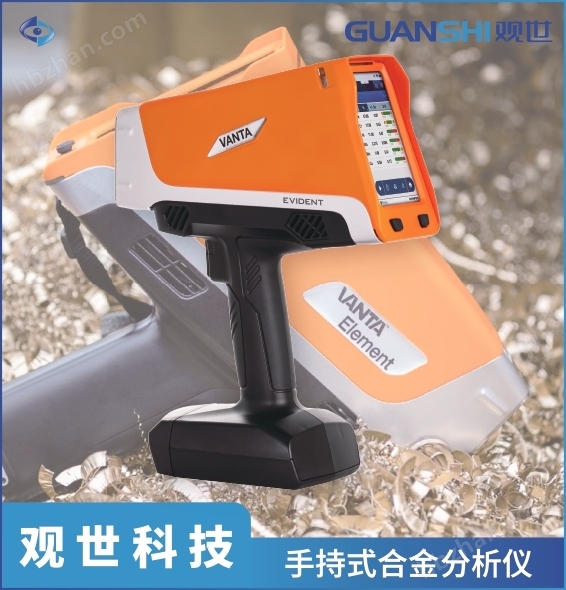
Vanta analyzer is an important tool for screening soil and other materials to detect heavy metals in pollution. The embedded GPS function can combine the detection results with their corresponding GPS coordinates, enabling the analyzer to trace samples back to the field. The Vanta analyzer can conveniently transmit GPS data and sample data to GIS via Wi Fi to create a mapping map of contaminated metals. This analyzer can quickly obtain decision-making results in site characterization, environmental assessment, property evaluation, and pollutant tracking.
Product Details
Vanta analyzer for soil analysis and environmental remediation:

Durable, improved and innovative, efficient and productive
Vanta analyzer is an important tool for screening soil and other materials to detect heavy metals in pollution. The embedded GPS function can combine the detection results with their corresponding GPS coordinates, enabling the analyzer to trace samples back to the field. The Vanta analyzer can conveniently transmit GPS data and sample data to GIS via Wi Fi to create a mapping map of contaminated metals. This analyzer can quickly obtain decision-making results in site characterization, environmental assessment, property evaluation, and pollutant tracking.

The Vanta analyzer can detect high levels of hazardous elements, priority pollutants, and hazardous metals as defined in the Resource Conservation and Recovery Act (RCRA) within seconds.
Vanta handheld analyzer can be used for compliance testing according to the following methods or procedures:
EPA 6200 (Environmental Protection Agency Method 6200)
ISO/DIS13196 (Organization for Standardization/Draft Standard 13196)
Various SOPs (Standard Operating Procedures)
The sample filtering analysis method described in NIOSH or OSHA methods
Surface screening analysis method

Portable XRF analyzer for exploration, ore grade control, and beneficiation of laterite nickel ore
Yijingtong's portable X-ray fluorescence analyzer has high analytical performance and can provide real-time geochemical data, which helps to quickly determine the multi-element characteristics of soil, rocks, and ores. The significant progress in XRF technology not only greatly reduces analysis time, but also significantly lowers detection limits and increases the number of detectable elements. Nowadays, portable XRF analyzers have been used as an effective method for exploring and mining laterite nickel ore. This analyzer is often used in the processes of surveying, drilling, trenching, surface sampling, material verification, and concentrate product validation.
Geological knowledge of laterite nickel ore
Nickel can generally be found in two main types of deposits: laterite nickel deposits and magmatic (volcanic) sulfide nickel deposits. Although nickel reserves account for about 70% in laterite nickel deposits, most of the nickel produced in the past came from sulfide nickel deposits. However, with the gradual depletion of nickel sulfide reserves and the steady increase in nickel consumption in various regions, this situation is changing. Mining laterite nickel ore also brings a beneficial byproduct, which is a higher content of cobalt. Due to the rapid rise of the battery metal industry, cobalt has also become a hot and expensive product.
Nickel bearing ultrabasic rock masses in humid, warm, and tropical environments form laterite nickel ores after long-term chemical and mechanical weathering under harsh weather conditions. The ore body of laterite nickel ore is in the shape of a continuous flat plate, extending for hundreds of meters, but with a depth of only a few tens of meters. All weathering profiles of laterite nickel deposits will show a predictable 5-layer structure (as shown in the figure below): unweathered ultrabasic bedrock, weathered bedrock or "humus", clay layer, limonite layer, and iron crust layer or "iron cap layer".
Similar Product Recommend