-
E-mail
846490659@qq.com
-
Phone
15618746768
-
Address
No. 1833, Building D, 4299 Jindu Road, Minhang District, Shanghai
Product Categories
Shanghai Qianshi Precision Electromechanical Technology Co., Ltd


Leather seam fatigue testing machine T101 strength tester
NegotiableUpdate on 04/24
- Model
- Nature of the Manufacturer
- Producers
- Product Category
- Place of Origin
Overview
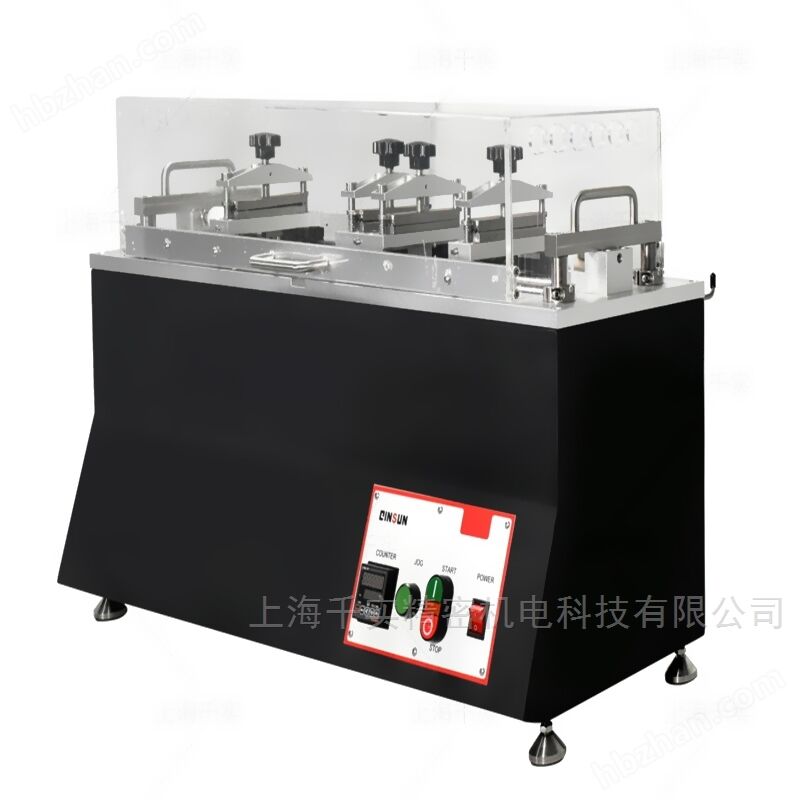
The leather seam fatigue testing machine T101 strength tester is used to evaluate the fatigue strength of the surface material seams of car seats. The surface materials of car seats (such as genuine leather, synthetic leather, fabrics, etc.) are mostly spliced and sewn structures. The sewing strength of the material seams and the fatigue resistance of the seams directly affect the service life of the seats. Testing the strength and lifespan of material seams can effectively predict the lifespan of seats and provide improvement directions to enhance their service life, effectively detecting product quality and performance.
Product Details
Leather seam fatigue testing machine T101 strength testermeet the standards
ASTM D4033,QB/T4043,Toyota TSL 5101G(3.7),GMW 3405,Nissan M-0154,Ford Motor Co.BN 106-02,TSL 5100G Section 4.22
Leather seam fatigue testing machine T101 strength testerTechnical Specifications:
Testing station: 2
Control screen: buttons+timing module
Security Gate: Transparent
Test load: 3kg
Fixture width: 50mm
Travel distance: 140mm
Speed: 30RPM
Sample span: 120124140 adjustable
Power supply: 220V 50HZ
Sample fixture: Aluminum alloy
Appearance dimensions: 900mm * 500mm * 500mm
Weight: 60Kg
Power supply: 220V 50HZ
core functionality
Multi station synchronous testing
The standard configuration is 2 workstations, with an optional 4 workstations, supporting parallel testing of multiple sets of samples, greatly improving efficiency.
Each workstation is equipped with independent fixtures and counters, which can simultaneously record test data for different samples.
High precision loading and measurement
The sample load is 3kg (approximately 29.4N), and the fixture is driven back and forth by a precision motor to simulate actual stress scenarios.
Equipped with high-precision displacement sensors, real-time monitoring of joint deformation with testing accuracy within ± 1%.
Automated operations and data recording
The instrument automatically completes stretching, compression, counting and other actions to reduce human errors.
The built-in counter supports at least four digit display, and the standard test cycle can reach 2500 times, meeting the requirements of long-term testing.
Security protection design
The opening and closing transparent protective cover protects the safety of operators and prevents the fixture from coming into contact with hazardous areas during movement.
The mechanical components are made of non corrosive aluminum and stainless steel materials, and the surface is powder coated and anodized for strong durability.
application standard
T complies with multiple international and industry standards, including but not limited to:
Automotive industry: Toyota TSL 5101G (3.7), GMW 3405, Nissan M-0154, Ford BN 106-02
General standards: ASTM D4033, QB/T 4043-2010, JASO M403
Other: TSL 5100G Section 4.22, GB/T 4043-2010
Product advantages
High precision and repeatability
Precision bearings and sensors ensure stable test data with a repeatability error of less than 1%.
Convenience of operation
The button type control panel is paired with a transparent protective cover, making parameter settings intuitive and sample clamping simple.
Durability and maintainability
The core components are made of high-quality materials and are suitable for long-term high-frequency testing; Modular design facilitates the replacement of spare parts.
After sales service guarantee
Provide fast supply of spare parts, calibration services, and technical support to solve customers' worries.
Typical application scenarios
automotive industry
Test the joint fatigue strength of materials such as genuine leather, synthetic leather, and fabric for the seat, and predict the service life of the seat.
furniture manufacturing
Evaluate the seam durability of leather products such as sofas and seats, and optimize production processes.
Quality inspection agency
Provide standardized testing data for third-party certification to ensure that products comply with relevant specifications.
operating steps
Sample preparation
Cut the sample to the specified size (such as 10cm in width and 10cm in length), and take two pieces from each latitude and longitude direction as a group.
Install sample
Open the transparent safety door, use a height ruler to set the fixture spacing (such as 140mm), align the sample with the joint and clamp it firmly.
Set parameters
Enter the number of test cycles (e.g. 2500 times) and close the safety door.
Start testing
Press the start button, the reducer drives the fixture to move back and forth, and the instrument automatically records data.
Result Analysis
After the test is completed, take out the sample and observe the deformation or fracture at the joint to evaluate the fatigue performance.
Similar Product Recommend