-
E-mail
karen_2023@126.com
-
Phone
18561654558
-
Address
China; Sino German Ecological Park, Qingdao Economic and Technological Development Zone
Product Categories
- Composite activated coke (carbon) adsorption regeneration system
- Activated carbon adsorption tower
- Activated carbon adsorption regeneration project
- Efficient reverse osmosis
- Activated carbon adsorption tank
- COD deep removal
- Advanced treatment of industrial wastewater
- Concentrated water reuse
- Wastewater regeneration
- Industrial wastewater effluent upgrading project
- water reuse
Qingdao New Pacific Energy Conservation and Environmental Protection Group Co., Ltd


Particle carbon fluidized bed adsorption
NegotiableUpdate on 01/08
- Model
- Nature of the Manufacturer
- Producers
- Product Category
- Place of Origin
Overview
Granular carbon fluidized bed adsorption: The regeneration of activated coke and heating regeneration have the advantages of high regeneration rate and short regeneration time (20-60 minutes for granular coke and a few seconds for powdered coke).
Product Details
China's understanding of powdered activated carbon is gradually deepening in the research and application of activated carbon in sewage treatment. There are four adsorption methods for activated carbon in sewage treatment, including fixed bed, contact adsorption, moving bed, and fluidized bed. The adsorption method of powdered activated carbon is only contact adsorption, which is also its characteristic. Activated carbon for sewage treatment has a particularly good treatment effect on projects with large inflow impact by changing the dosage or type of injection according to the different water quality conditions in the process of treating domestic sewage.
Particle carbon fluidized bed adsorptionApplication:
Through sewage treatment, water recycling can be achieved, greatly saving water resources. In the past, sewage treatment plants generally did not directly adopt activated carbon adsorption treatment method, and mostly used activated sludge method for treatment. The sewage treatment plant first removes larger waste residues through a grid, then settles them in a sedimentation tank to remove smaller particles, digests COD and ammonia nitrogen in a biological tank, and finally eliminates bacteria and viruses through disinfection.
When using activated carbon adsorption method for sewage treatment, how much activated carbon needs to be added to one cubic meter of sewage?
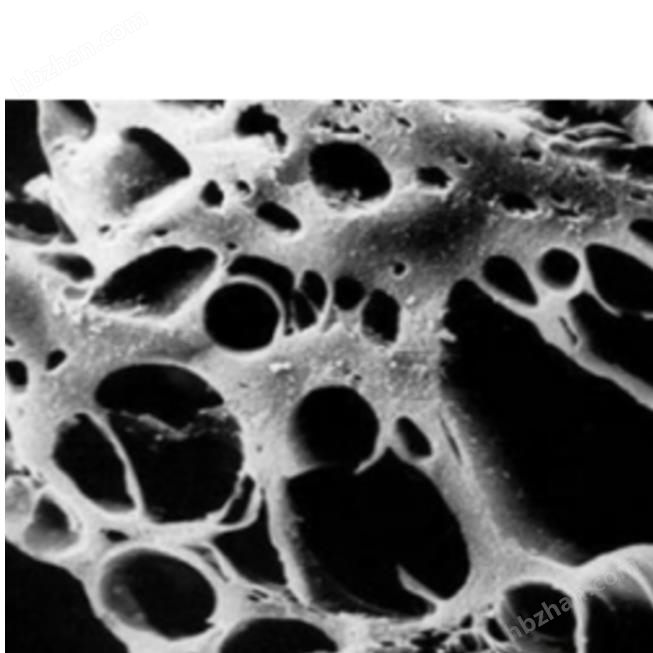
1. It is necessary to screen the iodine value of powdered activated carbon based on the difficulty of water treatment. Due to the more developed pore size of high iodine value activated carbon, the higher the iodine value of activated carbon, the stronger its ability to adsorb impurities.
When using powdered activated carbon, adsorption tests must be conducted based on the pollutants to be removed to determine the type of powdered activated carbon and the required amount of powdered carbon.
Before adding powdered activated carbon, the carbon powder should be made into a carbon slurry and evenly added to water in a quantitative manner. The longer the contact time during the process, the better the pollution removal effect. In general, calculations can be made according to the following formula
Adsorption capacity of activated carbon=impurities in wastewater * 1.2
Particle carbon fluidized bed adsorption:Powdered activated carbon has the characteristics of easy deployment, low equipment investment, low price, and fast adsorption speed, making it more suitable for the renovation of old factories. It has the advantages of cost saving, building area saving, and strong adaptability to short-term or sudden water pollution.