-
E-mail
1021464675@qq.com
-
Phone
13828746862
-
Address
Building C1, Longquan Science and Technology Park, Huarong Road, Longhua New District, Shenzhen
Product Categories
Shenzhen Xingyongsheng Environmental Protection Equipment Co., Ltd


UV photocatalytic activated carbon waste gas treatment equipment
NegotiableUpdate on 05/07
- Model
- Nature of the Manufacturer
- Producers
- Product Category
- Place of Origin
Overview
The exhaust gas generated by the adhesive production equipment is collected by the air duct and enters the rooftop exhaust gas treatment equipment. After purification, it meets the emission standards (currently using UV photolysis+activated carbon to treat harmful exhaust gas).
Product Details
The role of UV photocatalytic oxidation: High energy beams irradiate odorous gases, and ultraviolet beams decompose oxygen molecules in the air to produce free oxygen, also known as reactive oxygen species. Due to the imbalance of positive and negative electrons carried by free oxygen, it needs to combine with oxygen molecules to produce ozone. UV beams are used to break down the molecular bonds of bacteria in odorous substances, destroy their nucleic acid (DNA), and then undergo oxidation reactions through ozone to achieve the purpose of deodorization and killing bacteria. After the odorous gases are input into this purification equipment through exhaust equipment, the purification equipment uses high-energy C Wave beams and ozone synergistically decompose and oxidize odorous gases, causing them to degrade and transform into low molecular weight compounds, water, and carbon dioxide. Under the traction of the fan, these substances enter the activated carbon adsorption device. Due to the porous nature and large specific surface area of activated carbon, there is an unbalanced and unsaturated molecular attraction or chemical bonding force on its surface. Therefore, when gas comes into contact with activated carbon, it can attract gas molecules, causing them to concentrate and remain on the solid surface. Pollutant substances are adsorbed by activated carbon, thus achieving the goal of purifying the gas. When the exhaust gas contains a large amount of dust and particulate matter, the activated carbon adsorption device is used in combination with UV plasma to achieve exhaust gas purification and emission standards. The advantages of UV photocatalytic oxidation are: ① Strong adaptability: It can adapt to the purification treatment of most high concentrations, atmospheric quantities, and different organic gas substances. Through reasonable module configuration, it can be widely used in gas deodorization, sterilization, and purification treatment in refineries, rubber plants, chemical plants, pharmaceutical plants, sewage treatment plants, garbage transfer stations, sewage pump rooms, central air conditioning, etc. It can work continuously 24 hours a day, with stable and reliable operation. ② Efficient Odor Removal: It can efficiently remove volatile organic compounds (VOCs), as well as inorganic pollutants such as hydrogen sulfide and ammonia. It can detect various odors and has a much better deodorization effect than the national odor pollutant emission standards (GB14554-93). ③ Low operating cost: This equipment has no mechanical devices, no movement noise, no need for dedicated management and daily cone protection, only requires regular inspection and maintenance, low maintenance and energy consumption, extremely low wind resistance, and can carry a large amount of exhaust power energy consumption. ④ Safe and reliable: Due to the use of photolysis principle and explosion-proof treatment of the module, safety hazards are eliminated, and the fire, explosion, and corrosion resistance performance is high. The equipment performance is safe and stable, especially suitable for high concentration flammable and explosive waste gas occasions.
2、 Working principle of activated carbon adsorption:
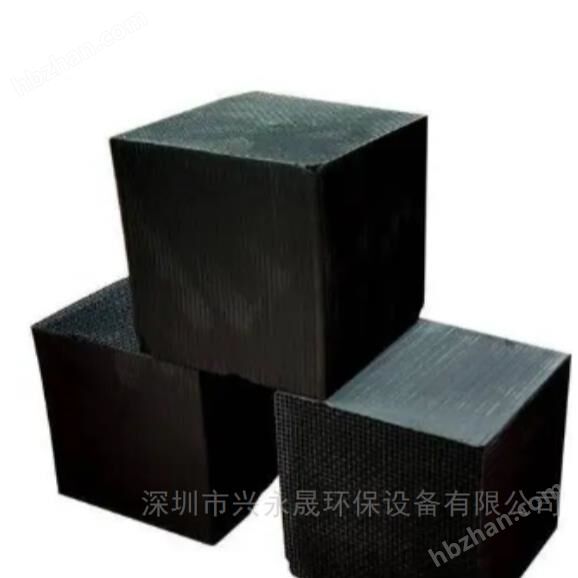
The adsorption function of activated carbon: Activated carbon is a black powder, granular or pellet shaped amorphous and porous carbon. The main component is charcoal, which also contains small amounts of oxygen, hydrogen, sulfur, nitrogen, and chlorine. It also has a fine structure like graphite, but with smaller grains and irregularly stacked layers. Has a large surface area (500~1000m ^ 3/g). It has strong adsorption ability and can adsorb gases, liquids or colloidal solids on its surface. The adsorption of gas and liquid can be close to the quality of activated carbon itself. Activated carbon has selective adsorption, and non-polar substances are easier to adsorb than polar substances. In the same series of substances, substances with high boiling points are more easily adsorbed, with higher pressure, lower temperature, higher concentration, and greater adsorption capacity; On the contrary, reducing pressure and increasing temperature are beneficial for gas desorption. Activated carbon is commonly used for gas adsorption, separation, and purification, solvent recovery, decolorization agents for sugar, oil, glycerol, and drugs, deodorizers for drinking water or refrigerators, filter agents for gas masks, and can also be used as a catalyst or metal salt catalyst. When the dust containing gas is powered by a fan and enters the activated carbon box under positive or negative pressure, due to the unbalanced and unsaturated molecular gravity or chemical bonding force on the solid surface of the activated carbon, when the solid surface comes into contact with the gas, it can attract gas molecules, concentrate and maintain them on the solid surface, and adsorb pollutants and odors. After passing through the activated carbon filter, the exhaust gas enters the equipment's dust removal system to purify the gas and achieve high-altitude emission standards. Advantages of activated carbon adsorption box products: ① High adsorption efficiency and wide applicability; ② Easy maintenance without technical requirements; ③ Capable of simultaneously processing multiple mixed exhaust gases.