-
E-mail
595012668@qq.com
-
Phone
13838263242
-
Address
Building B, Shenglong Jinzhong Ring, Zhongyuan District, Zhengzhou City, Henan Province
Product Categories
Zhengzhou Qifeng Environmental Protection Technology Co., Ltd

Cartridge dust collector
NegotiableUpdate on 01/26
- Model
- Nature of the Manufacturer
- Producers
- Product Category
- Place of Origin
Overview
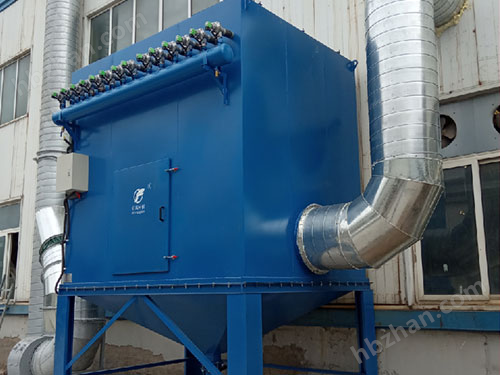
The filter cartridge dust collector is a pulse back blowing dust removal device that uses the filter cartridge as the filtering element. Equipment features: 1 The equipment is small in size, efficient, and easy to maintain; 2. Especially suitable for welding and powder coating occasions.
Product Details
1、 Core definition and core advantages: Different from traditional filter bag dust collectors
Cartridge dust collectorThe core of the filter is to make the filter material into a pleated filter cartridge (similar to an air purifier filter cartridge). Compared with traditional filter bag dust collectors, its core advantages can be summarized into three points:
Large filtration area and compact volume: The pleated design increases the filtration area per unit volume of the filter cartridge by 3-5 times compared to traditional filter bags (such as a filter cartridge with a diameter of 320 × 600mm and a filtration area of about 10-12 square meters). The overall volume of the equipment can be reduced by more than 50%, making it suitable for scenarios with limited workshop space.
High filtration accuracy and strong ability to capture fine dust: The filter cartridge often uses PTFE coated filter material or ultrafine fiber filter material, with a filtration accuracy of over 0.3 μ m and a PM2.5 removal rate of ≥ 99.9%, which can meet strict emission requirements (such as particulate matter ≤ 5mg/m ³ in key areas).
Efficient dust cleaning and long filter cartridge life: Low pressure pulse jet cleaning (pressure 0.2-0.6MPa) is used, and the dust cleaning airflow directly acts on the surface of the filter cartridge, causing dust to peel off and making the filter cartridge less prone to clogging. The service life can usually reach 2-5 years (1-2 years longer than traditional filter bags).
2、 Structural composition: 4 core components determine dust removal efficiency
Cartridge dust collectorThe structure is designed around "efficient filtration+convenient dust cleaning" and mainly consists of the following four parts:
Filter cartridge (core filter element)
Structure: It consists of a metal/plastic skeleton, pleated filter material, and sealing rubber ring. The filter material is mostly polyester needle punched felt, PPS (high temperature resistant), PTFE film (anti adhesion), and the number of pleats is usually 30-60 pleats to ensure the filtration area.
Function: When the dusty gas passes through the filter cartridge, the dust is intercepted on the surface of the filter material, and the purified gas enters the clean air chamber through the filter material.
Selection key: Select the filter material according to the operating temperature (polyester is used for room temperature ≤ 130 ℃, PPS is used for medium temperature 130-200 ℃, and fiberglass is used for high temperature > 200 ℃); Choose PTFE coated filter material for sticky dust (such as paint powder) to prevent dust adhesion.
Dust removal system
Composition: Pulse valve, spray pipe, air bag, PLC controller, yesCartridge dust collectorThe 'heart'.
Workflow: When the dust accumulation on the surface of the filter cartridge causes the equipment resistance to reach the preset value (usually 1200-1500Pa), the PLC controller triggers the pulse valve, and the compressed air in the air bag is sprayed into the filter cartridge at high speed through the spray pipe, causing the filter material to instantly expand and vibrate. The dust falls off to the ash hopper under the action of inertia force.
Technical features: The response time of the pulse valve is ≤ 0.1 seconds, and the spraying cycle can be adjusted by PLC (usually 10-30 minutes/time) to avoid excessive cleaning and damage to the filter material.
Box and airflow distribution system
Box body: divided into "dust chamber" (outside the filter cartridge, inlet area) and "clean chamber" (inside the filter cartridge, outlet area), welded with carbon steel or stainless steel, with anti-corrosion treatment (such as painting, galvanizing) on the inner wall to ensure that there is no air leakage during negative pressure operation (air leakage rate ≤ 2%).
Airflow distribution: A guide plate and a uniform flow net are installed at the inlet to evenly distribute the dusty gas to each filter cartridge, avoiding premature blockage caused by excessive local filter cartridge load.
Ash hopper and ash unloading device
Ash hopper: located at the bottom of the box, in a conical shape with a tilt angle of ≥ 60 °, to prevent dust accumulation. Some ash hoppers are equipped with heating devices (such as electric heating tubes) to avoid high humidity dust agglomeration.
Ash unloading device: commonly used star shaped unloaders, screw conveyors, or flap valves are used to discharge the dust in the ash hopper at regular intervals (the unloader speed is usually 5-15r/min), ensuring that the ash hopper does not accumulate dust.